An old garden finds new life by connecting its natural history to contemporary ecology.
Victorian Wild Garden
Des Moines, Iowa — 2023-present
A historic house and garden, once home to a former Better Homes and Gardens editor, enters its second century with a new era of ecological horticulture.
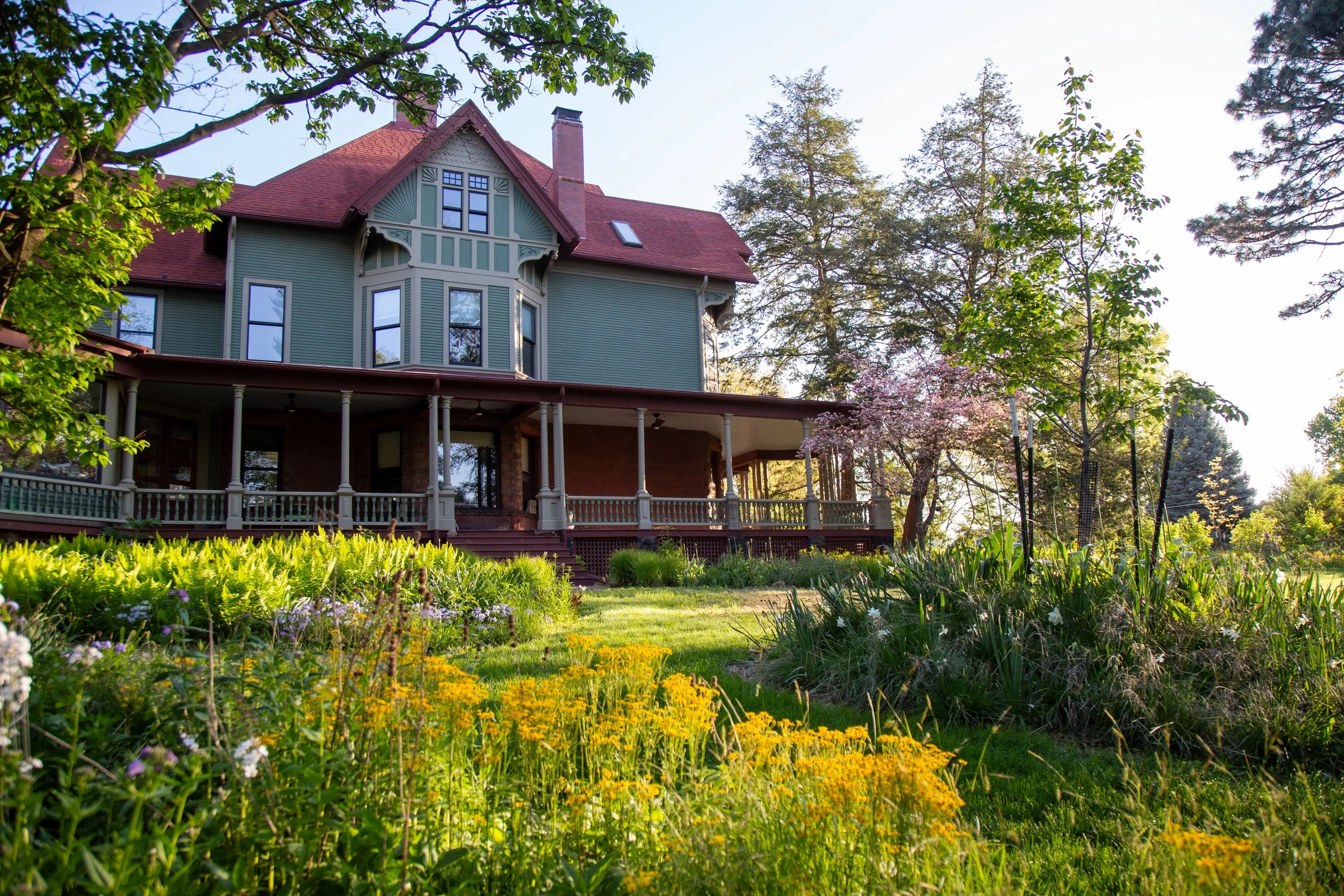
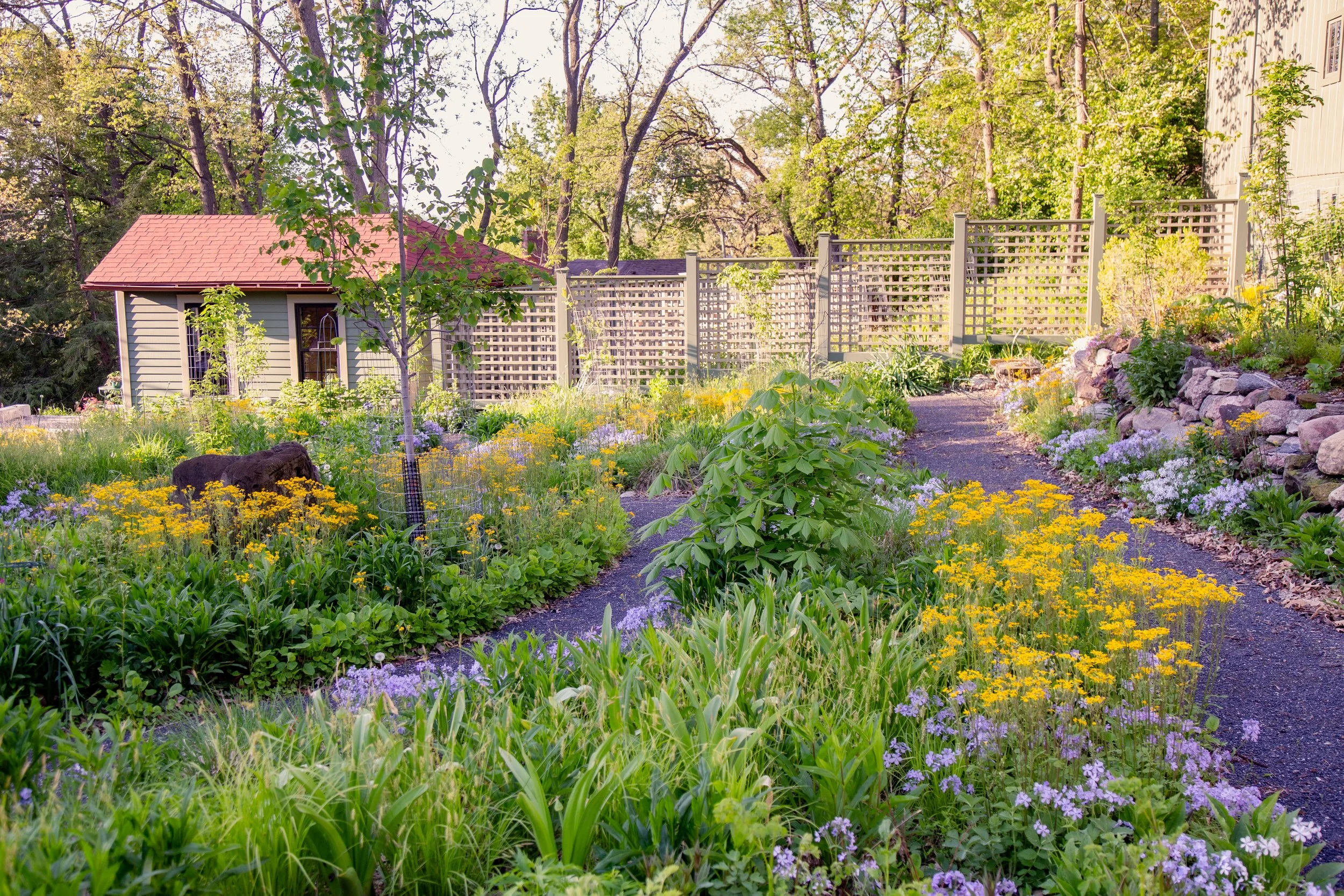
Set within the grounds of a 1895 Victorian home in Des Moines, the Victorian Wild Garden project began as a ten-year master plan for a historic residential landscape already rich with memory and horticultural inheritance. The brief called for privacy, seasonal depth, and a garden that could age well with the house—one that did not need to be eye-catching or showstopping, but authentic and alive. Early site notes identified the clients’ affection for meadow textures, an emphasis on spring abundance, existing heritage plants, mature trees, and the desire to “rewild” areas around the carriage house.
The design study framed the property as a layered palimpsest: oak savanna and upland forest before European settlement, significant ornamental gardens throughout the 20th century, and an envisioned contemporary landscape that negotiates this rich history. Phase one focused on translating those ideas into a resilient, legible plant palette that could adapt to the form of the contemporary landscape. The plantings are biased towards spring, early summer, autumn, and winter—reflecting both the clients’ travel patterns and the seasons they most enjoy.
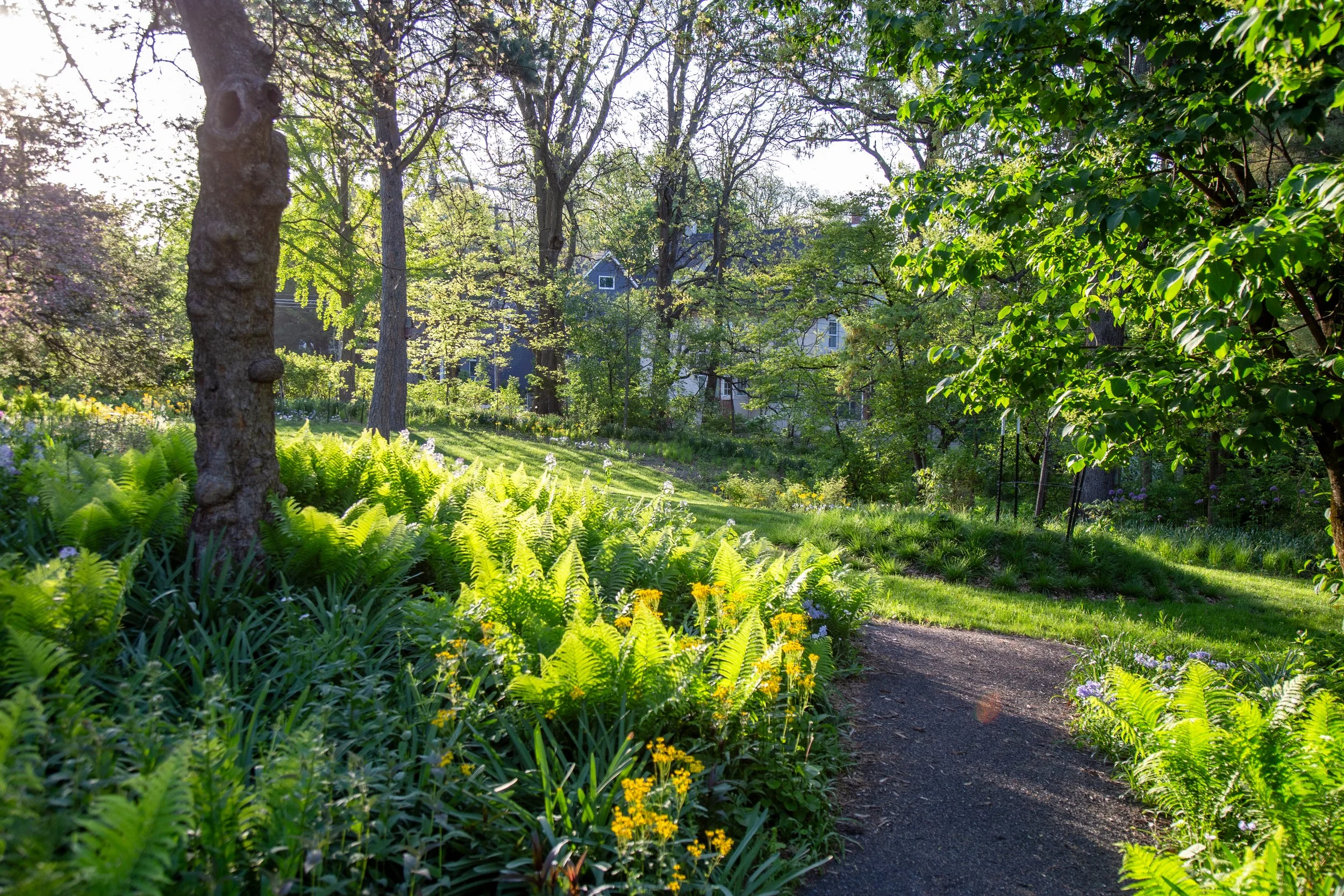
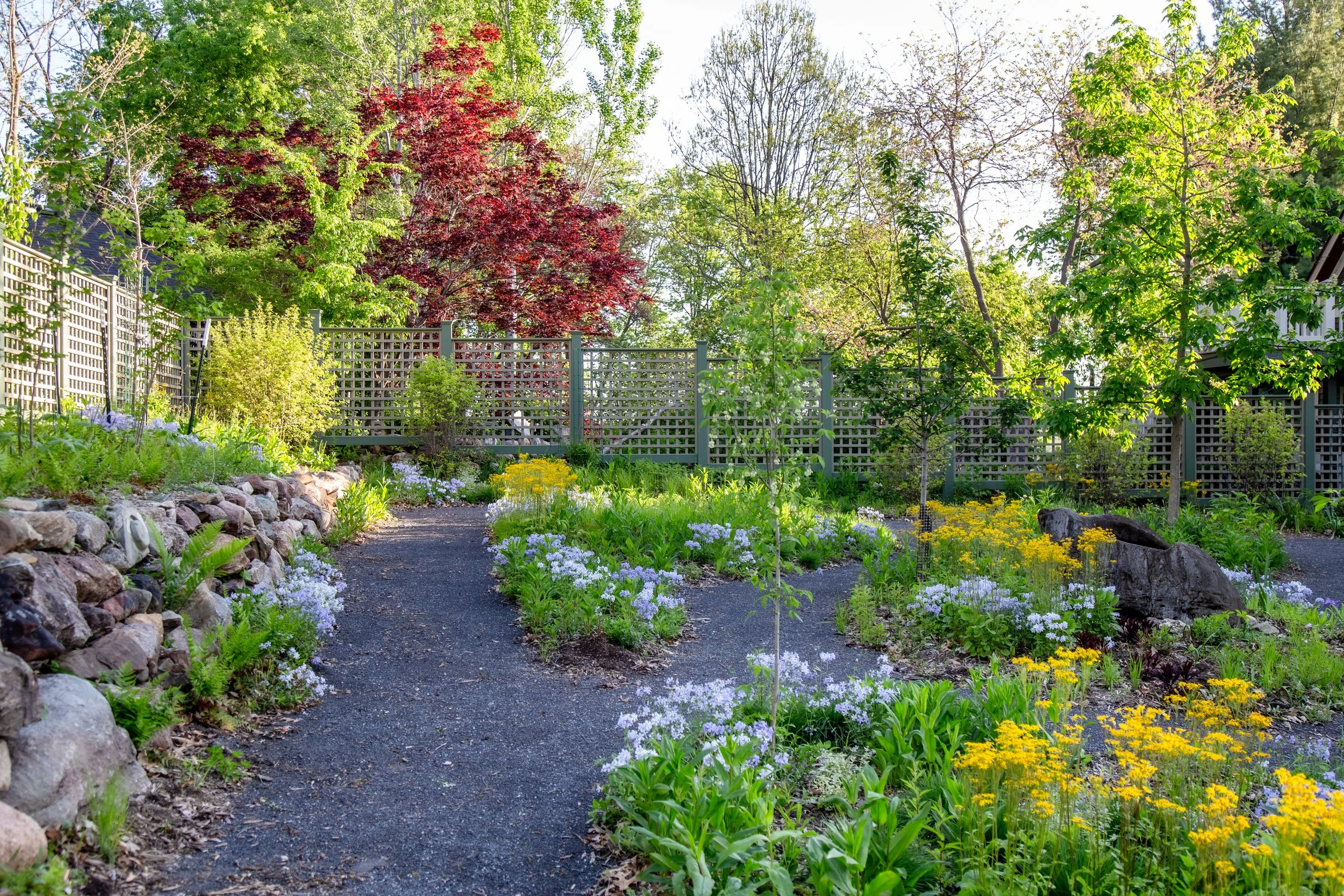
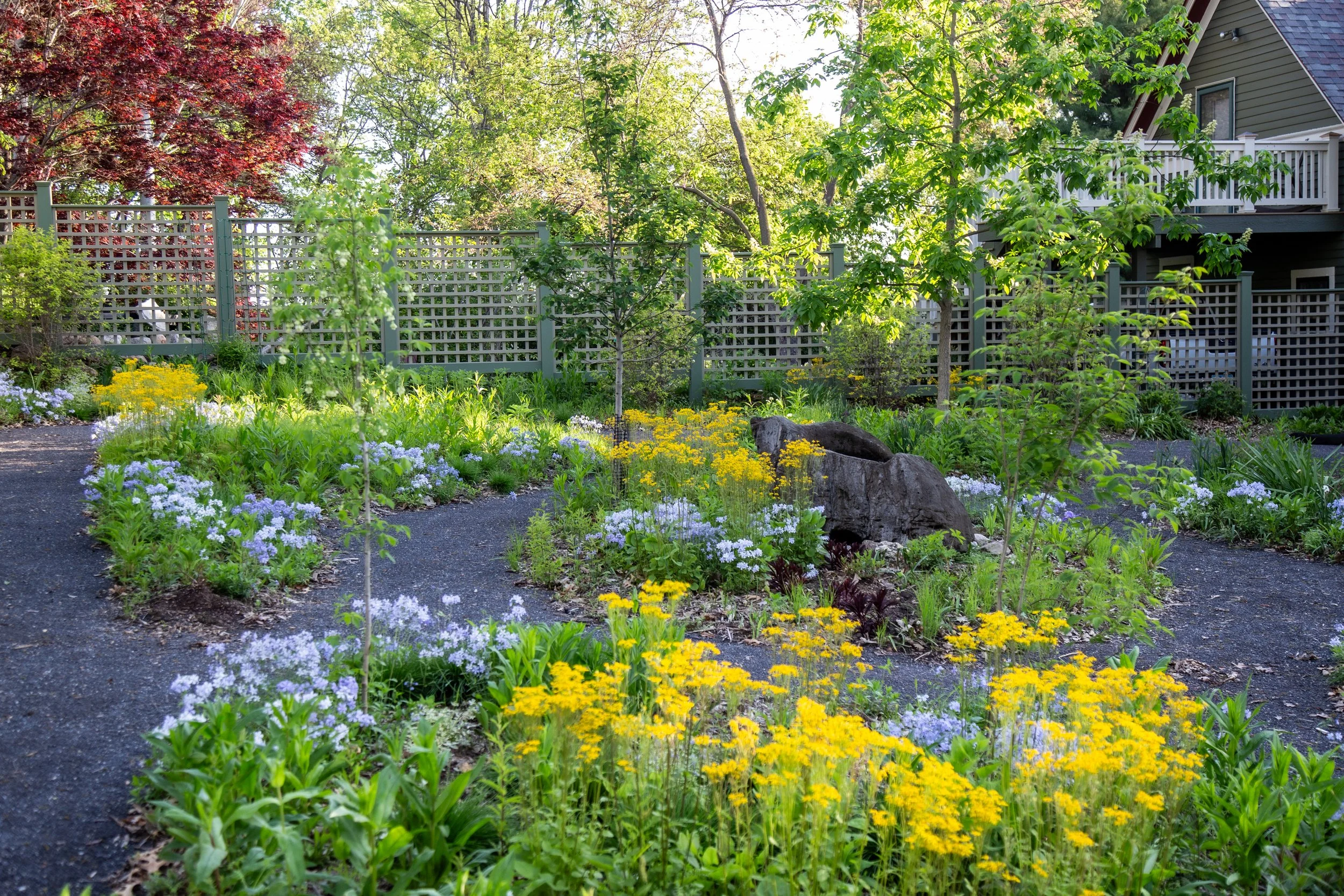
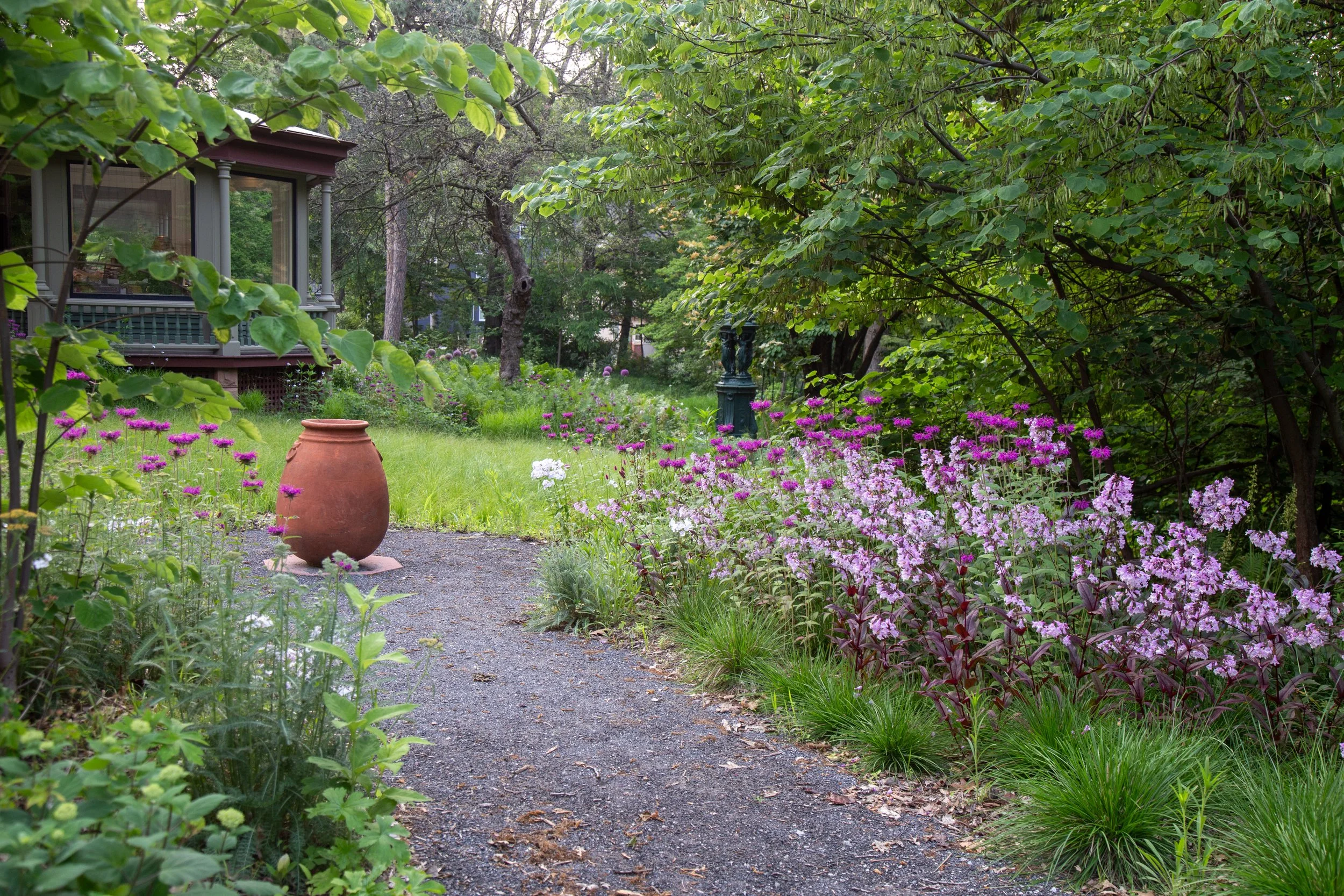
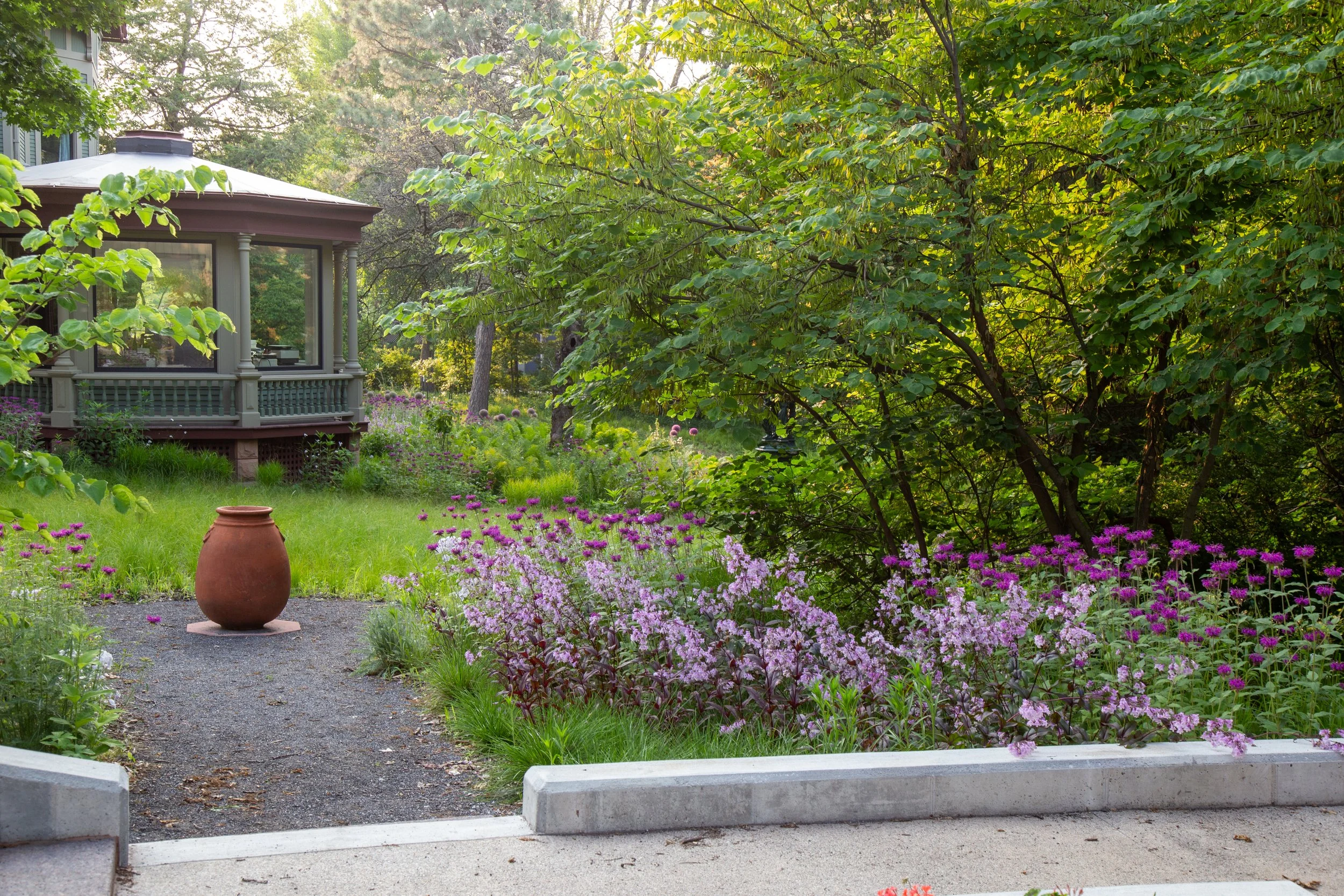
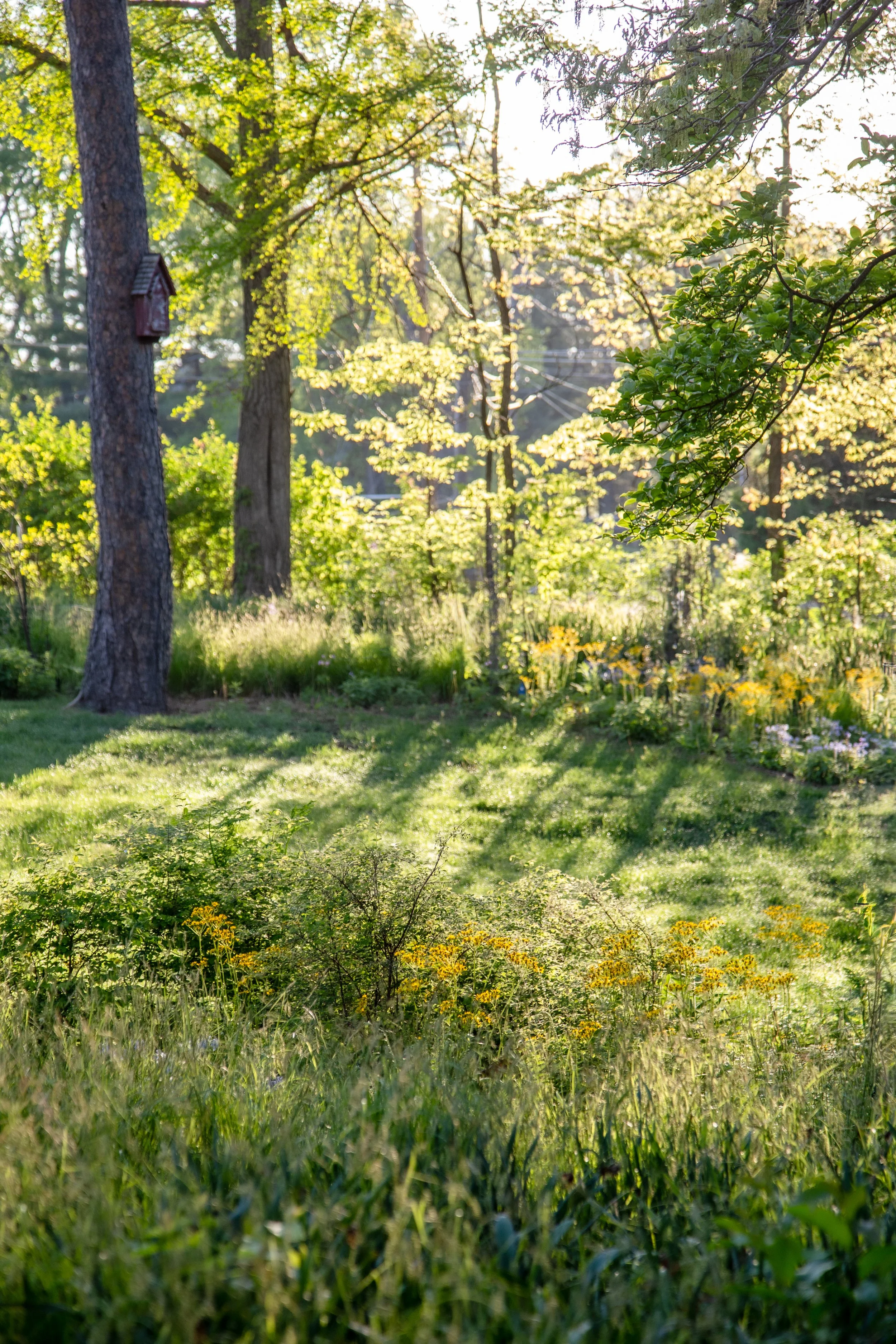
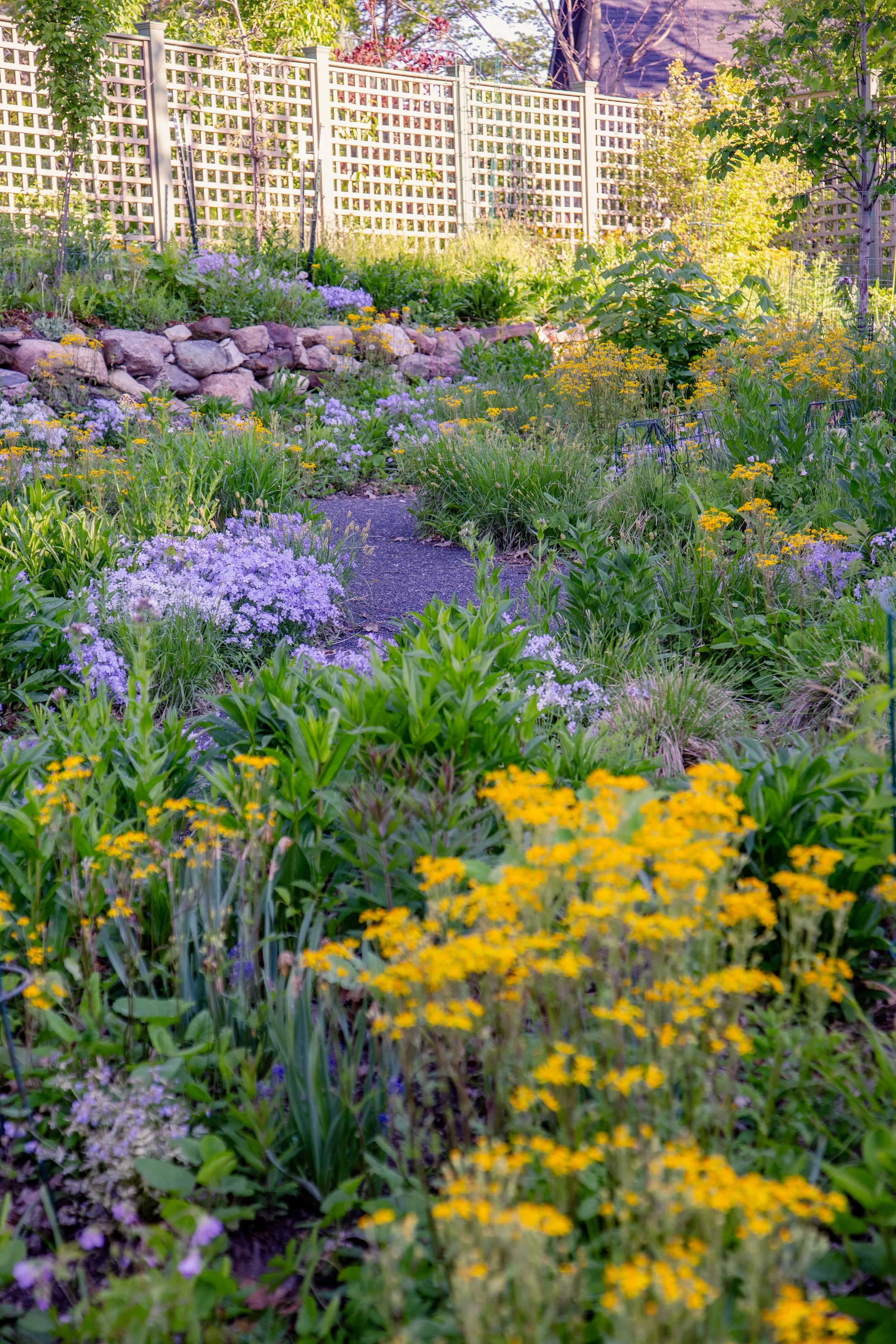
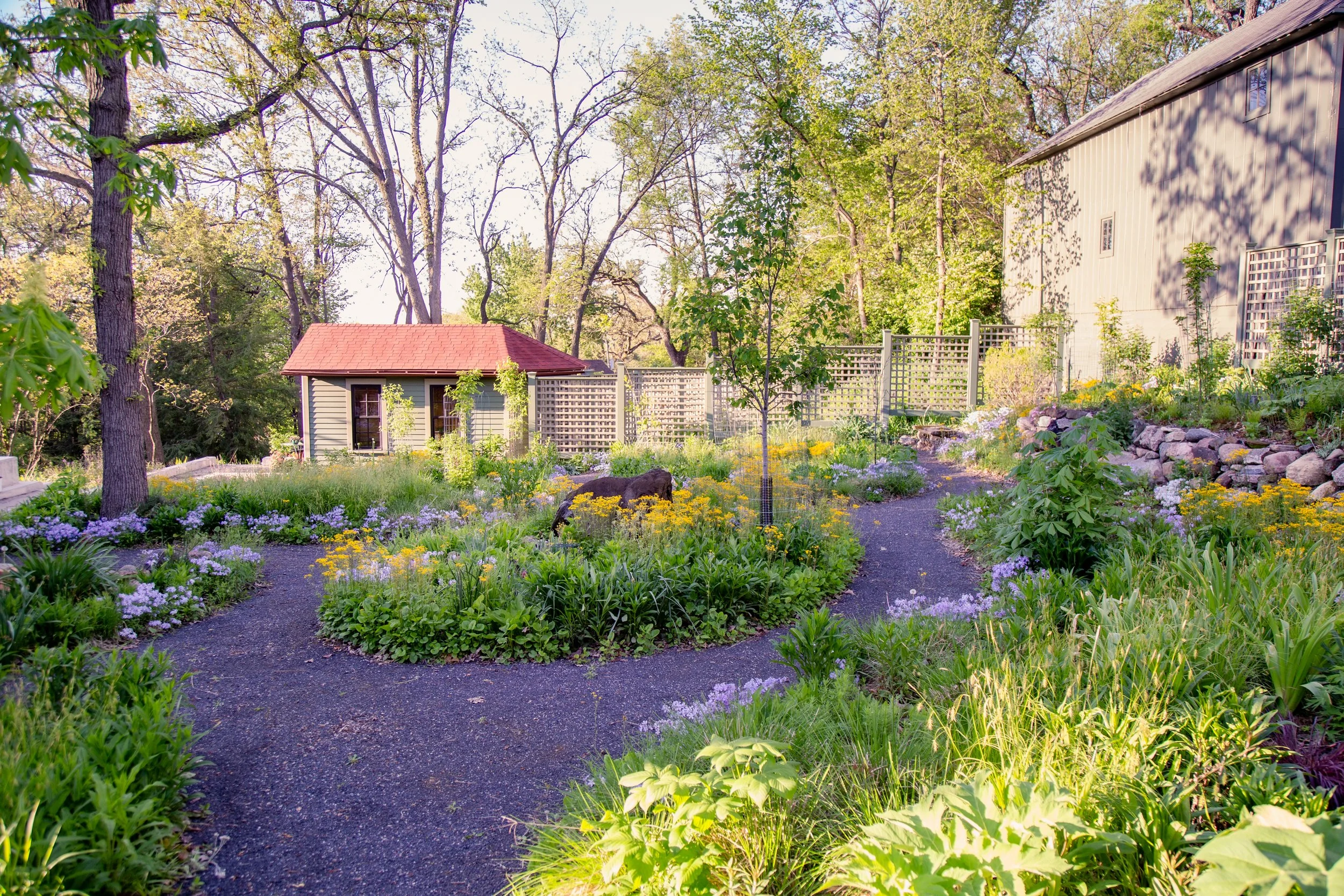
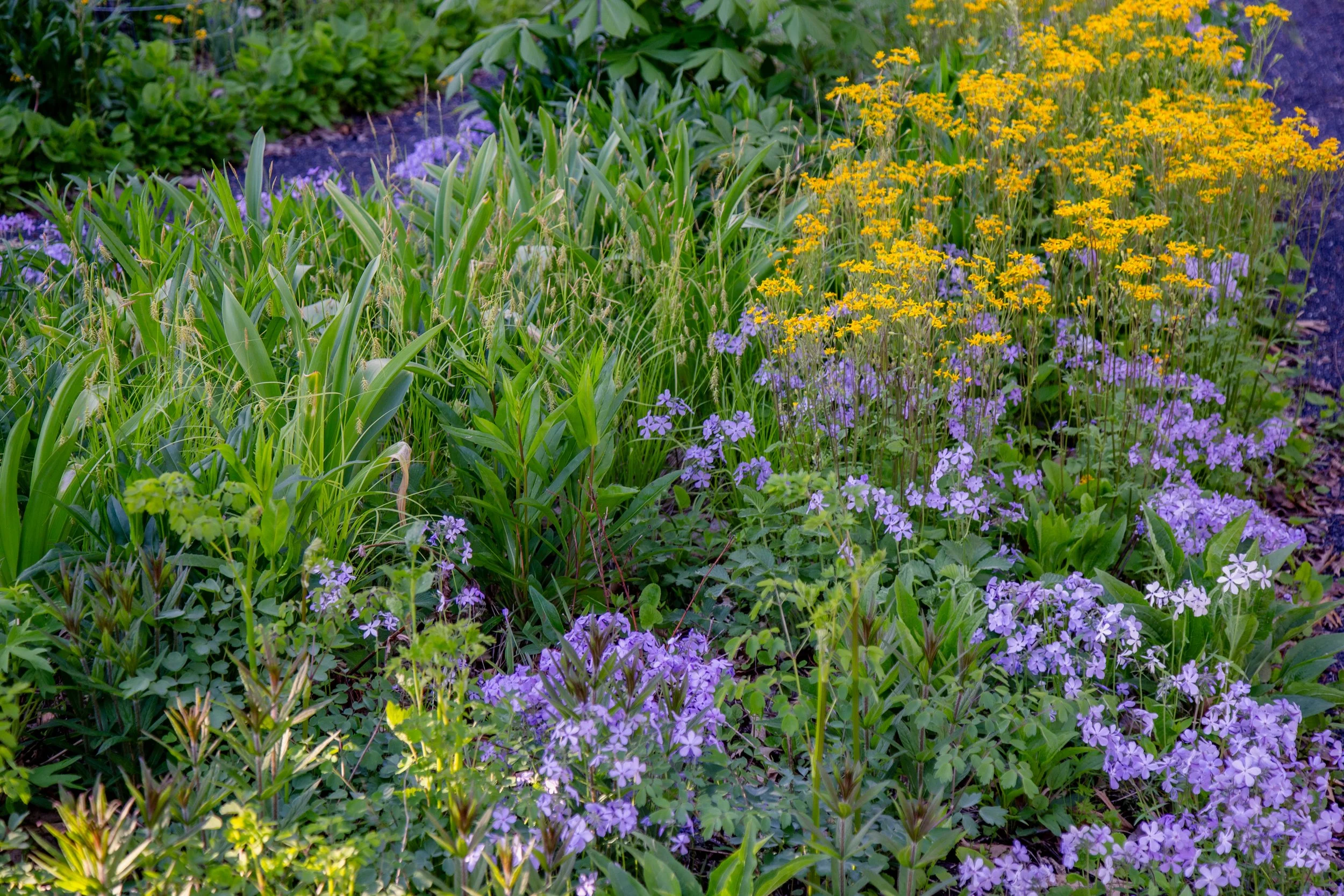
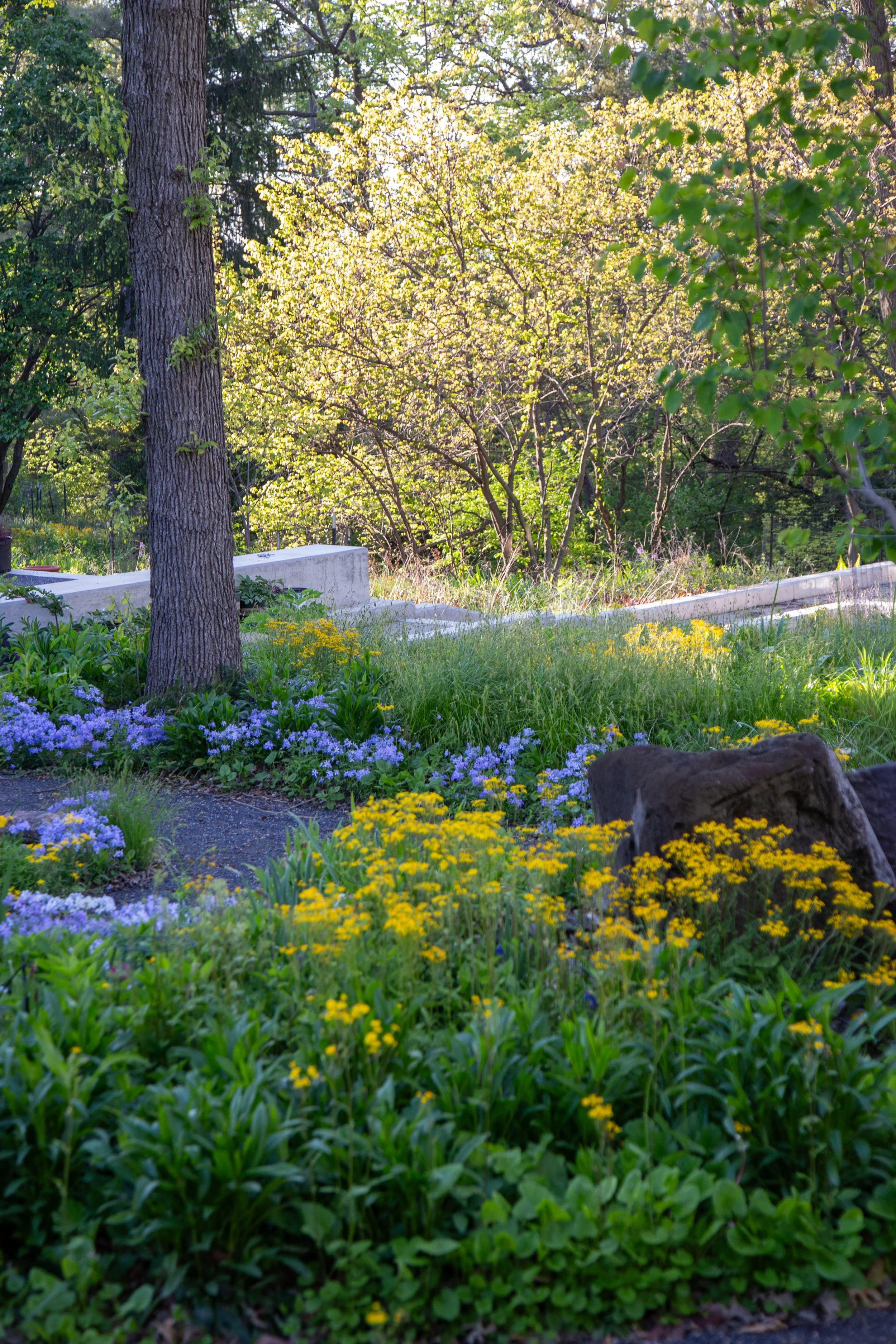
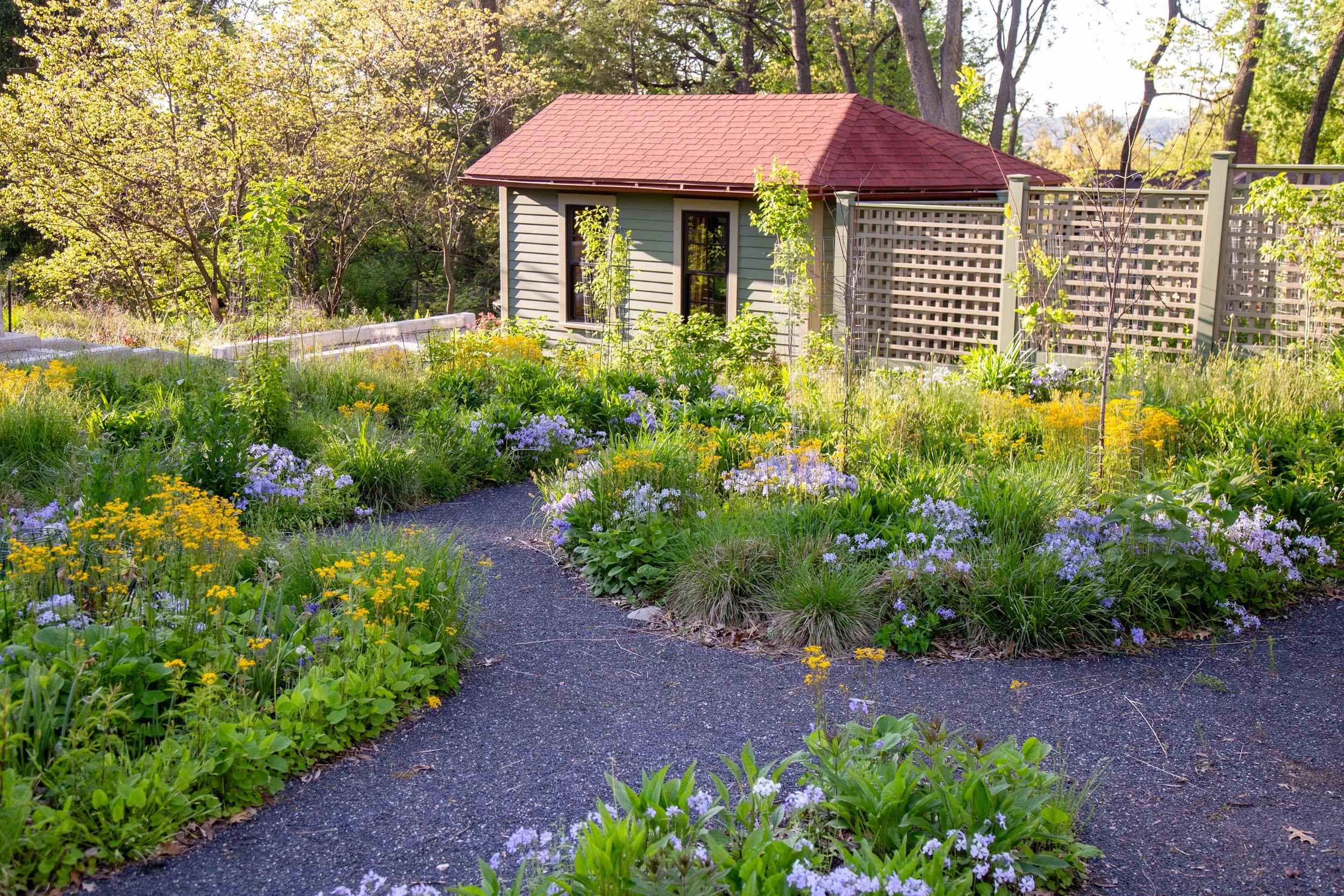
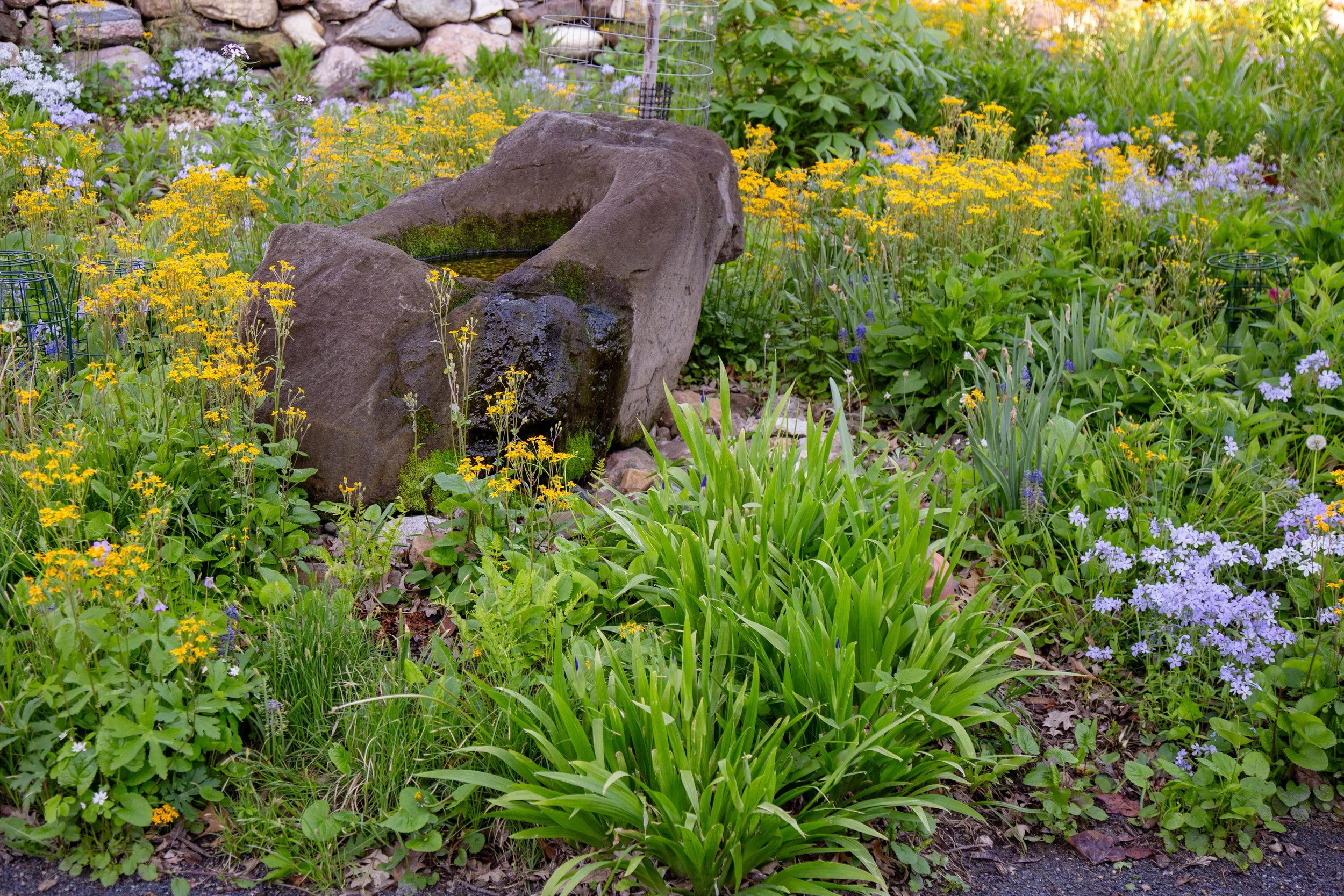
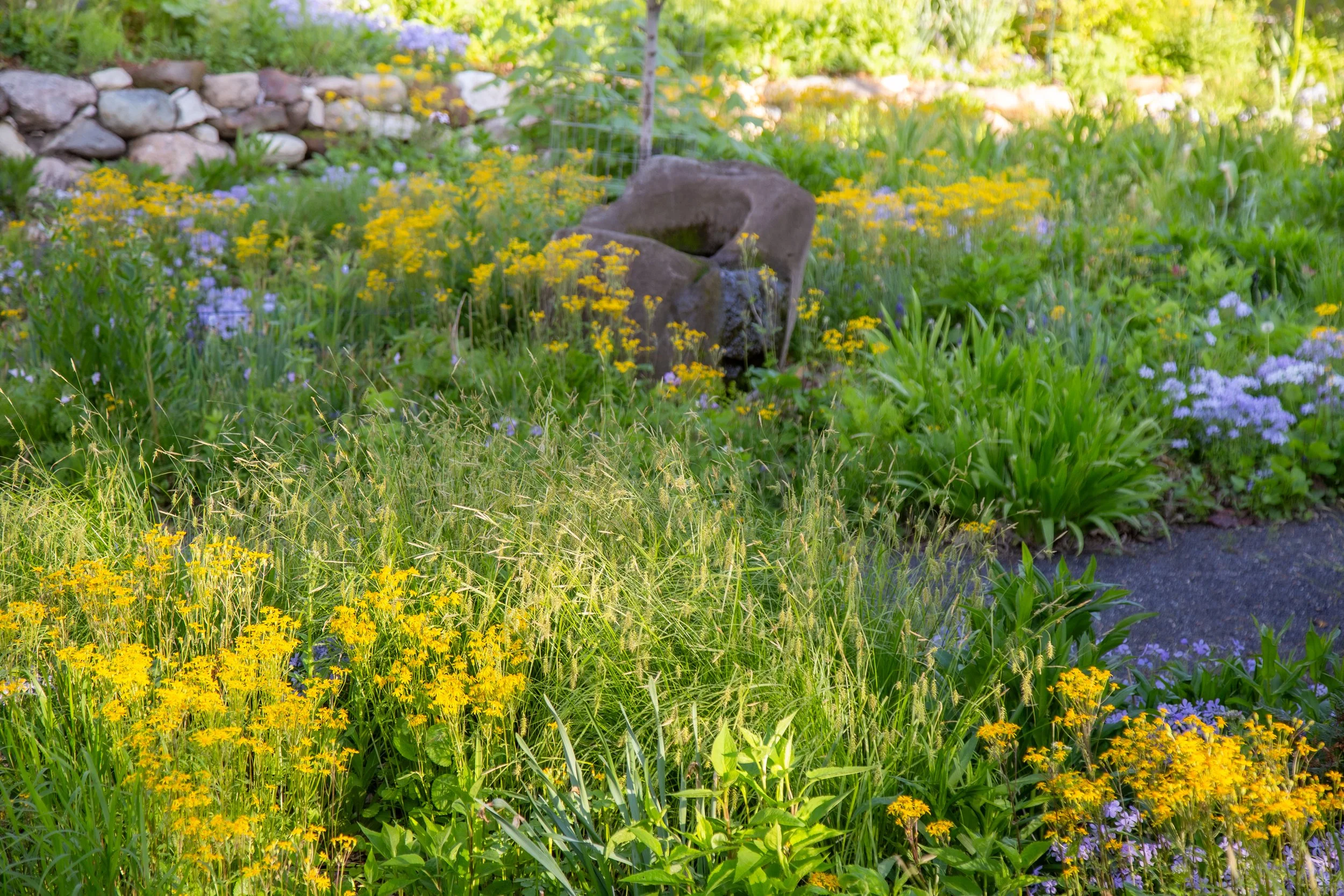
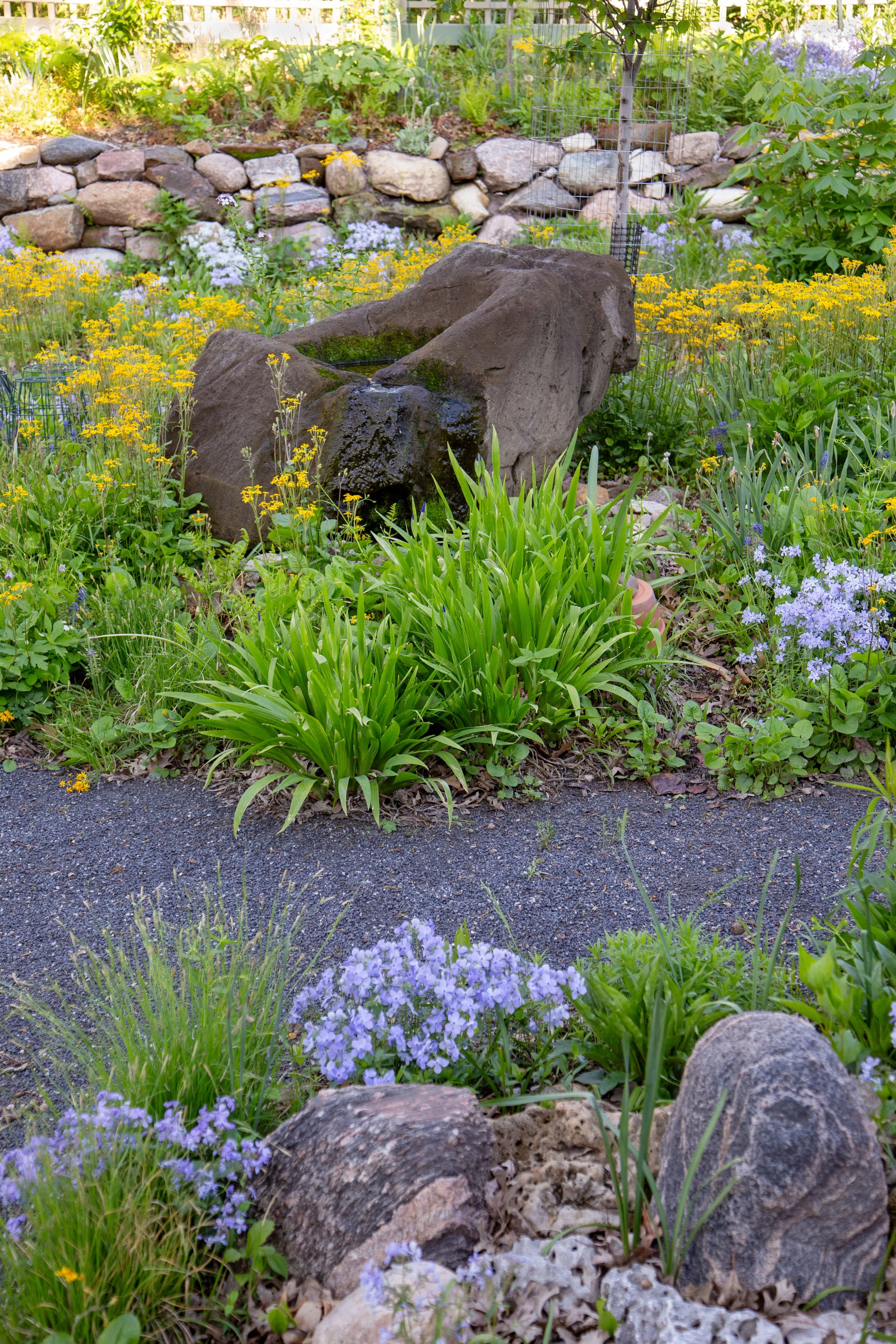
Rather than impose a single stylistic narrative, the plan organized the site into distinct but related episodes: the Carriage House, Wild Borders, and Front Meadow. Each area was conceived as a way to orchestrate different rhythms of openness, enclosure, memory, and seasonality. Each area also negotiates its history and the design brief at different tempos. The previous owners used the former garden behind the Carriage House and a playhouse-turned-garden shed for cut flowers. Seedling oaks and buckeyes had begun to reclaim the space, long since overgrown. We repurposed the boulders and field stone that previously defined the cutting garden into a wall to negotiate grade changes and frame the organic bed lines of the new plantings into an architectural form. The plant palette evokes an open woodland with a rich tapestry of Carex (sedges) and spring ephemerals skirting a floral understory canopy of Amelanchier laevis ‘Snow Flurry’, Chionanthus virginicus (fringetree), Viburnum prunifolium (blackhaw viburnum), and a bosque of Staphylea trifolia (bladdernut).
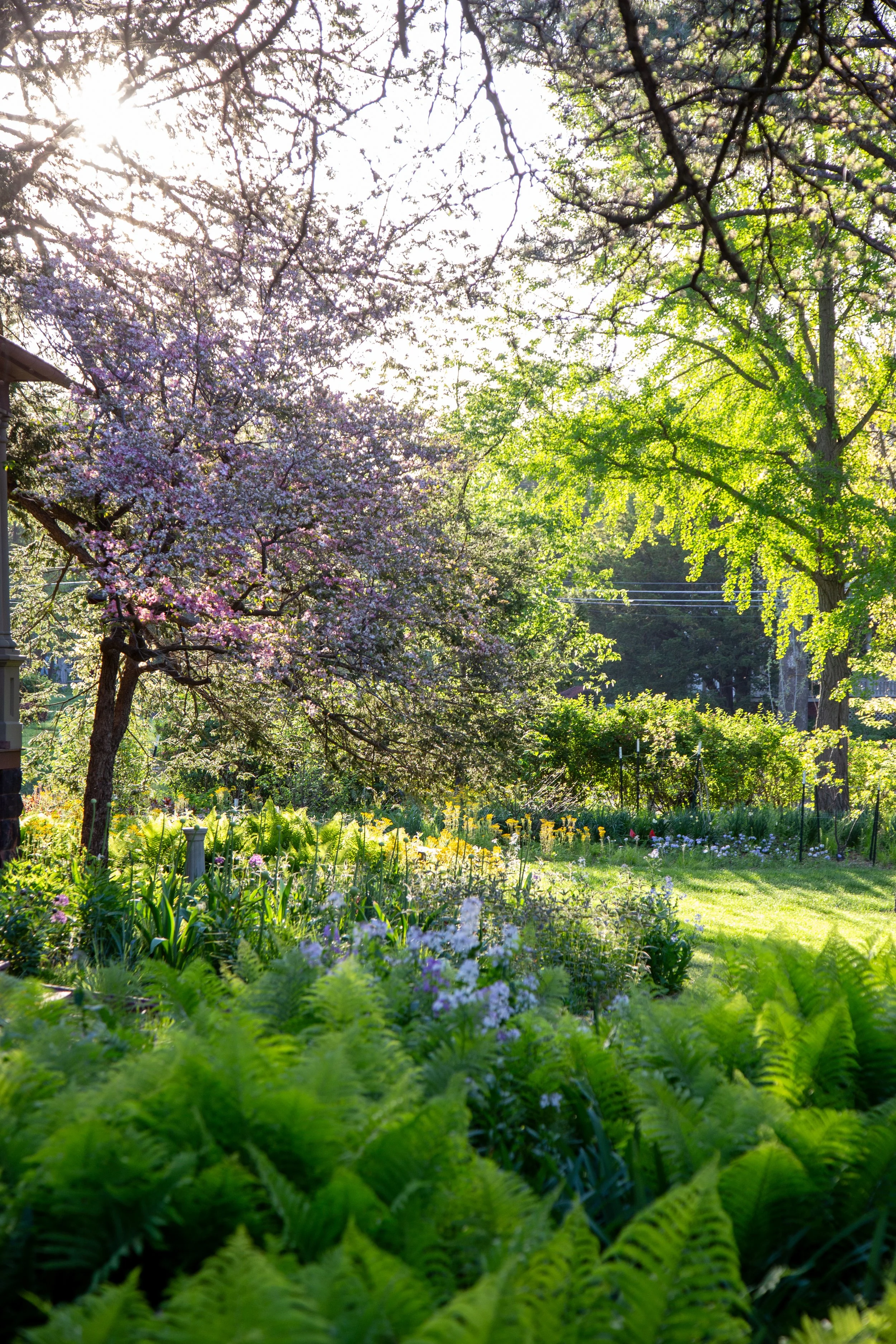
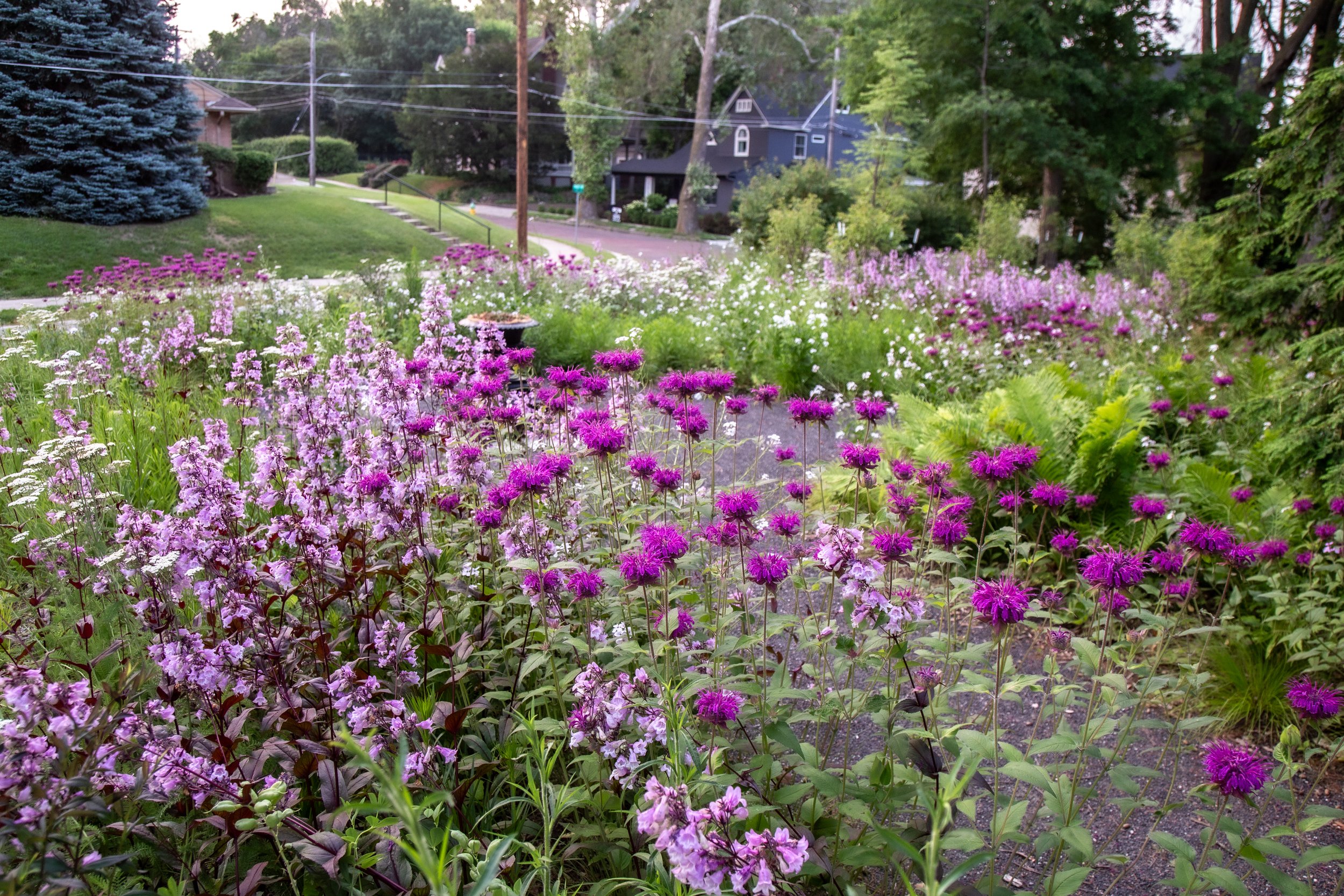
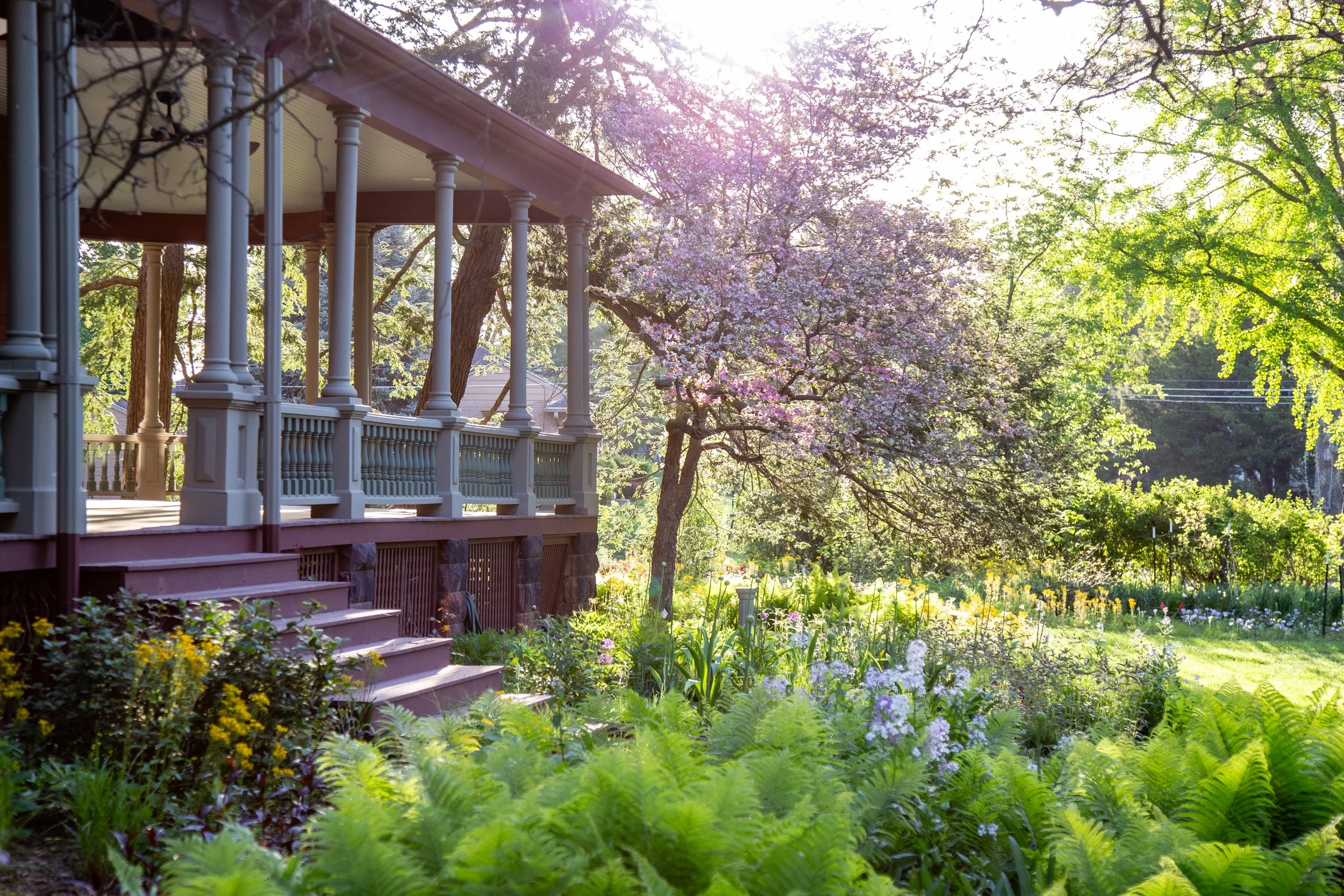
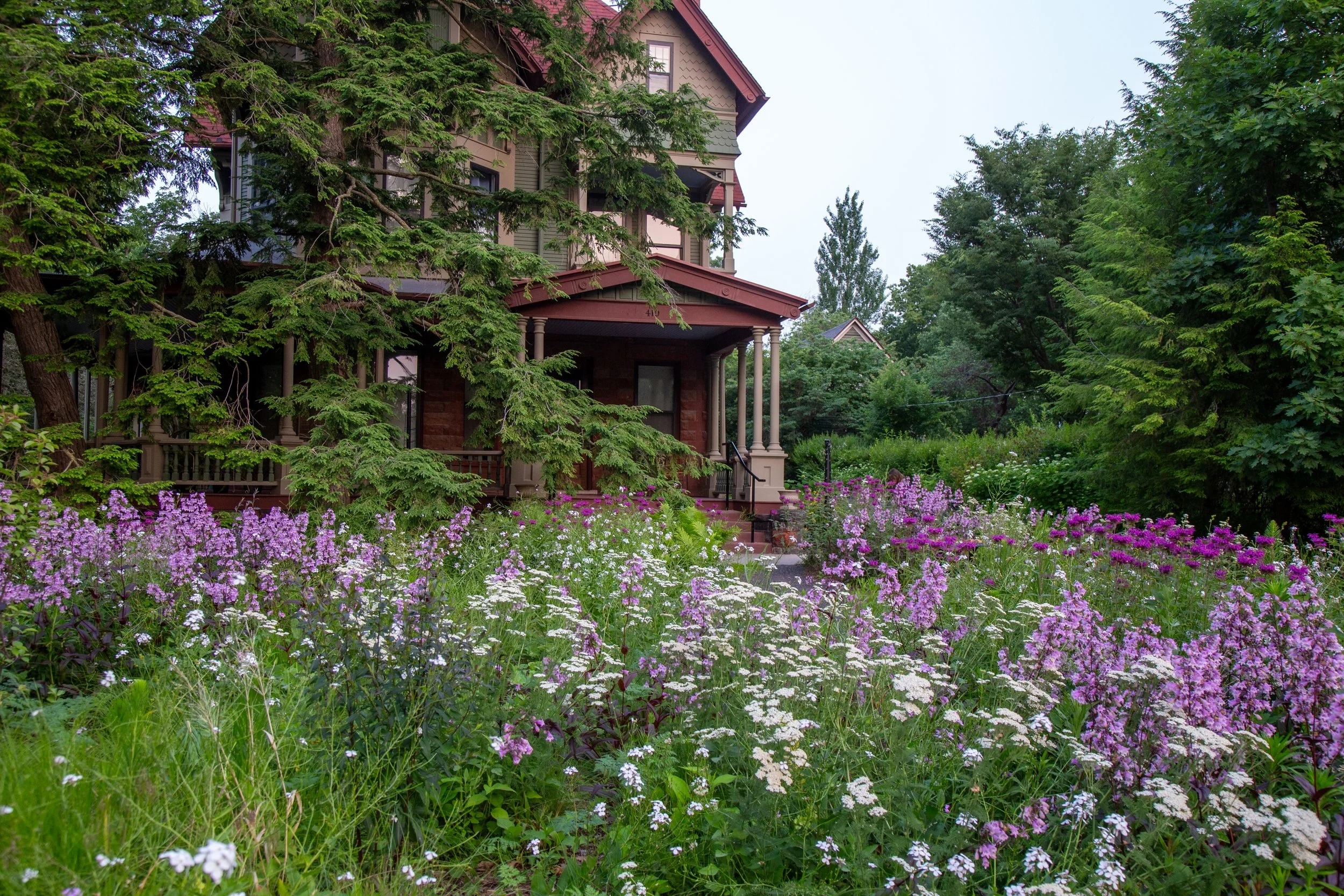
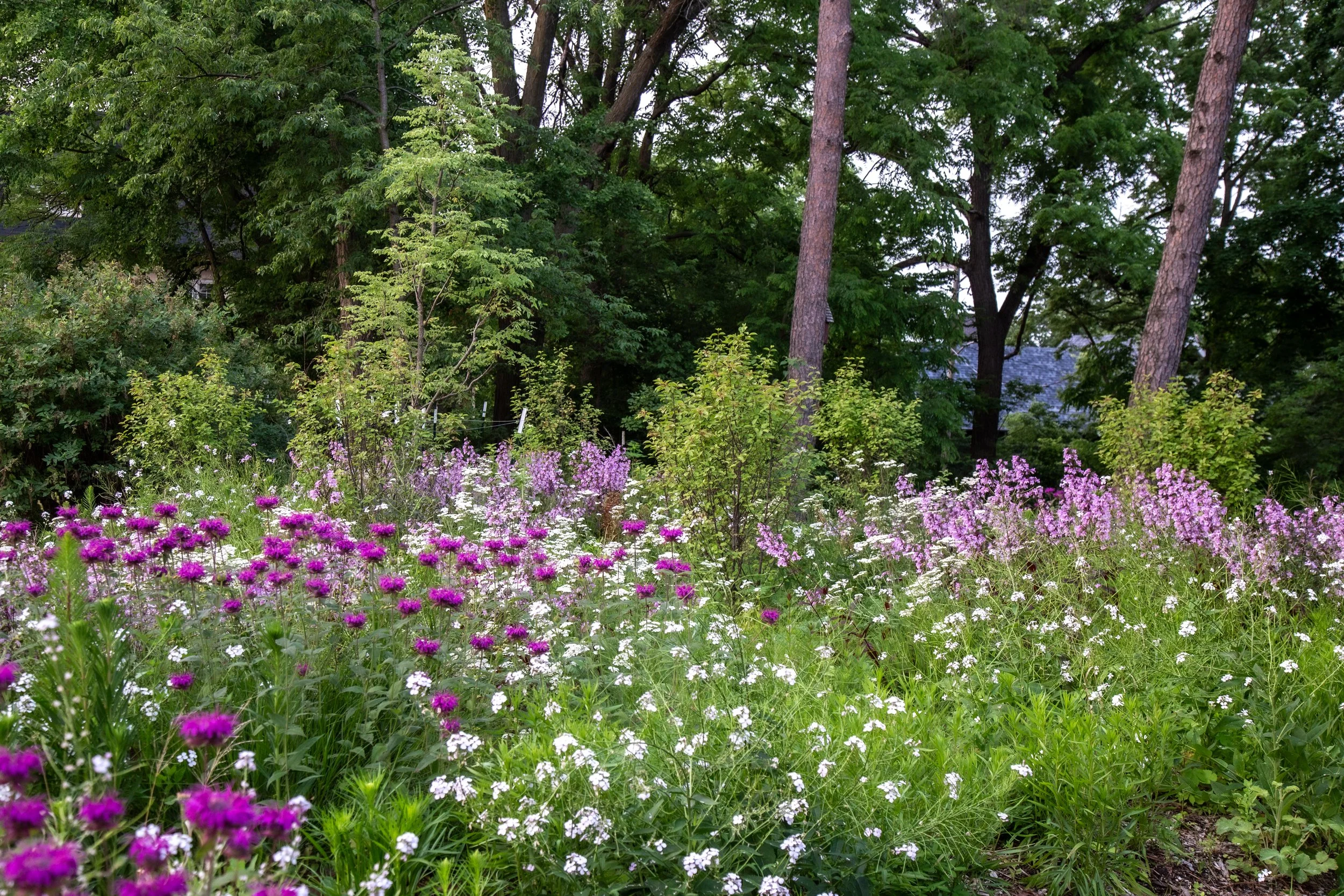
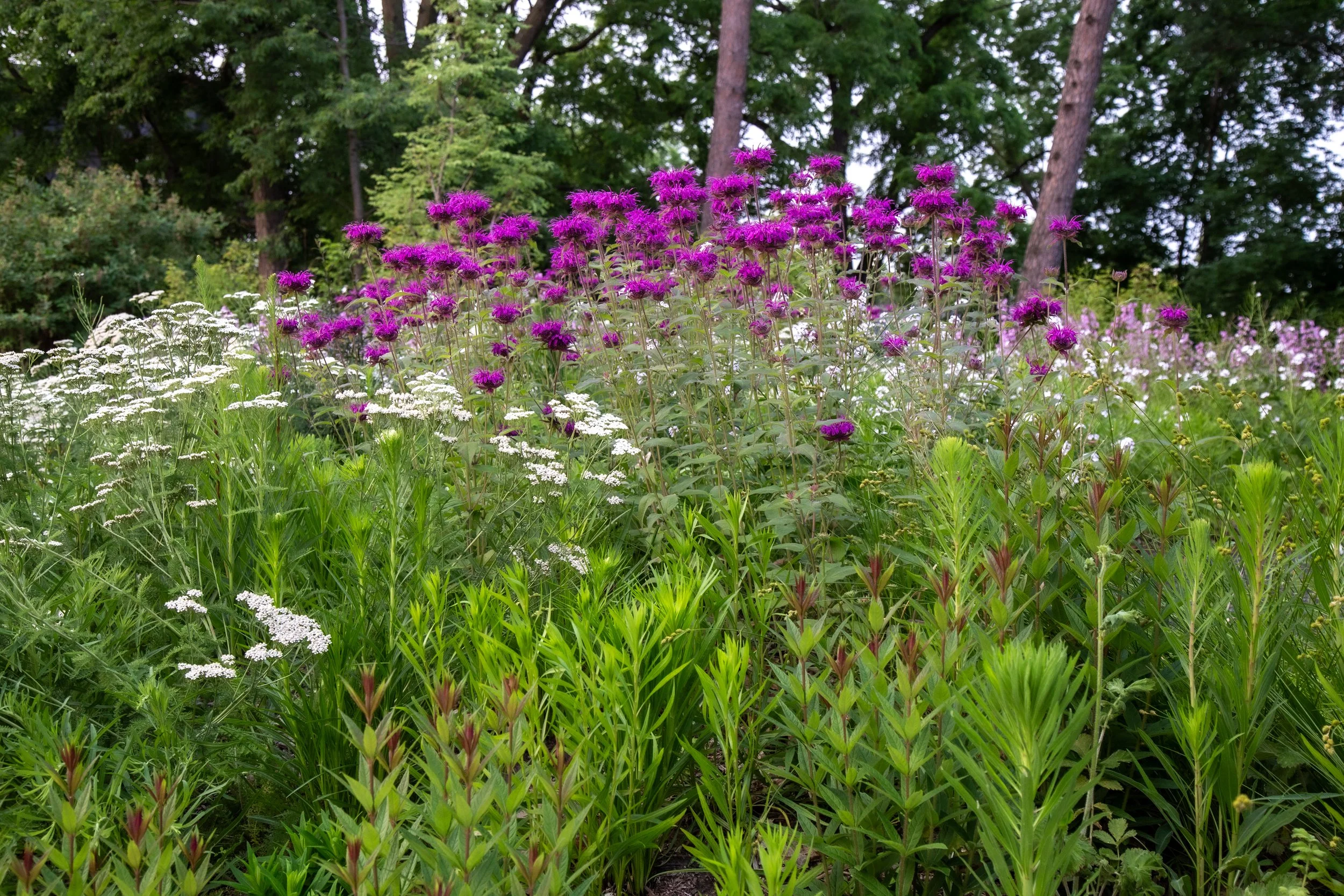
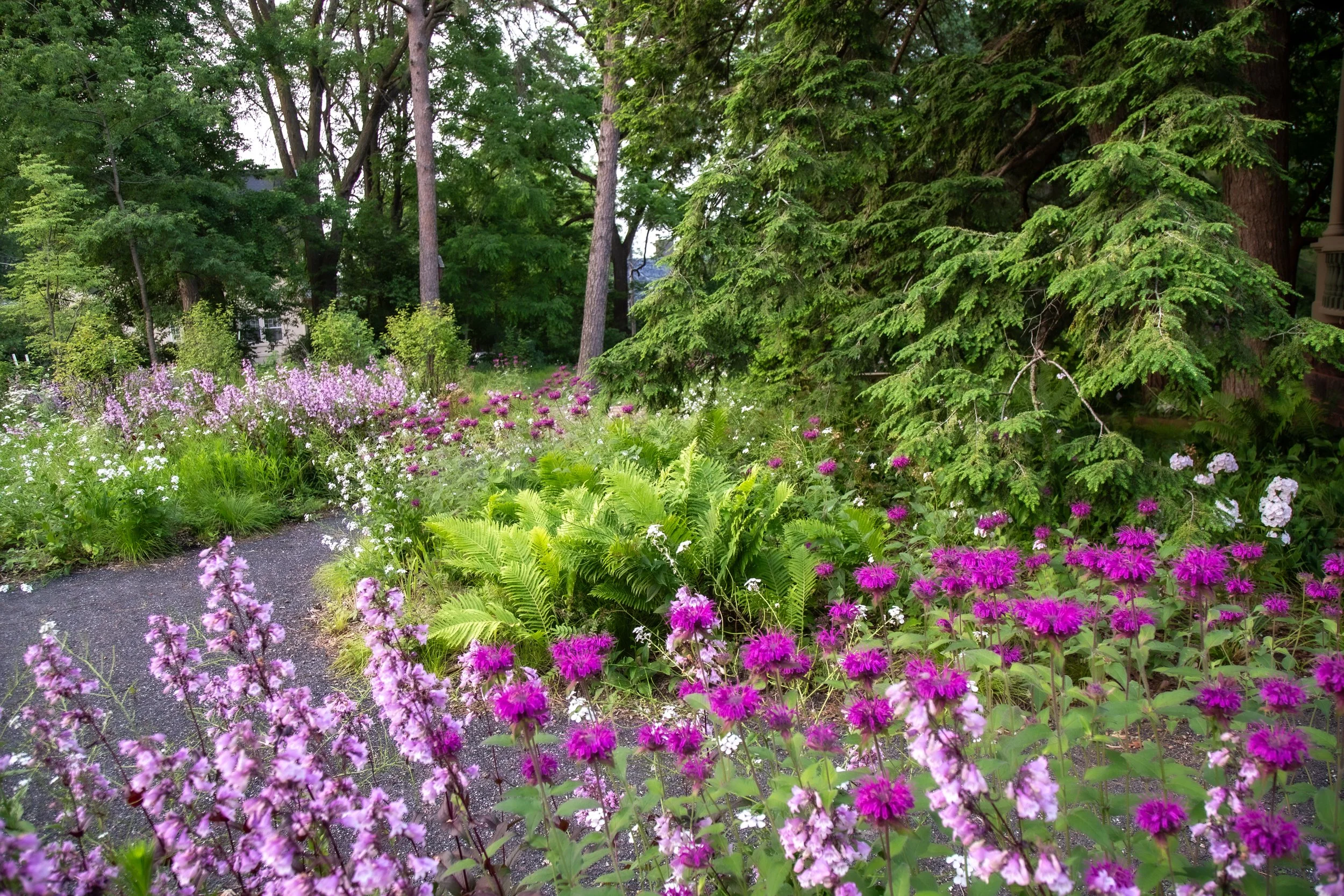
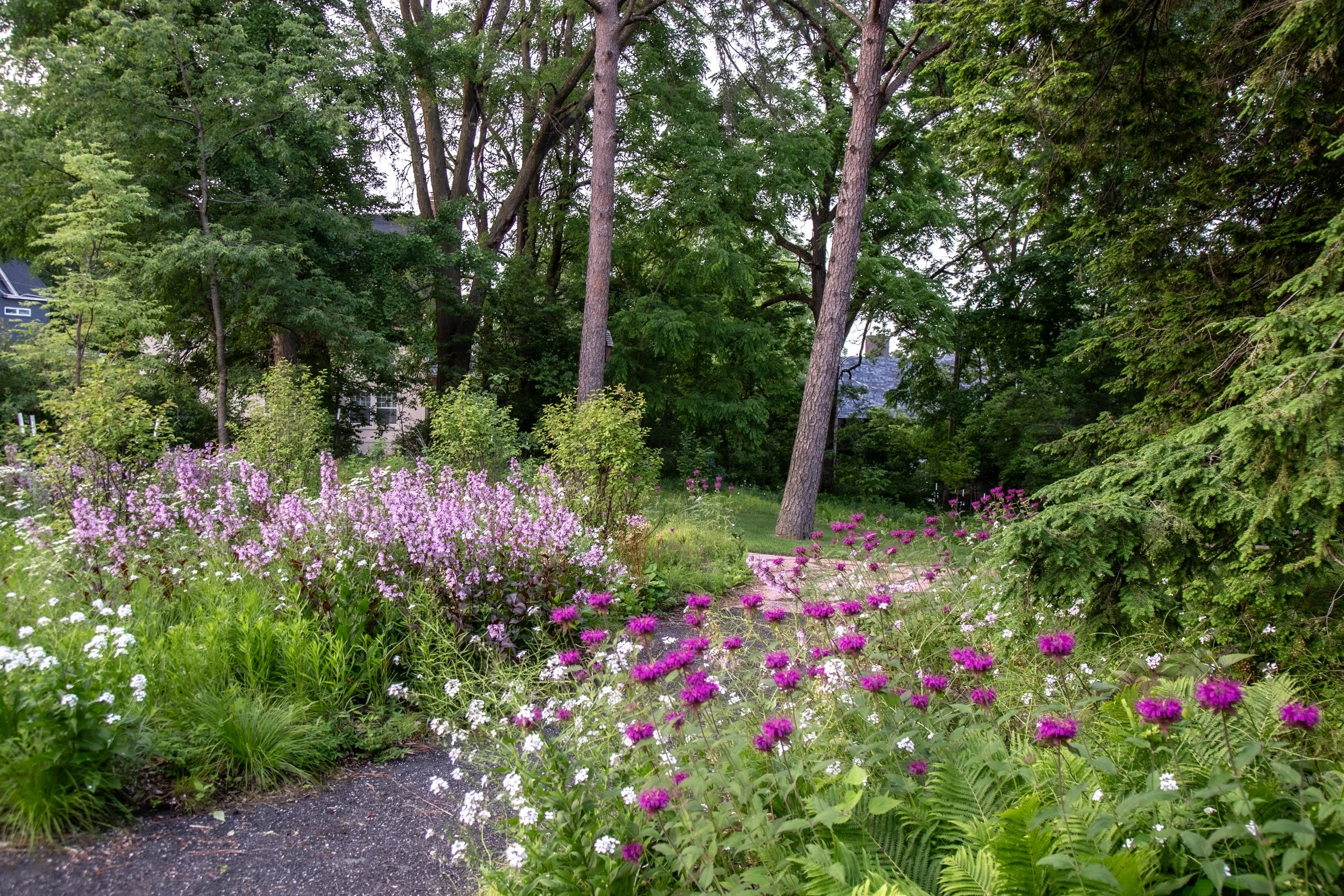
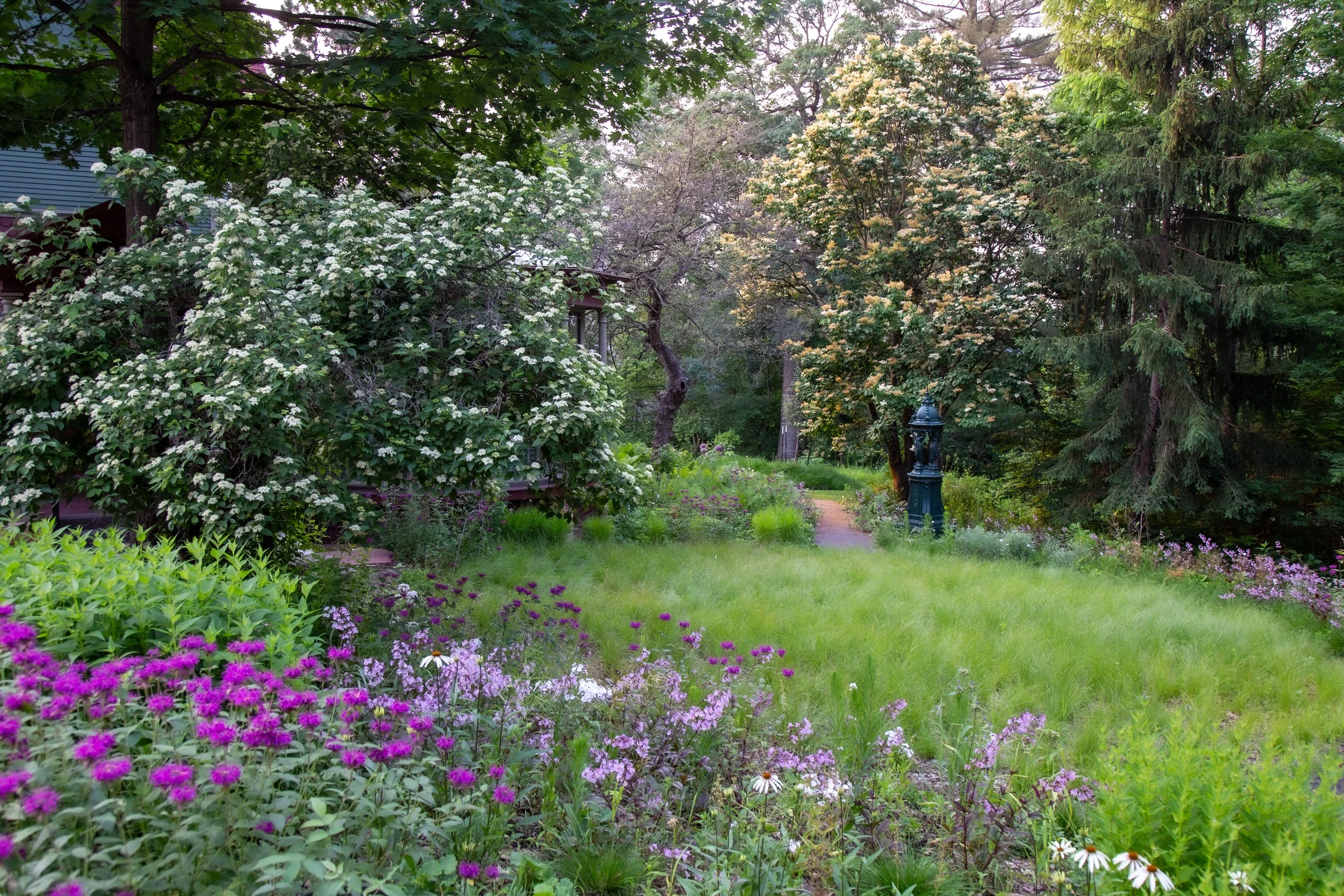
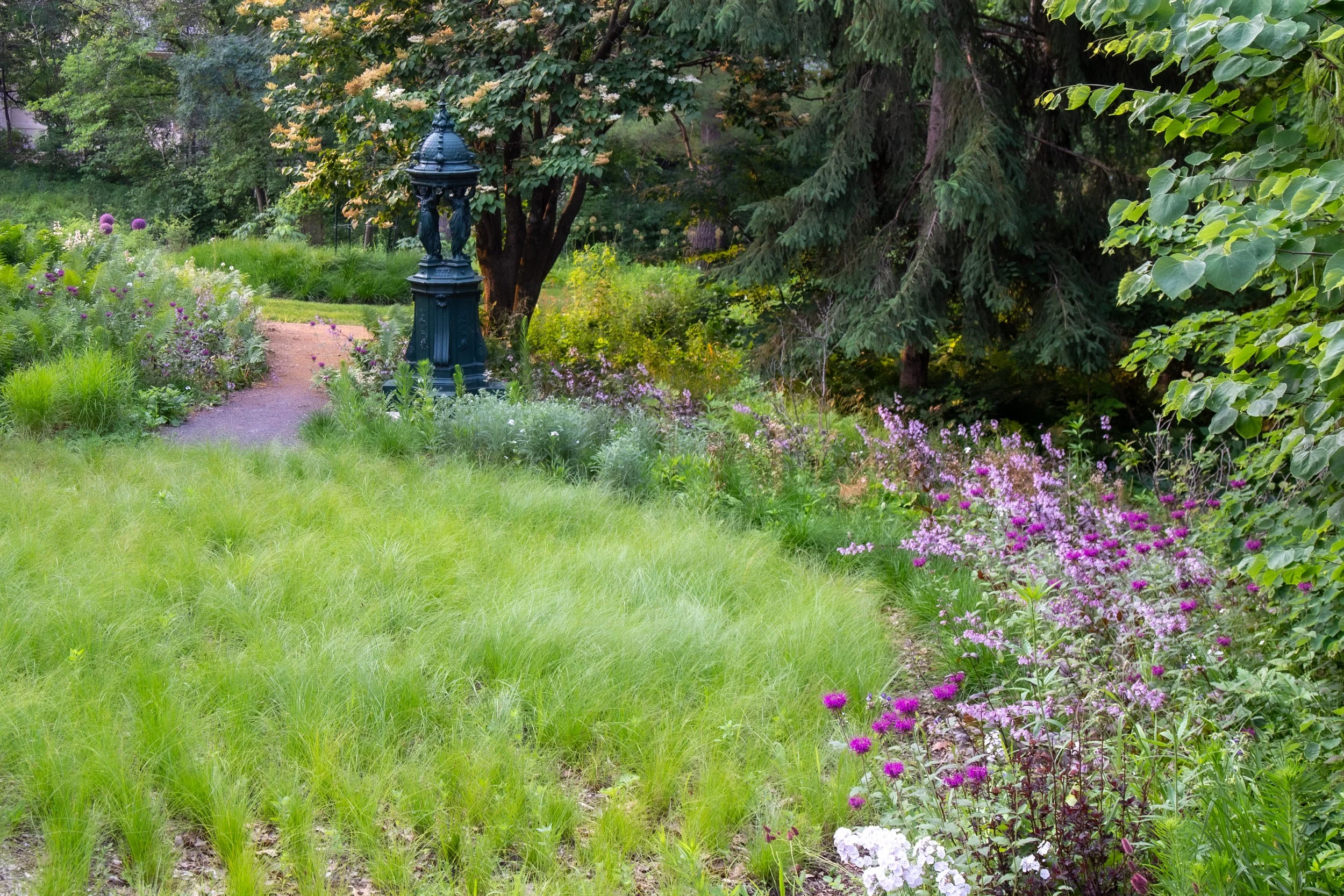
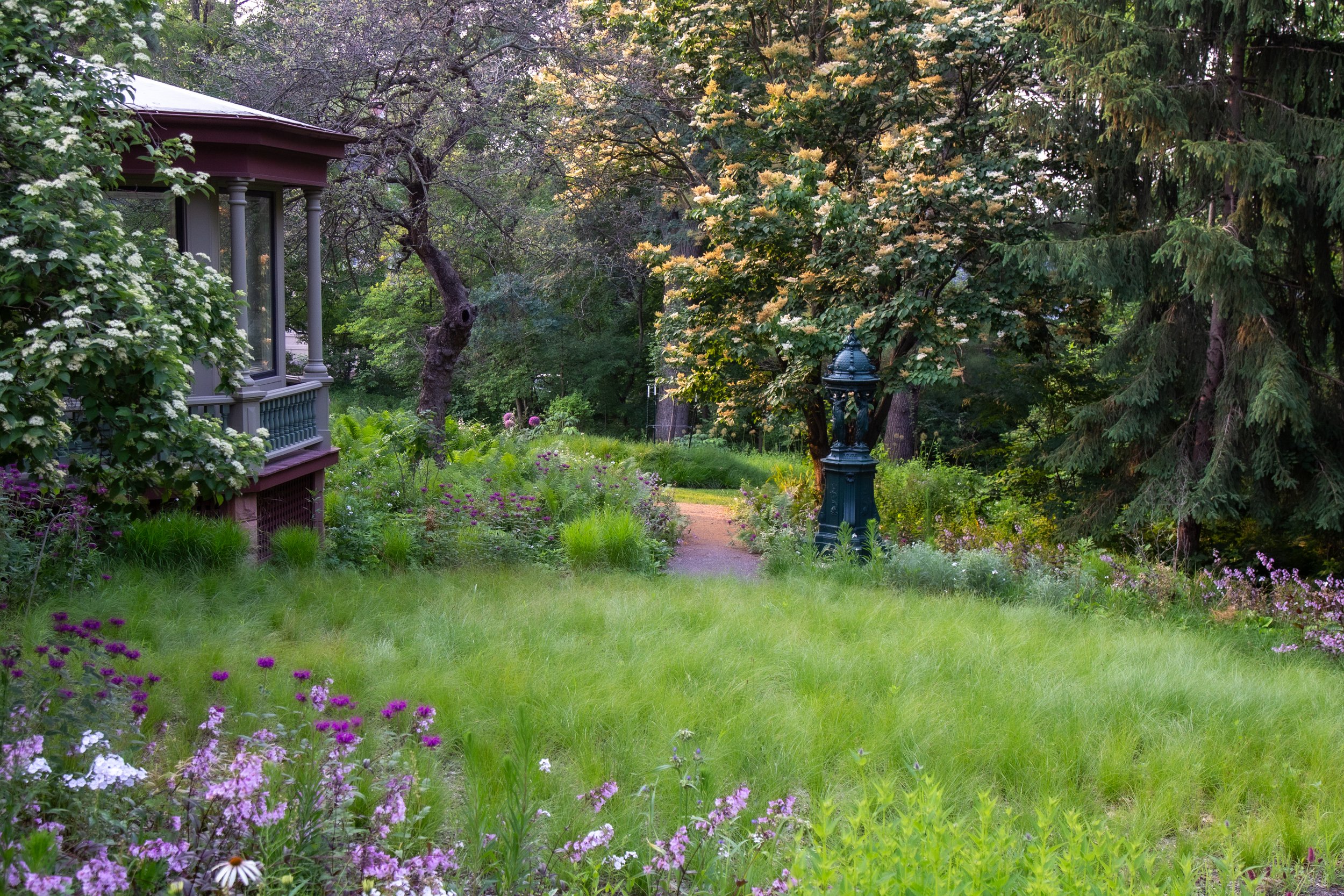
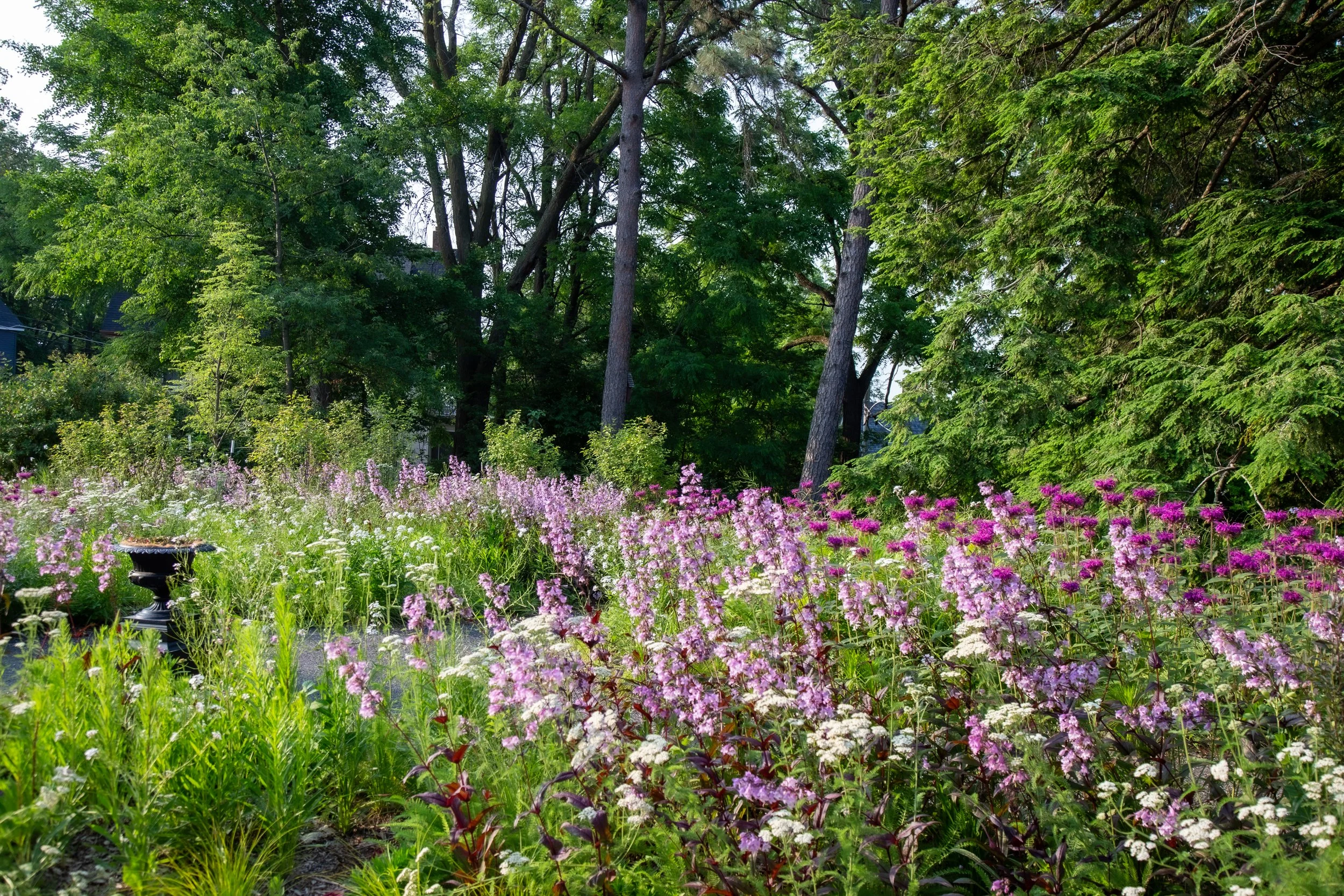
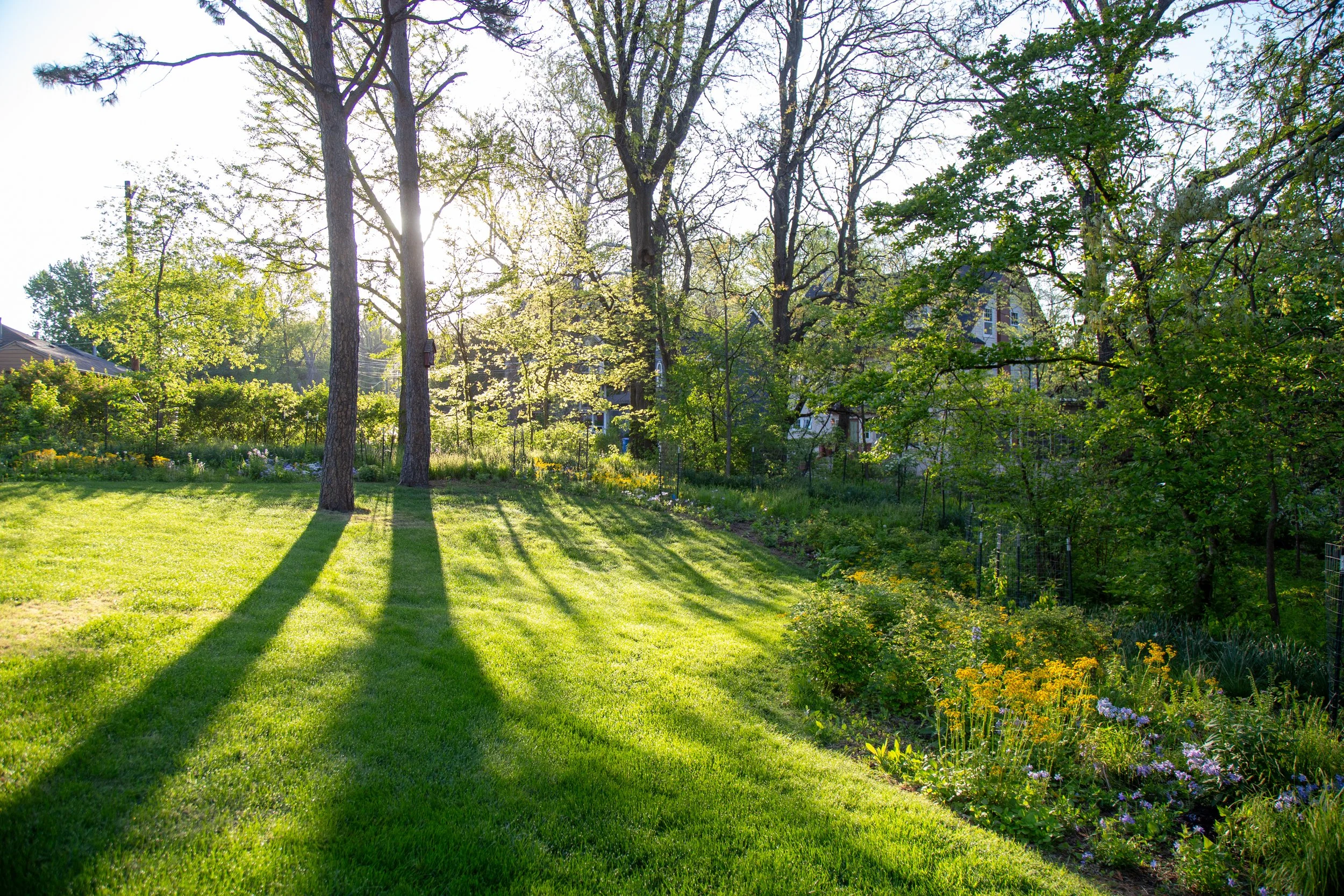
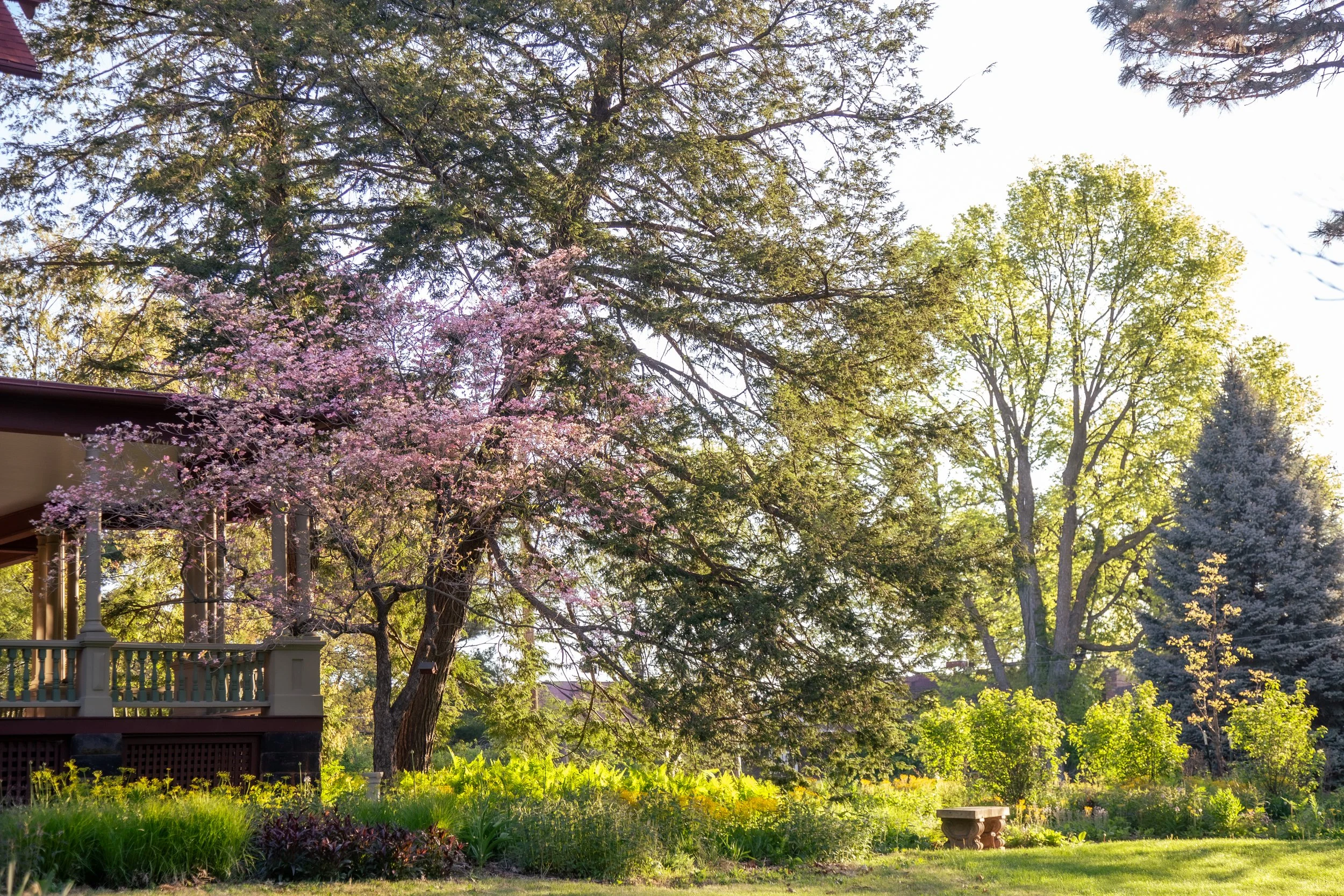
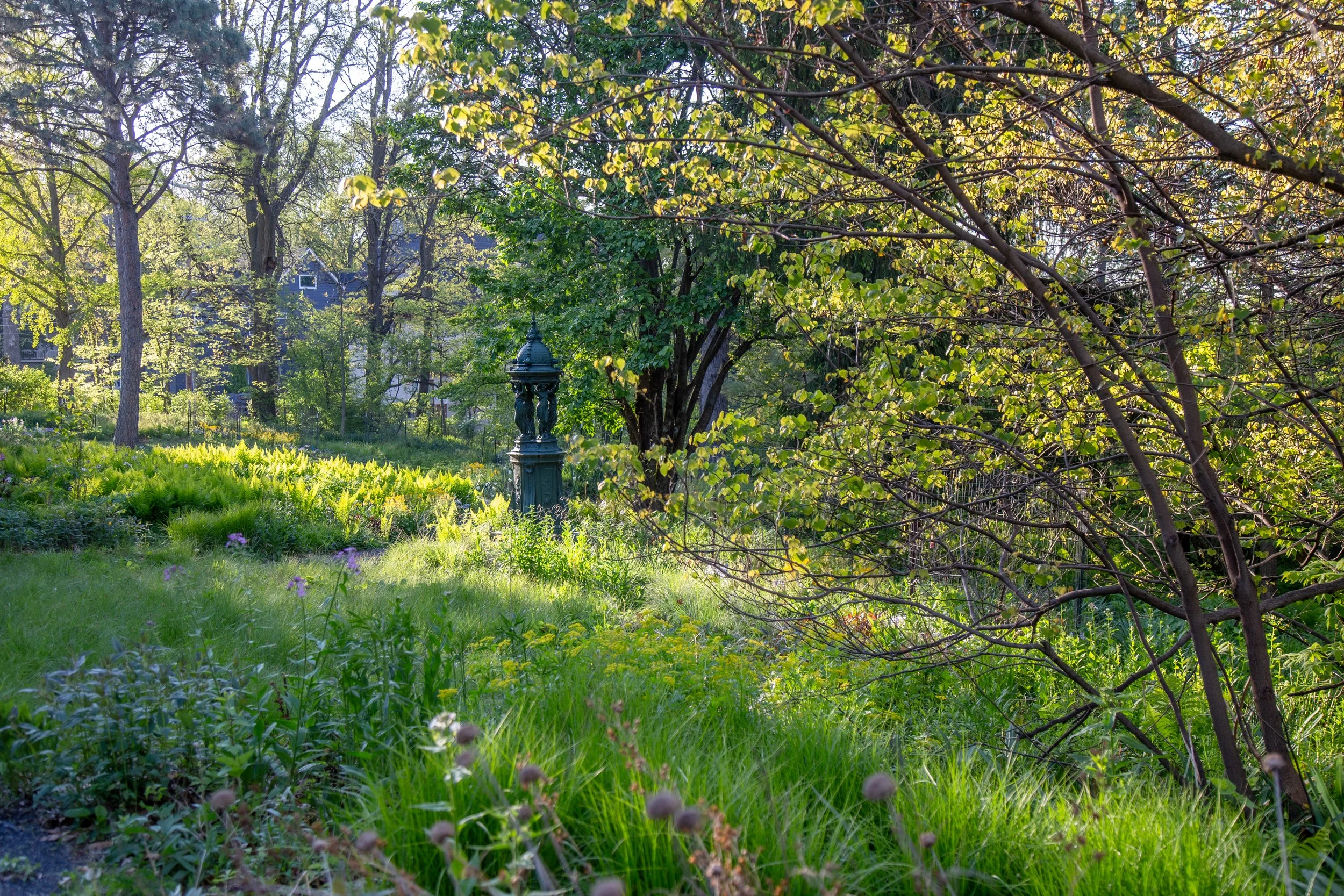
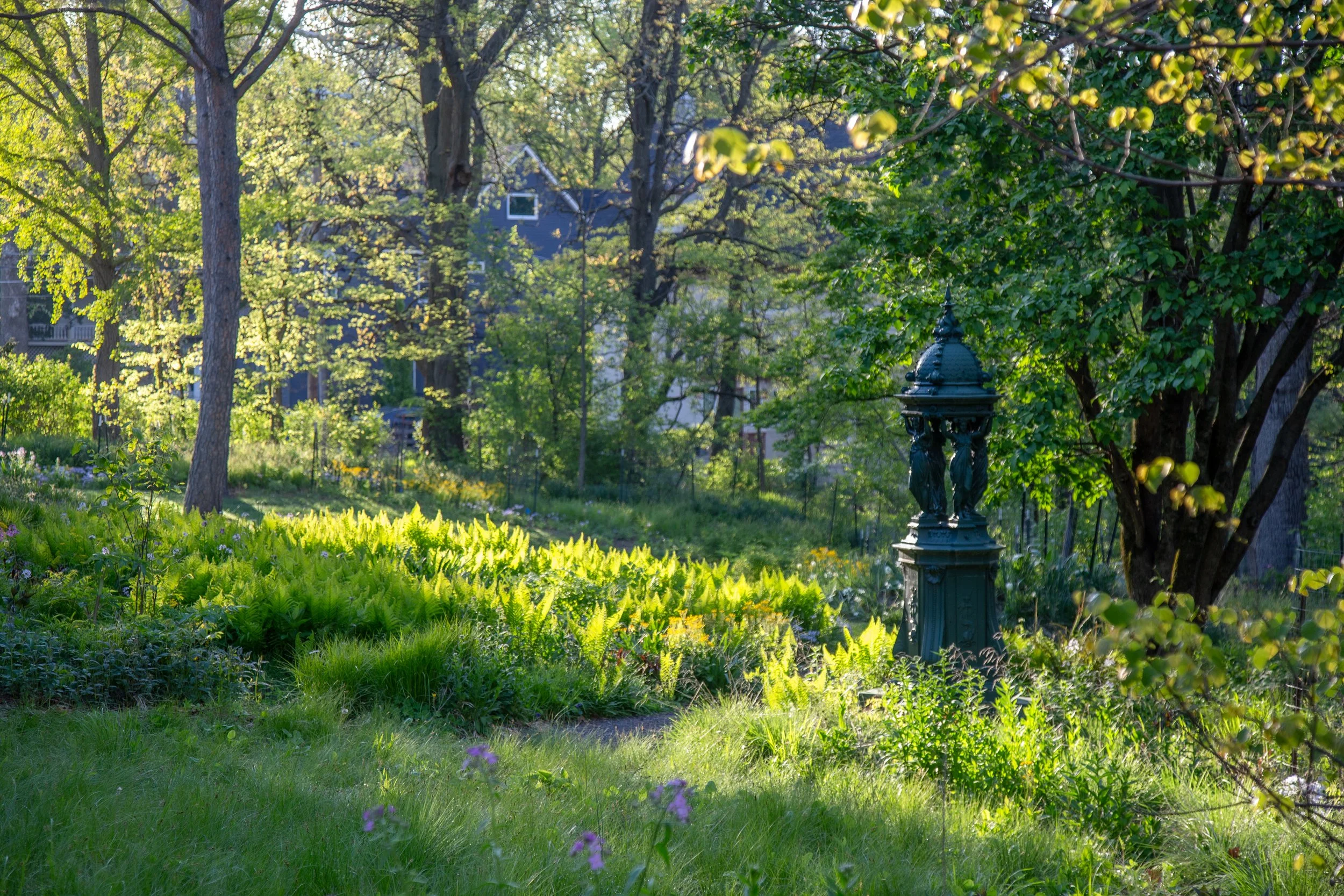
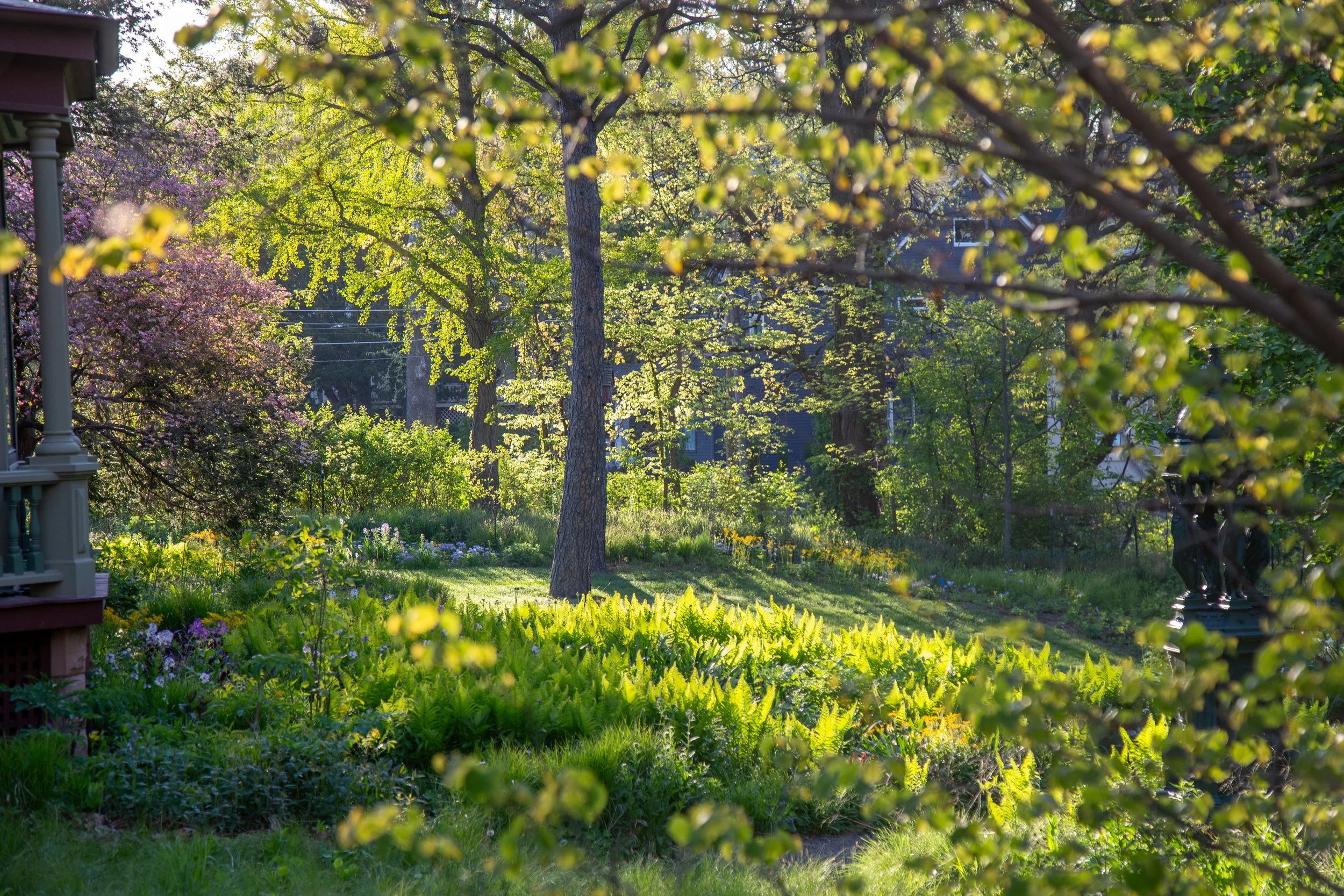
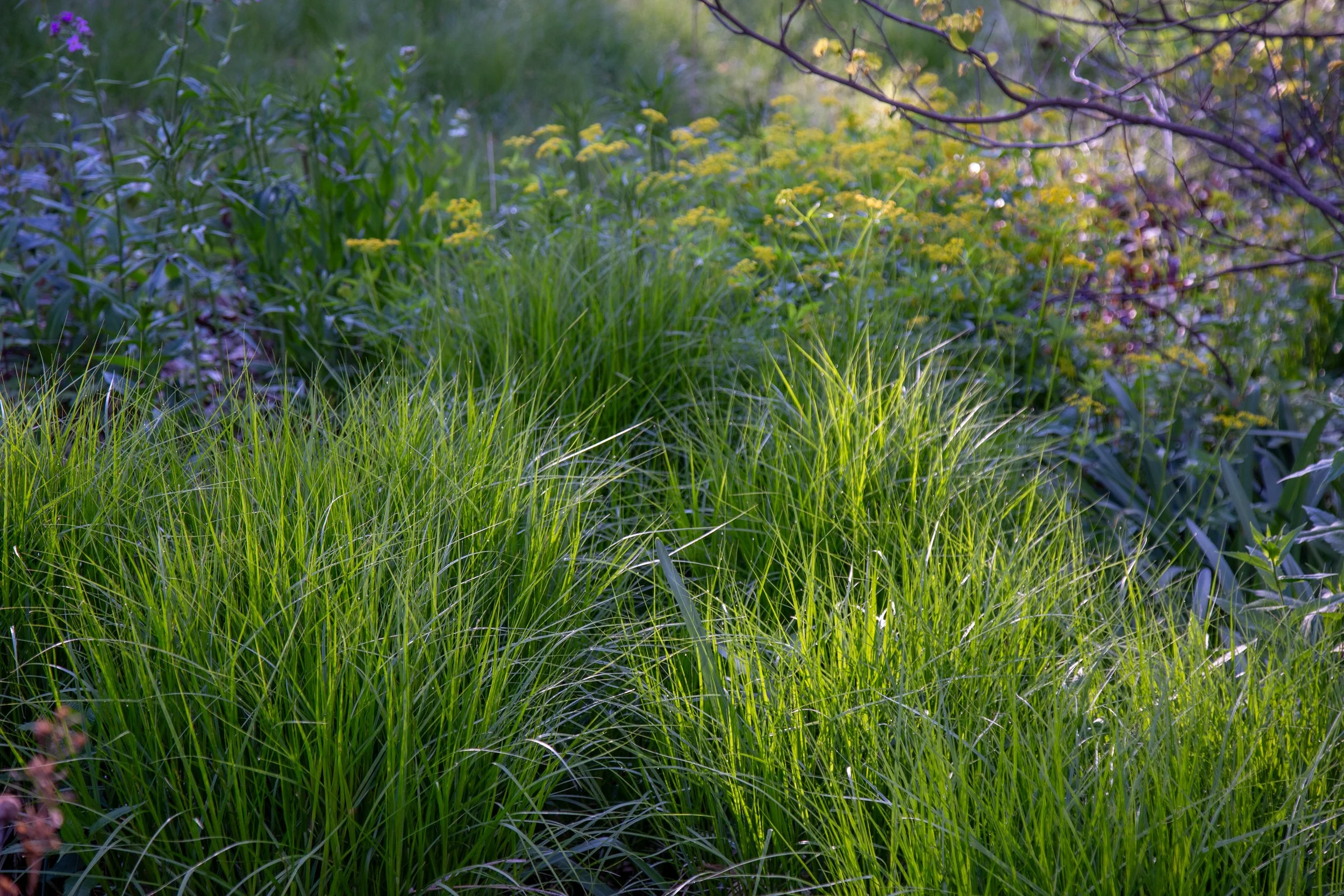
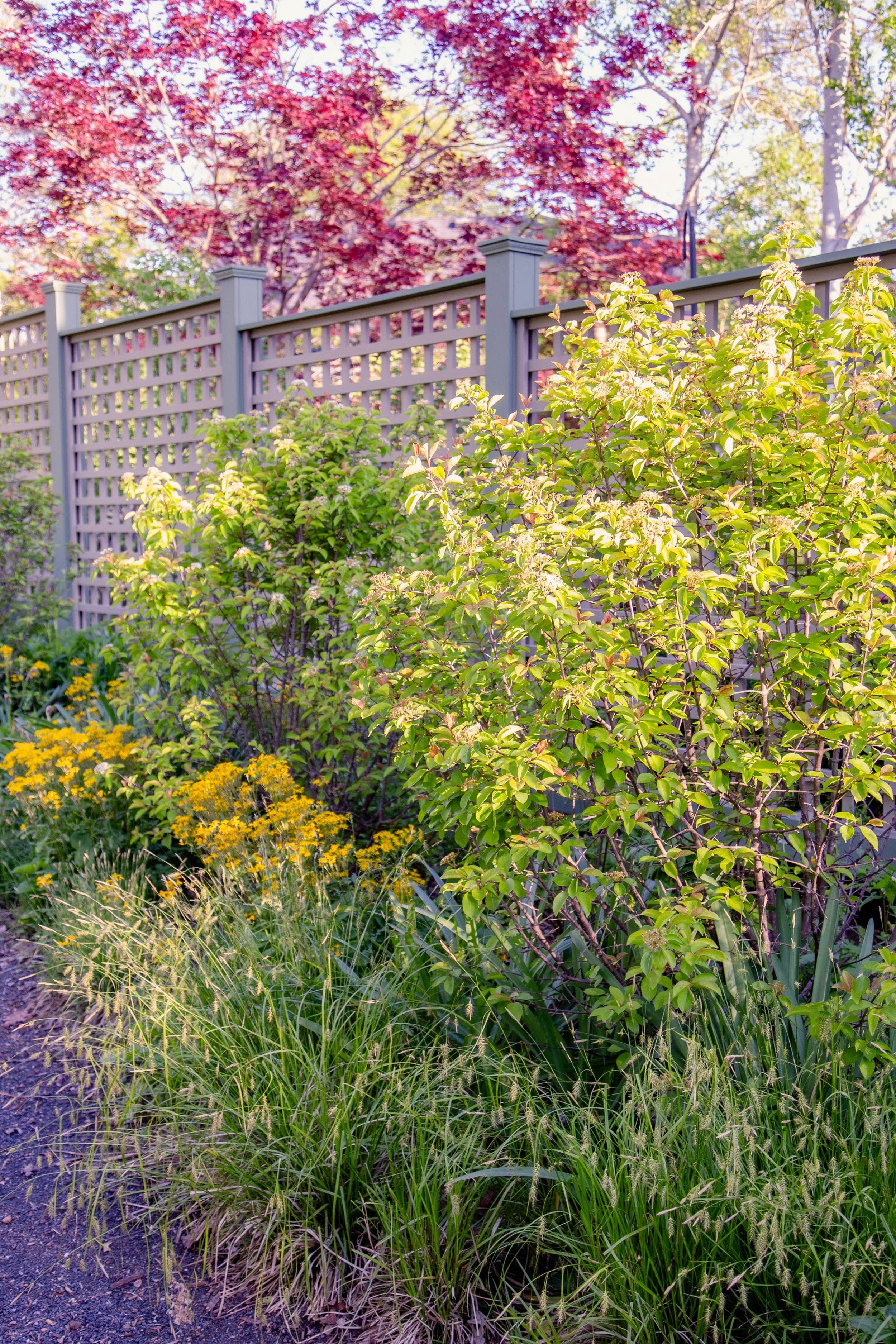
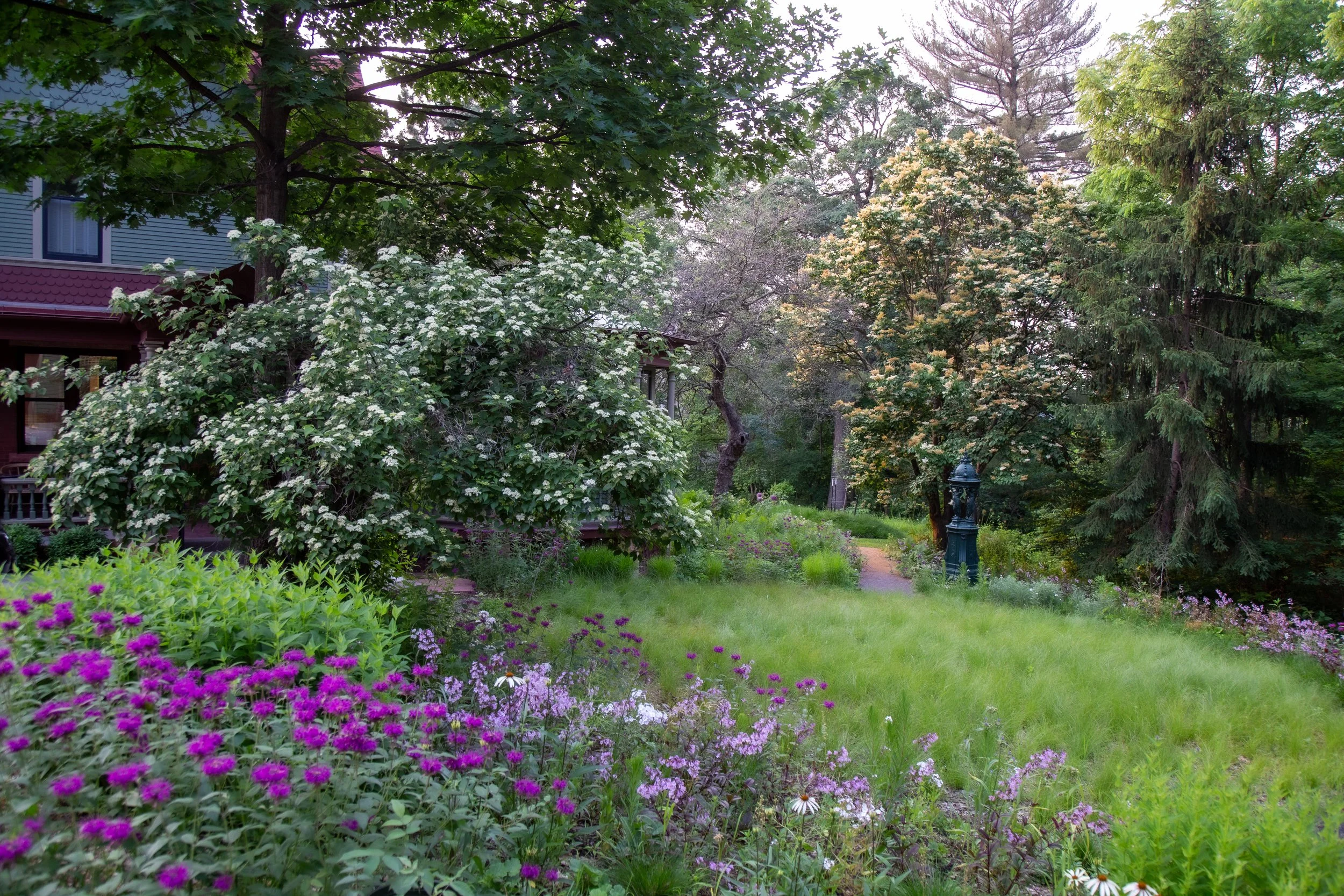
The Front Meadow and Wild Borders softened the transition from house to woodland, reducing lawn and expanding plantings within an architectural framework. This new exuberant ground plane grows alongside the patina of prior eras, sometimes planted and sometimes adopted, including Matteuccia struthiopteris (ostrich fern), Tsuga canadensis (Canadian hemlock), Cornus florida (flowering dogwood), Cornus racemosa (gray dogwood), Cercis canadensis (redbud), and a pair of Syringa reticulata (Japanese tree lilac). New understory hedge species, including Ptelea trifoliata (common hoptree), Ostrya virginiana (ironwood), and Aesculus parviflora (bottlebrush buckeye), reintroduce a middle canopy for the future while framing a bold, gestural herbaceous understory. A new sedge lawn echoes the proportions of a former lawn and flower border while also framing a scale replica of a Wallace fountain.
Even in the first growing season, it was already difficult to tell where renovation ended and horticultural inheritance began. The result is a garden of productive tension: Victorian in its spirit of discovery and collection, wild in its deference to woodland succession, and contemporary in its embrace of stewardship as design. It honors the horticulture that came before while looking ahead to the next century of life in the landscape.
Landscape architecture and planting design: Kelly D. Norris, LLC
Landscape Contractor: Country Landscapes, LLC
General Contractor : Crose and Lemke Construction