LifeServe Stormwater Basins
Johnston, Iowa — Installed 2025
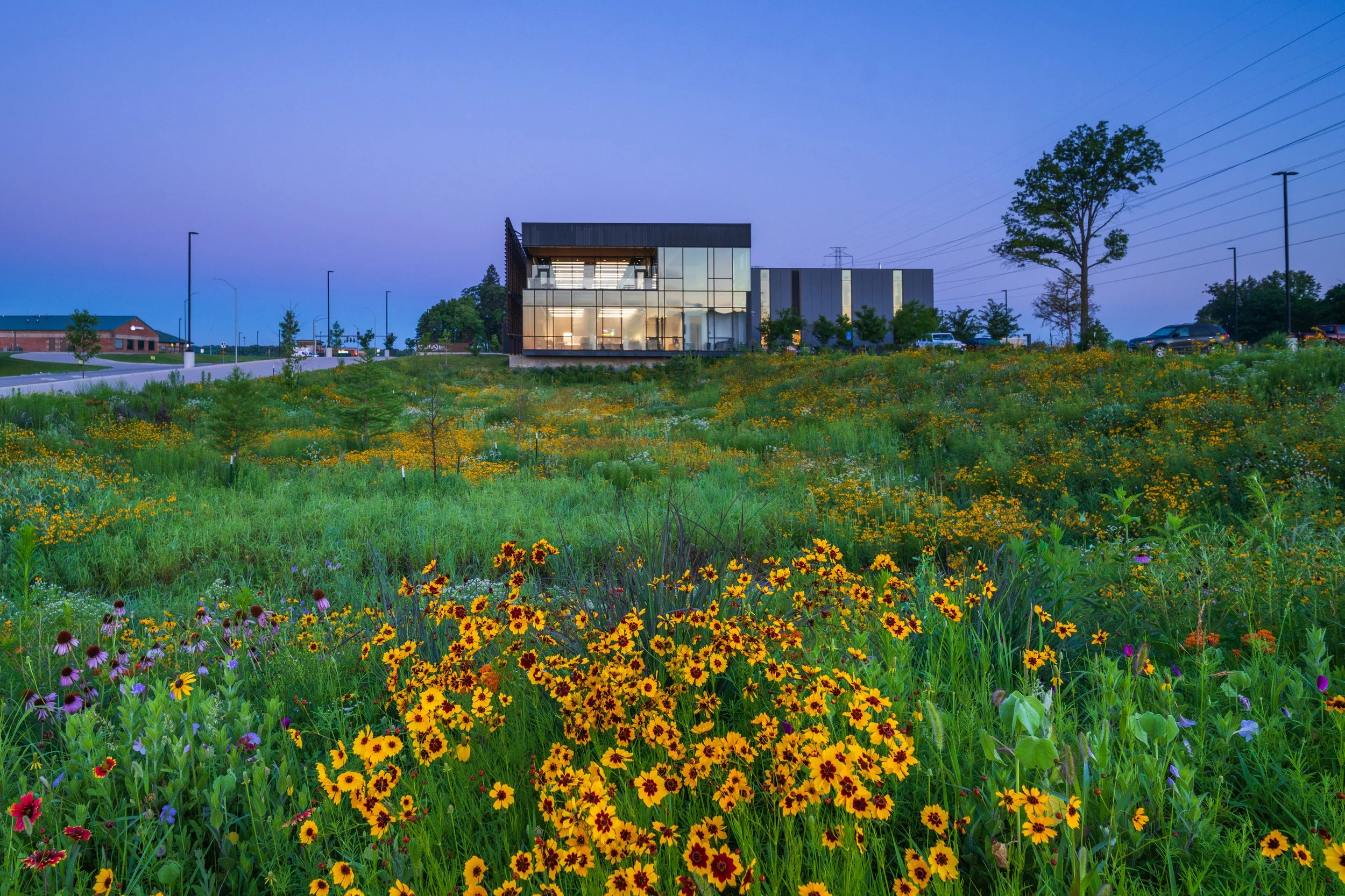
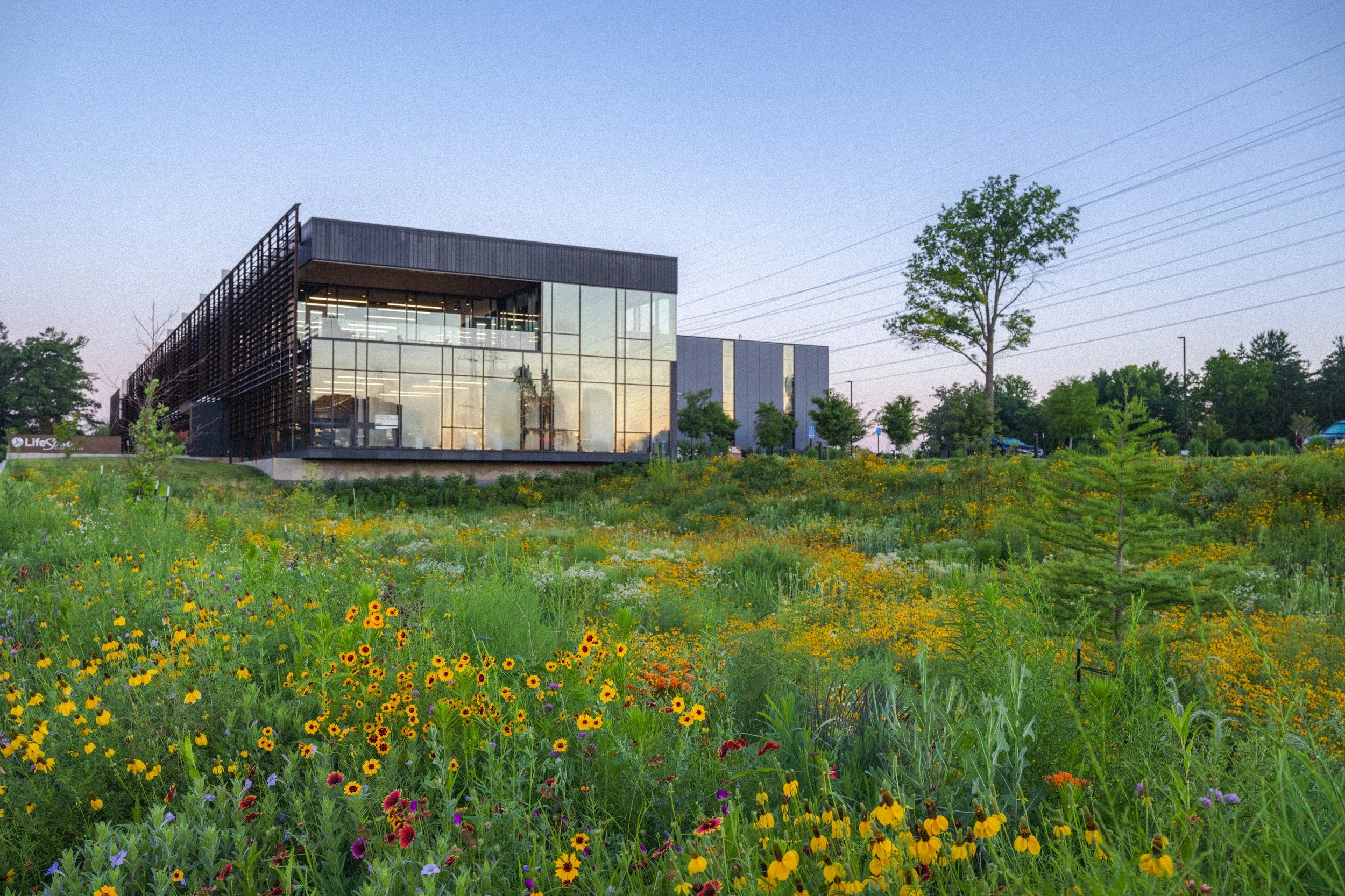
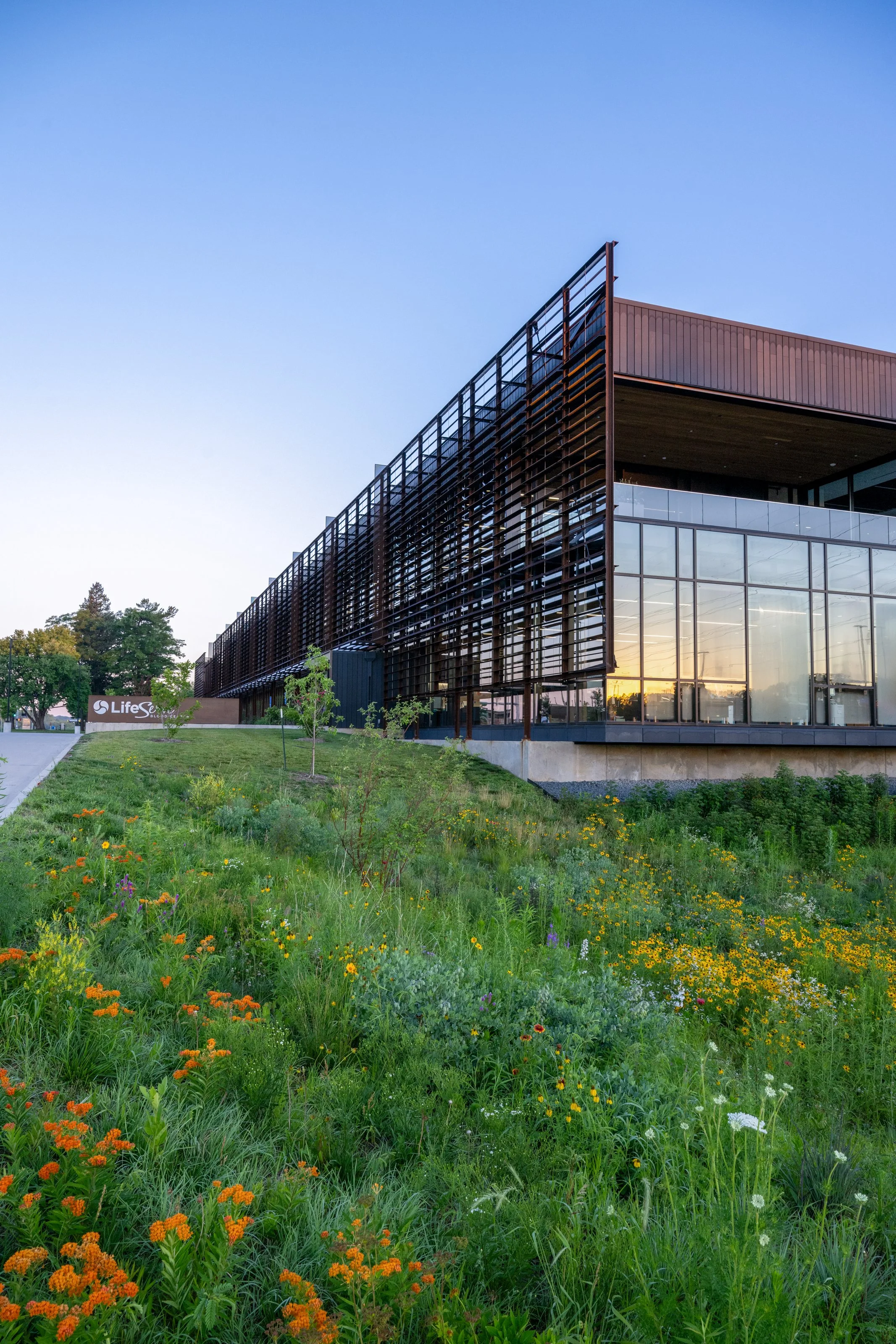
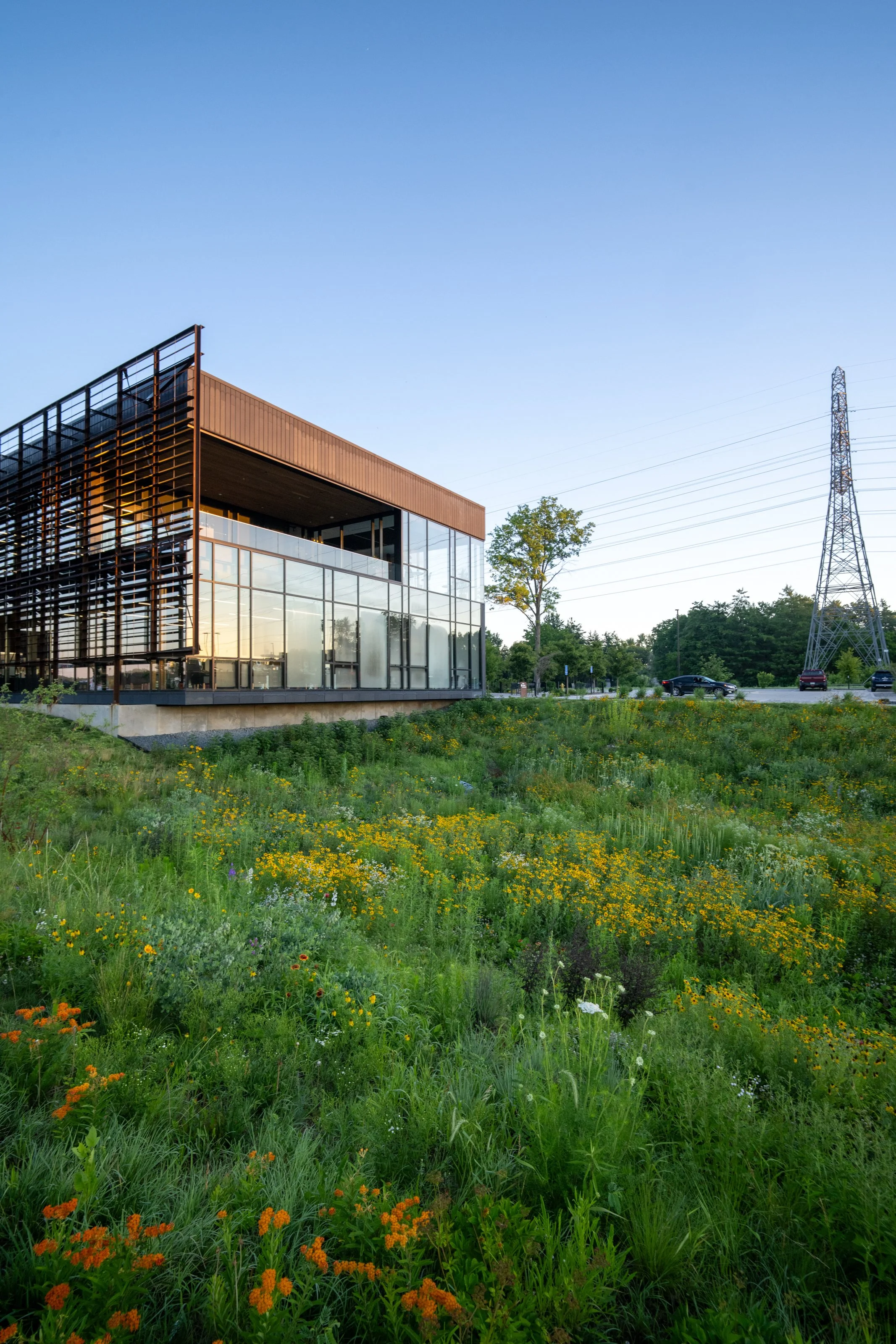
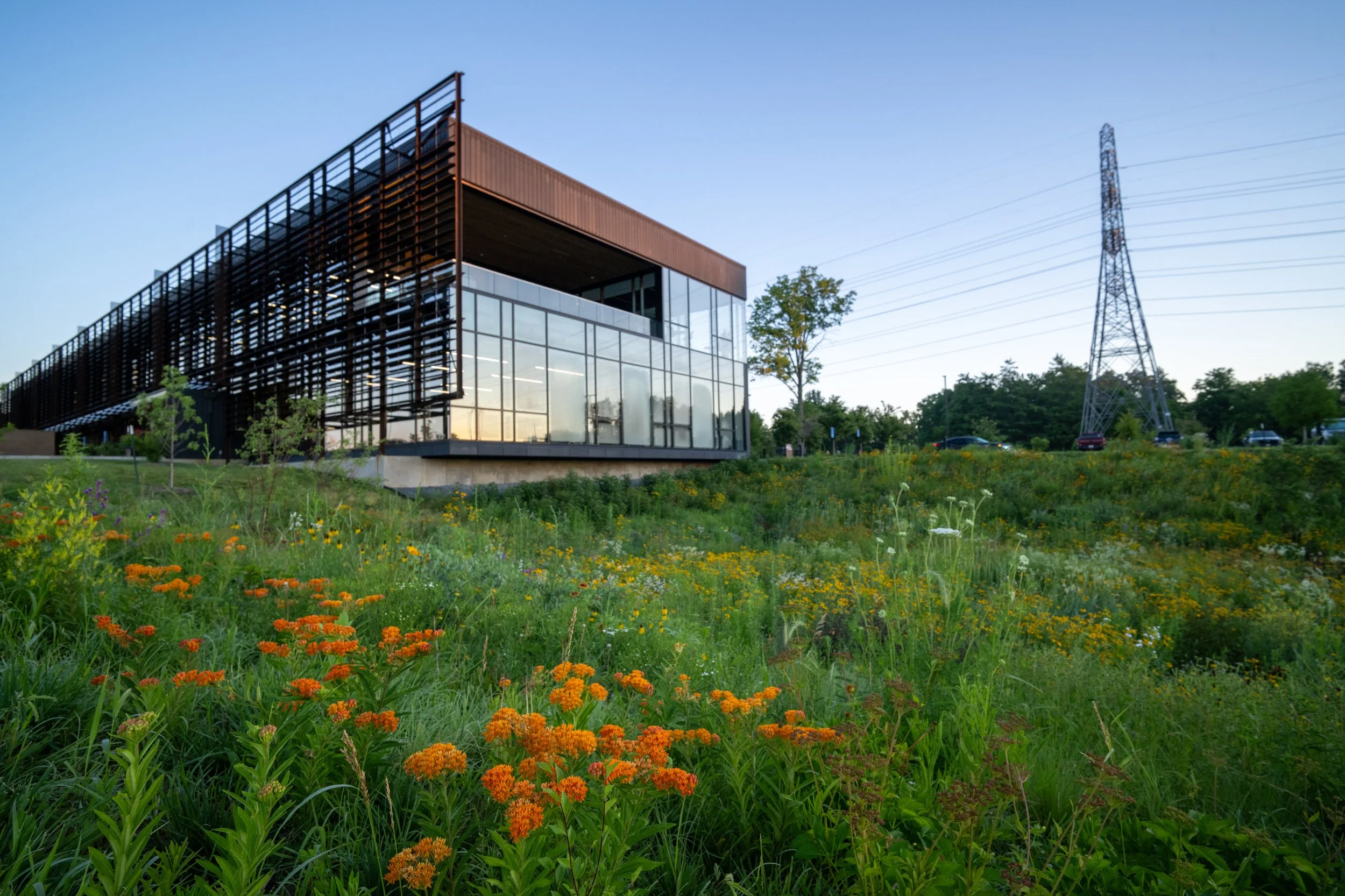
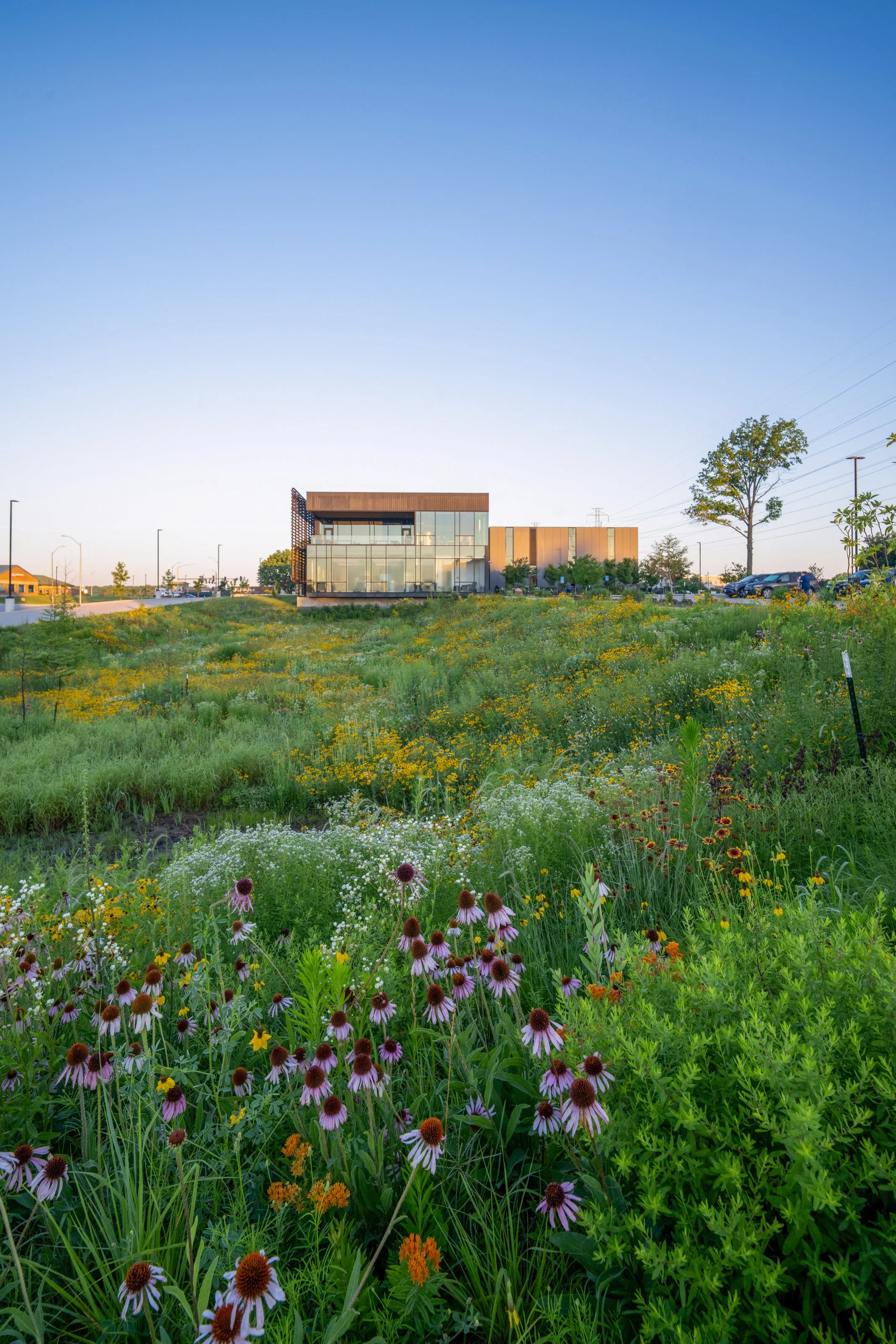
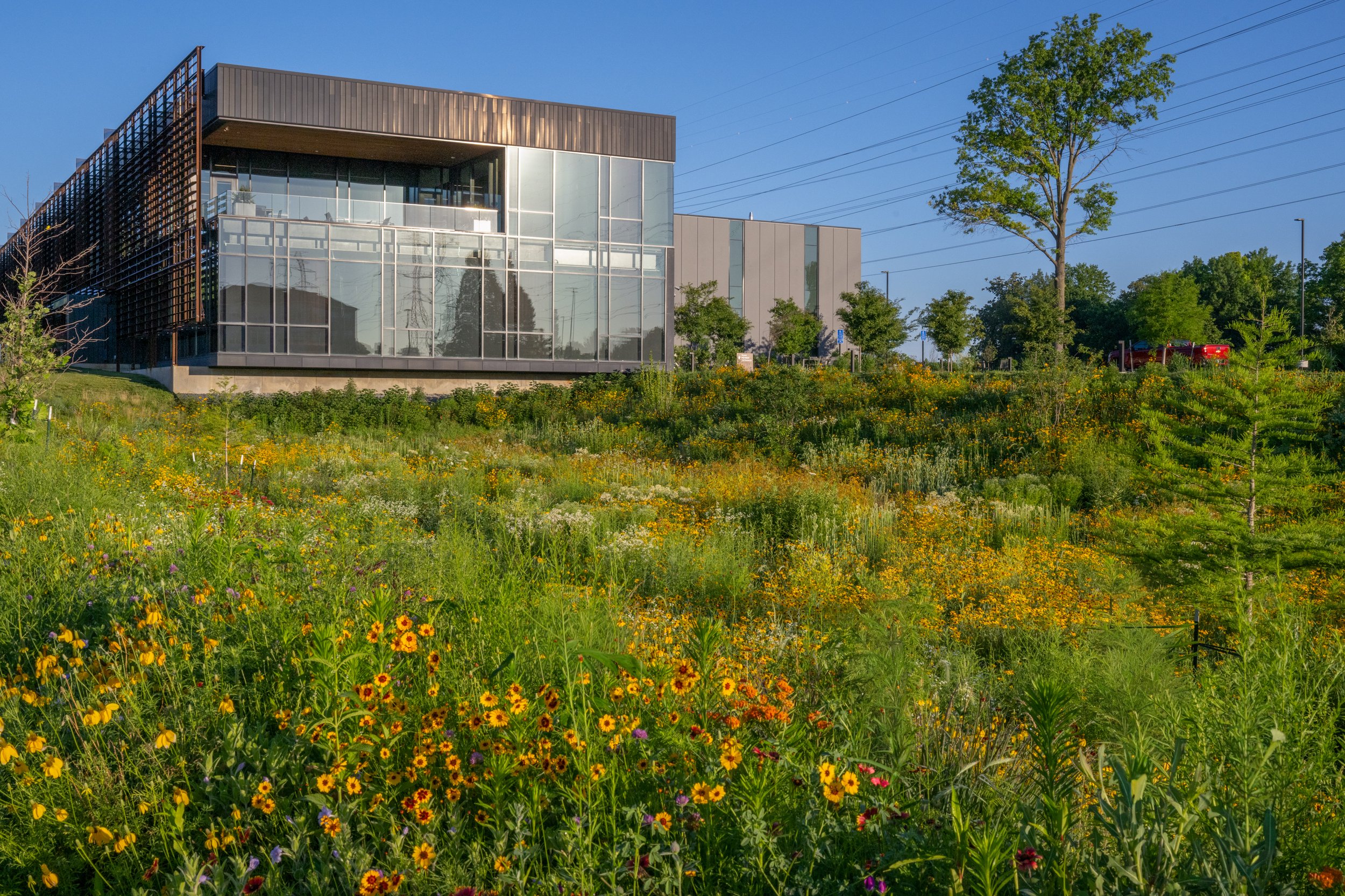
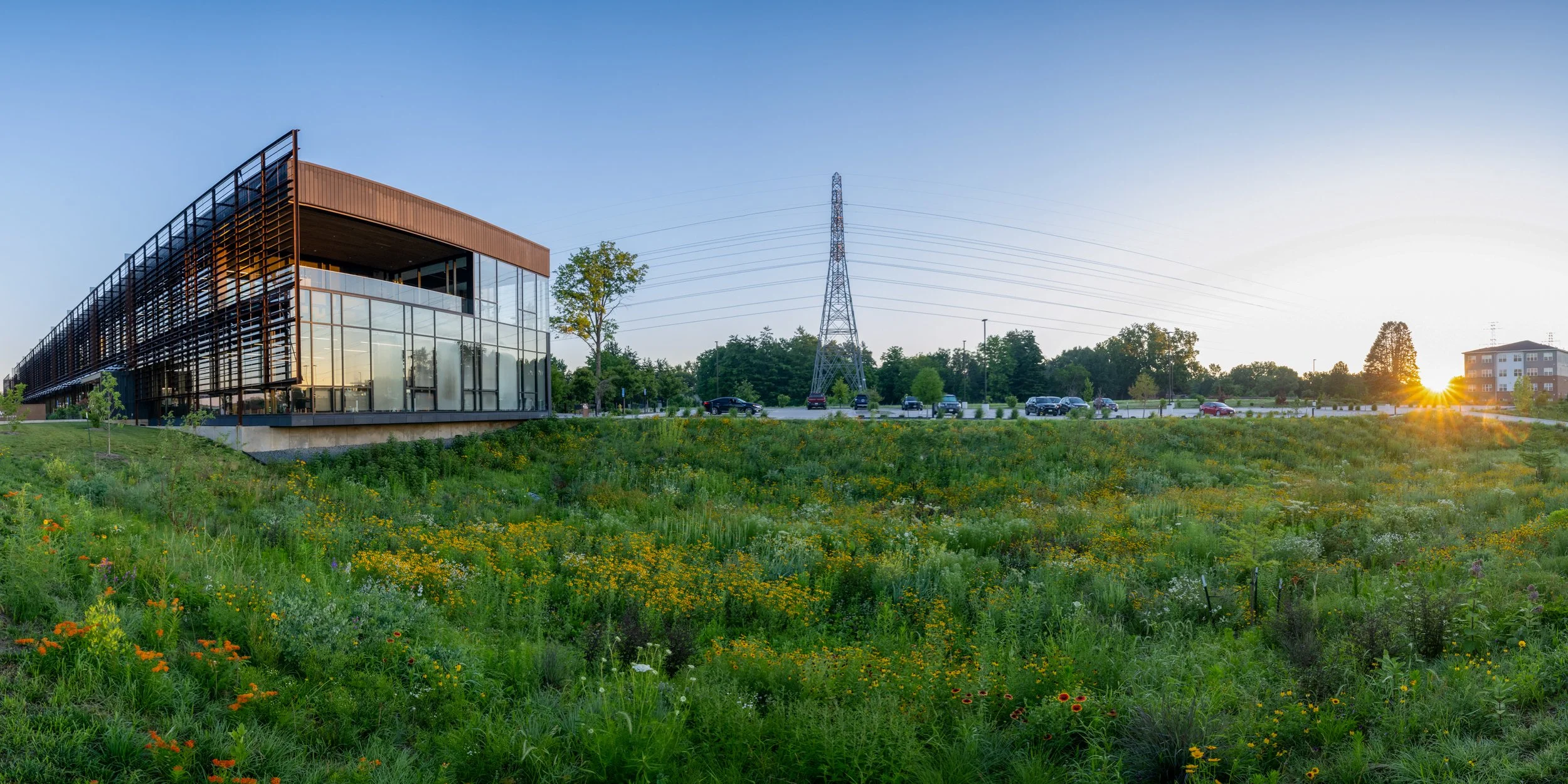
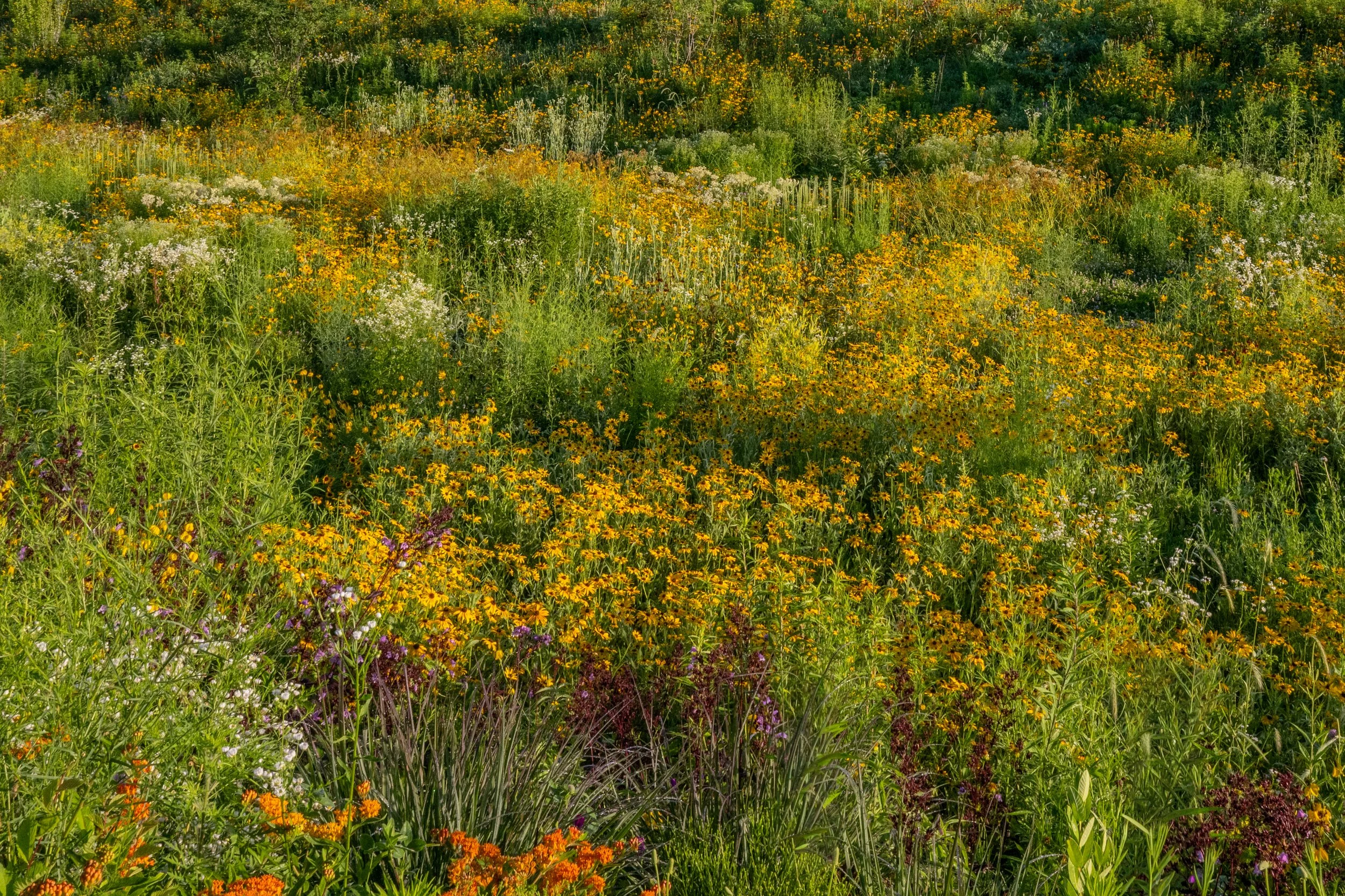
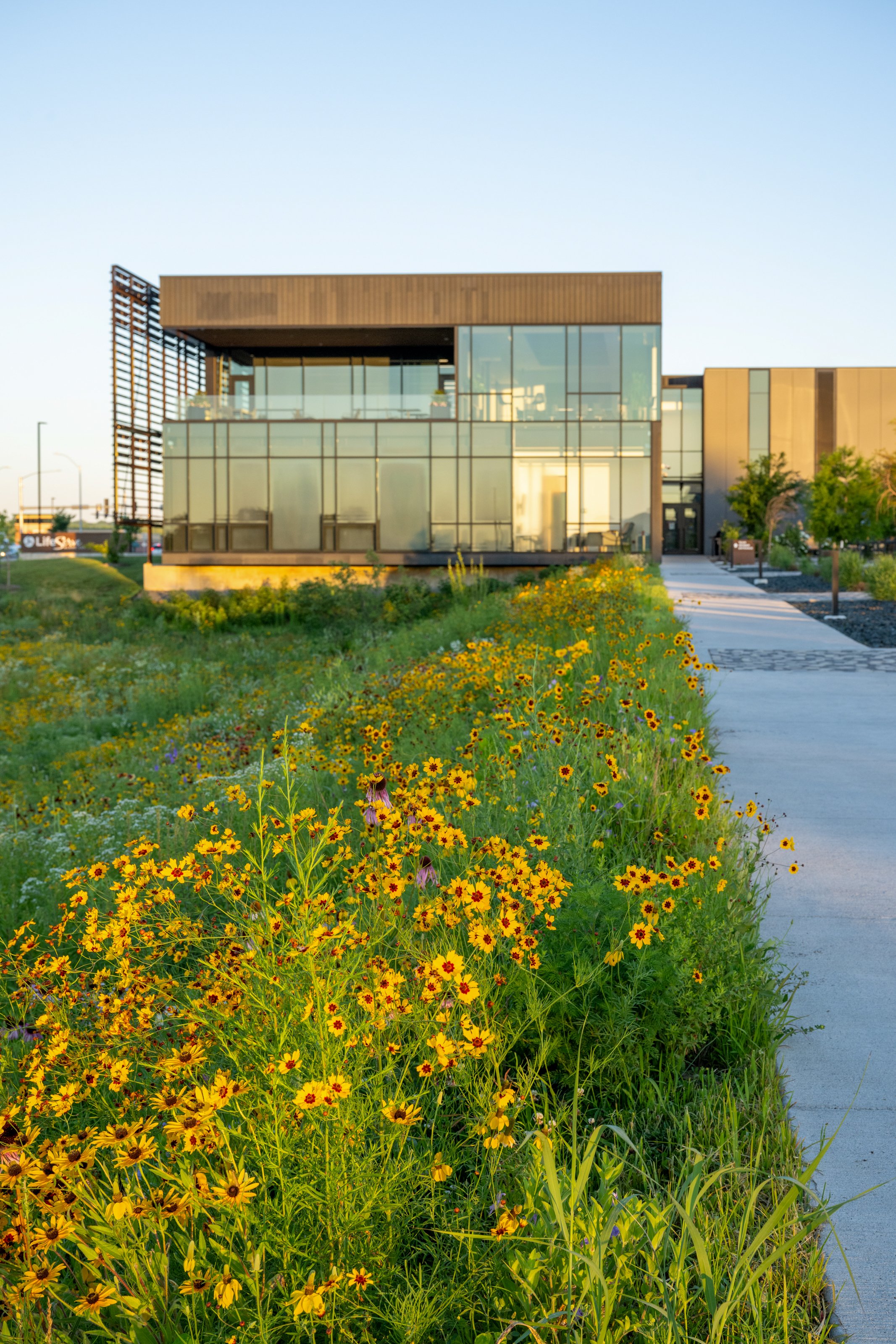
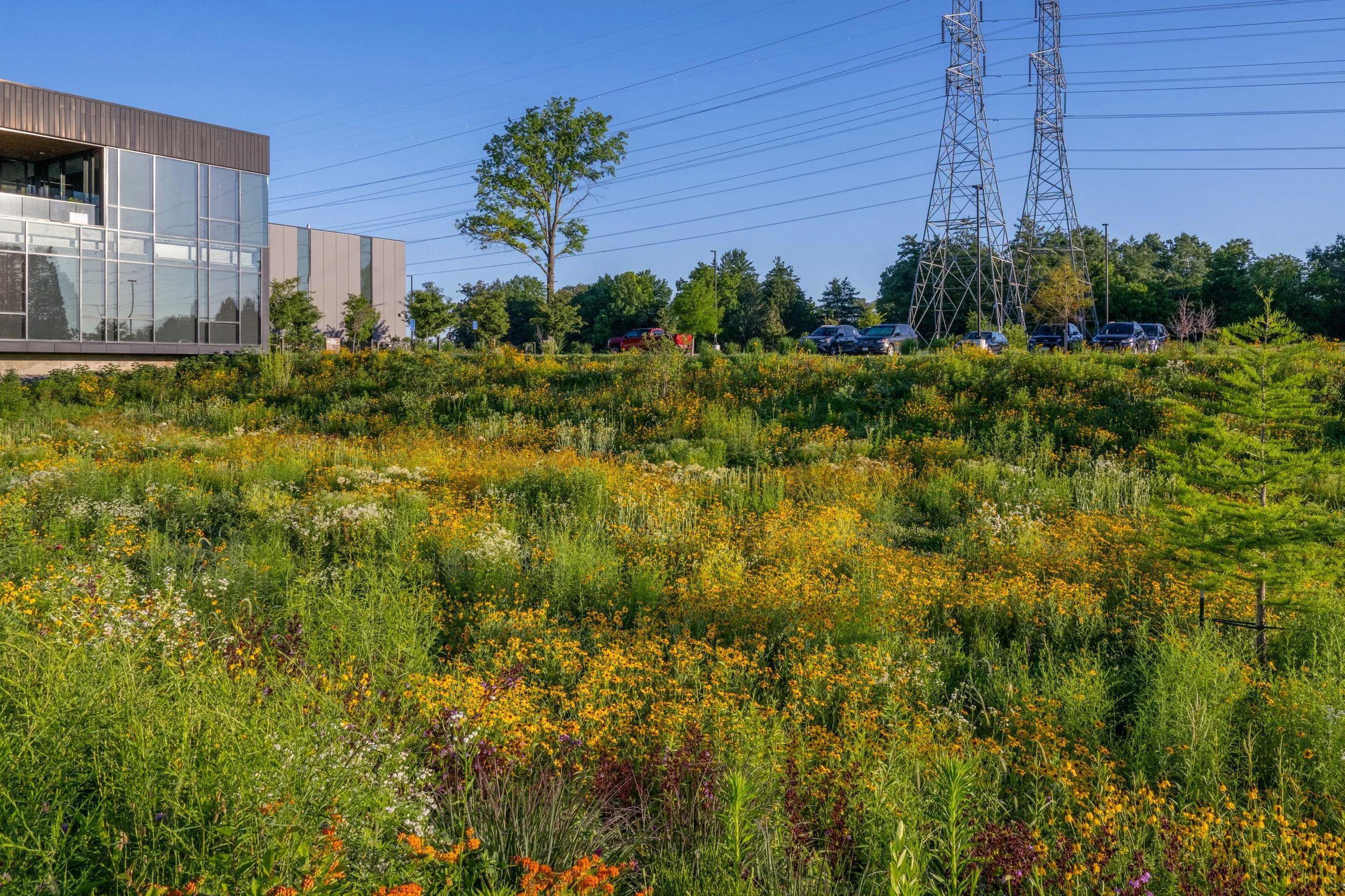
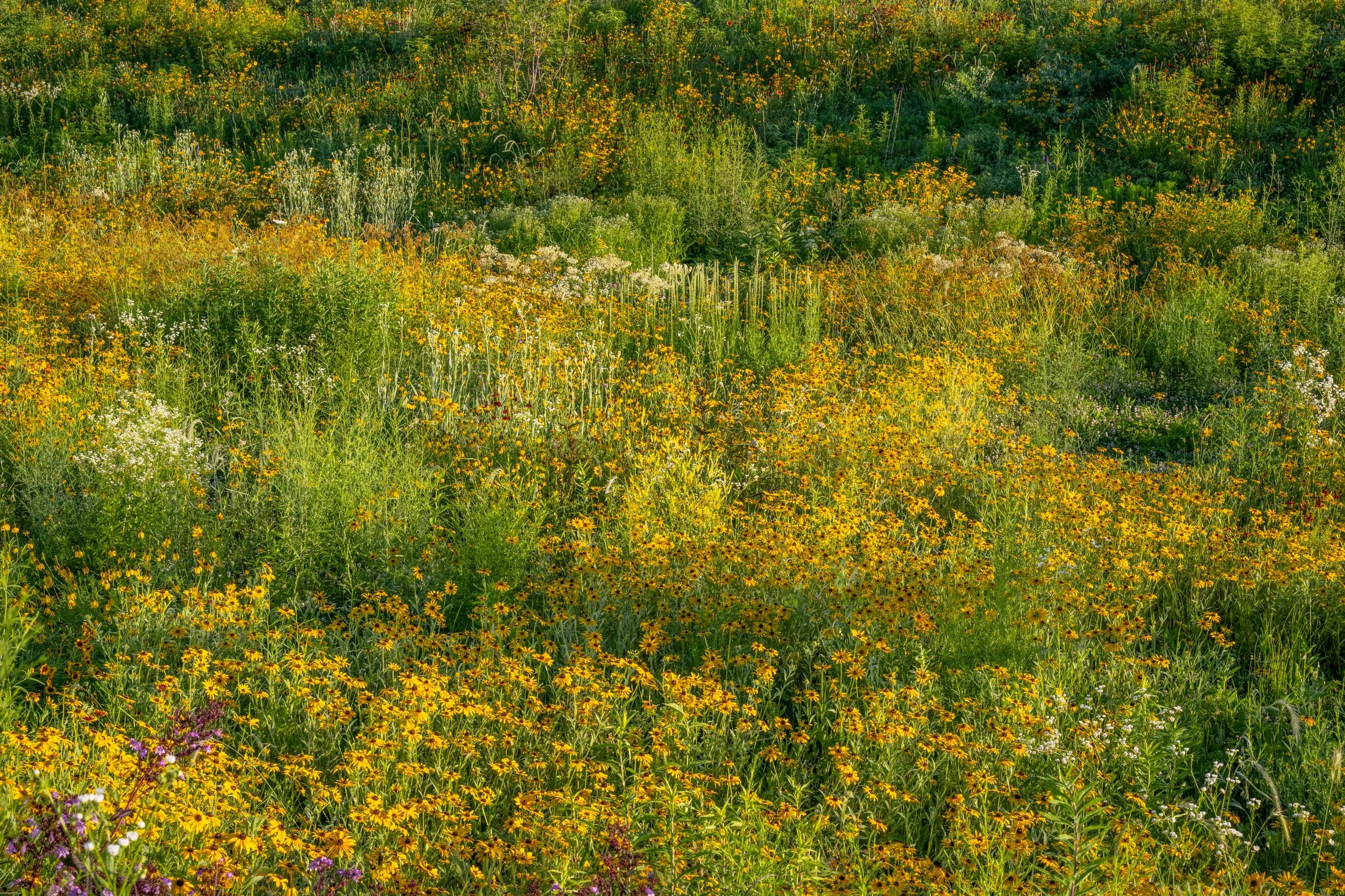
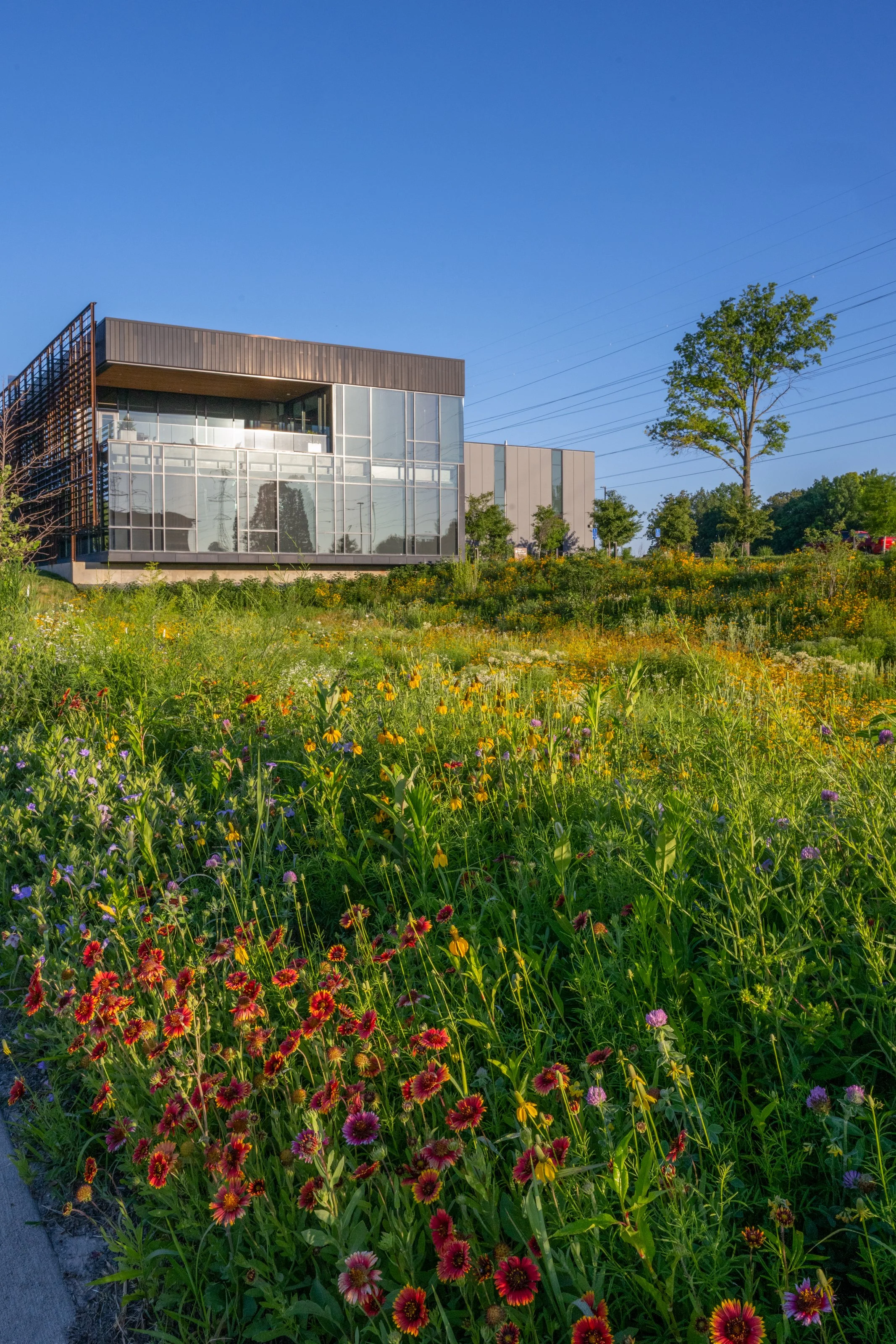
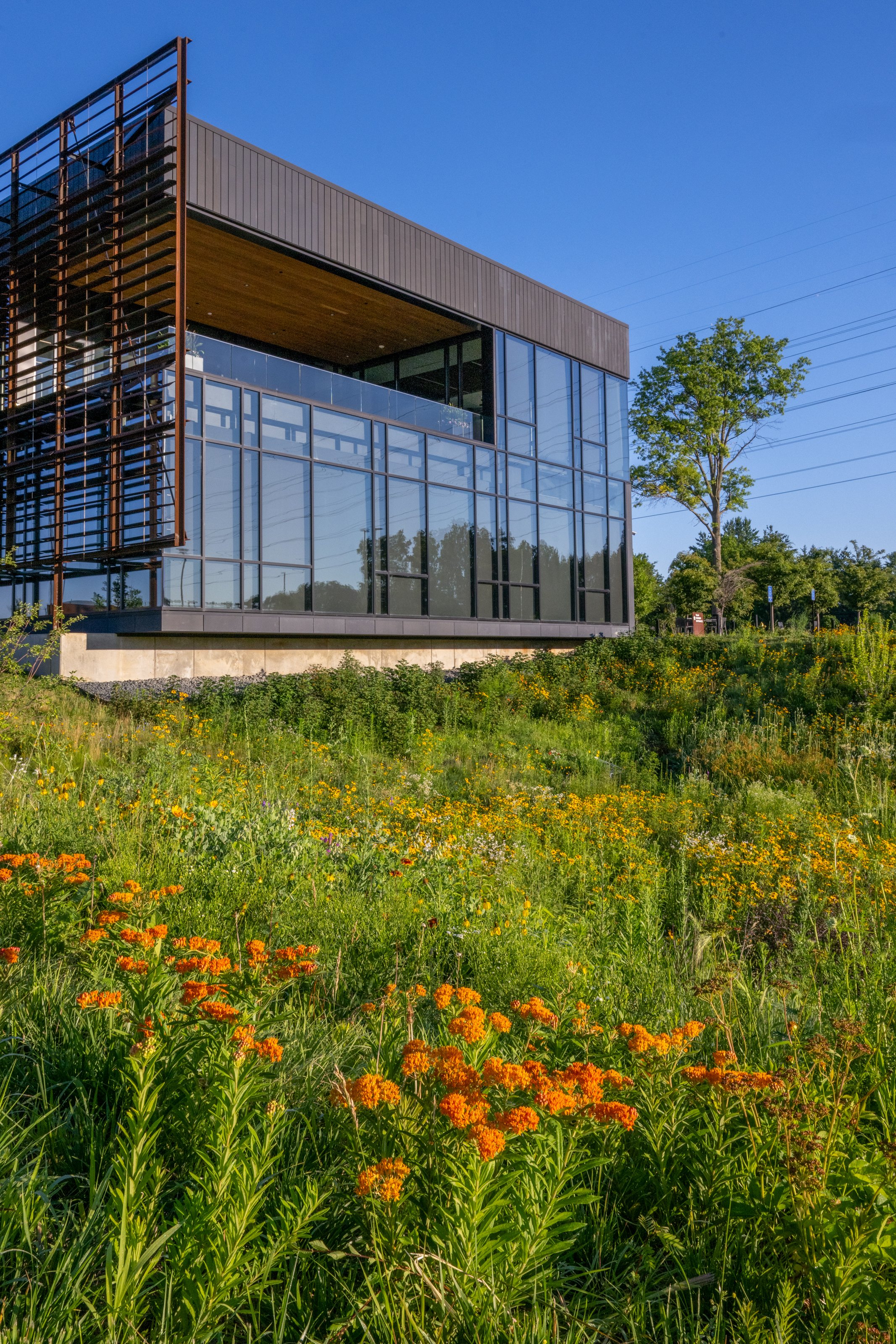
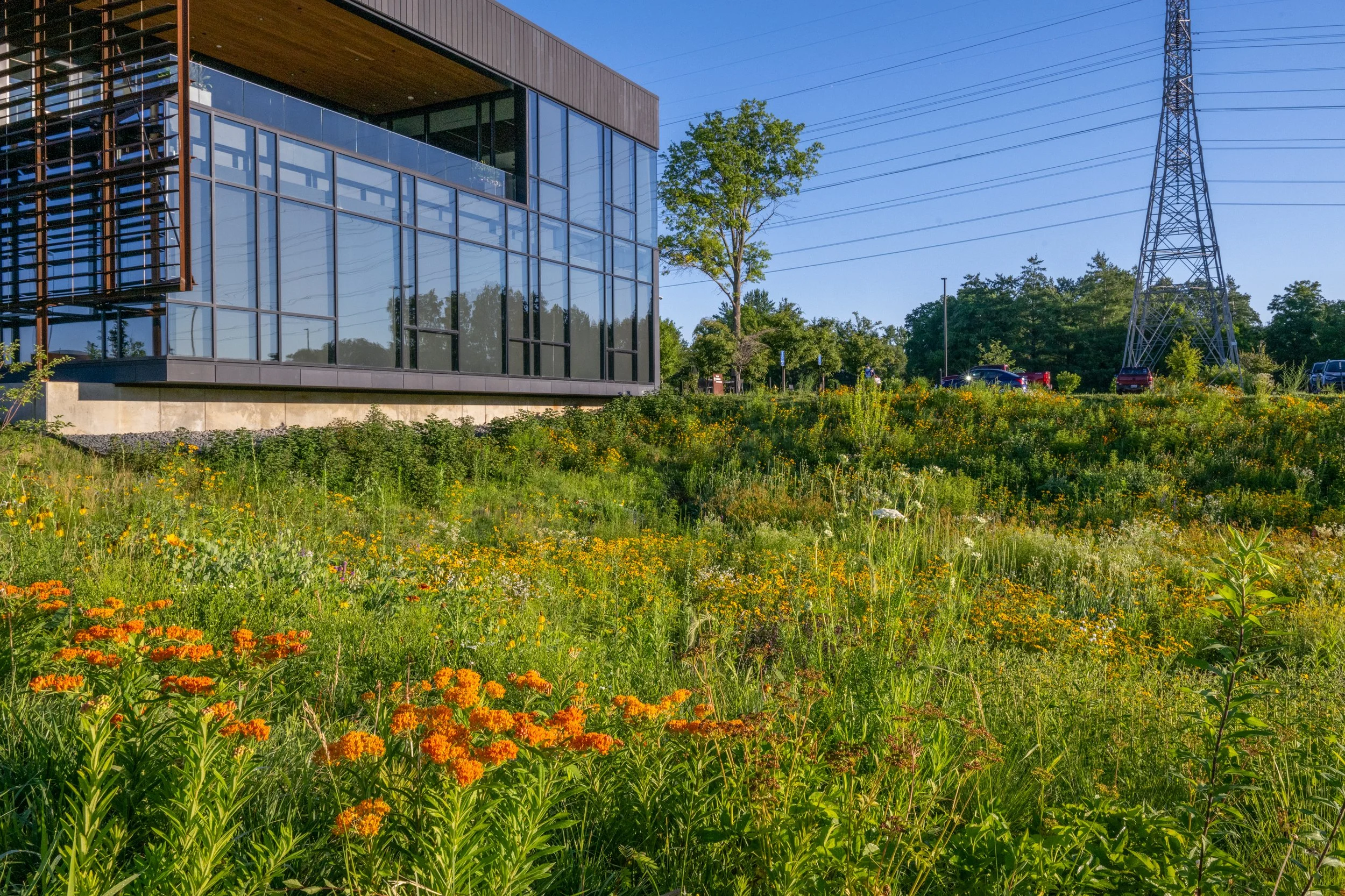
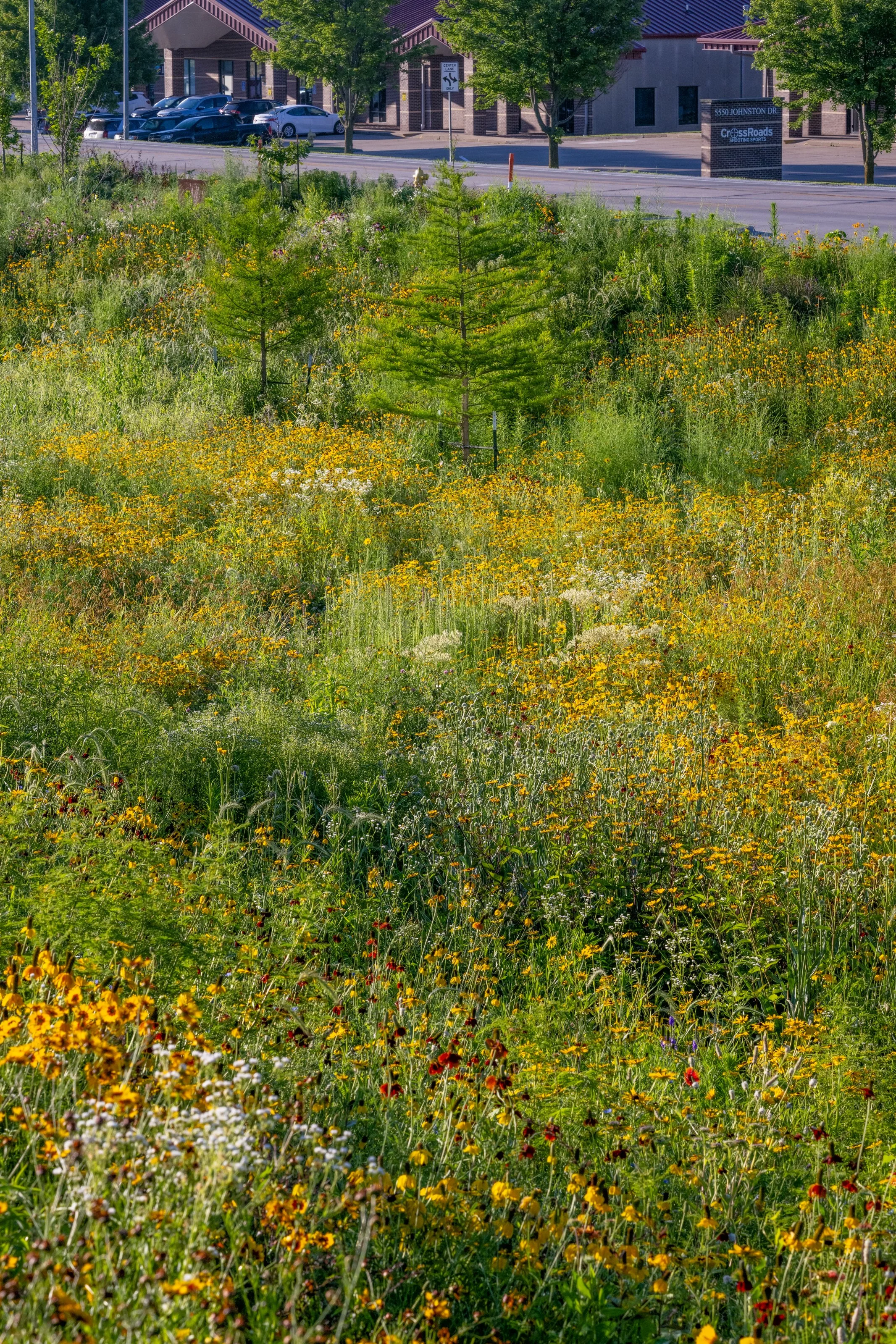
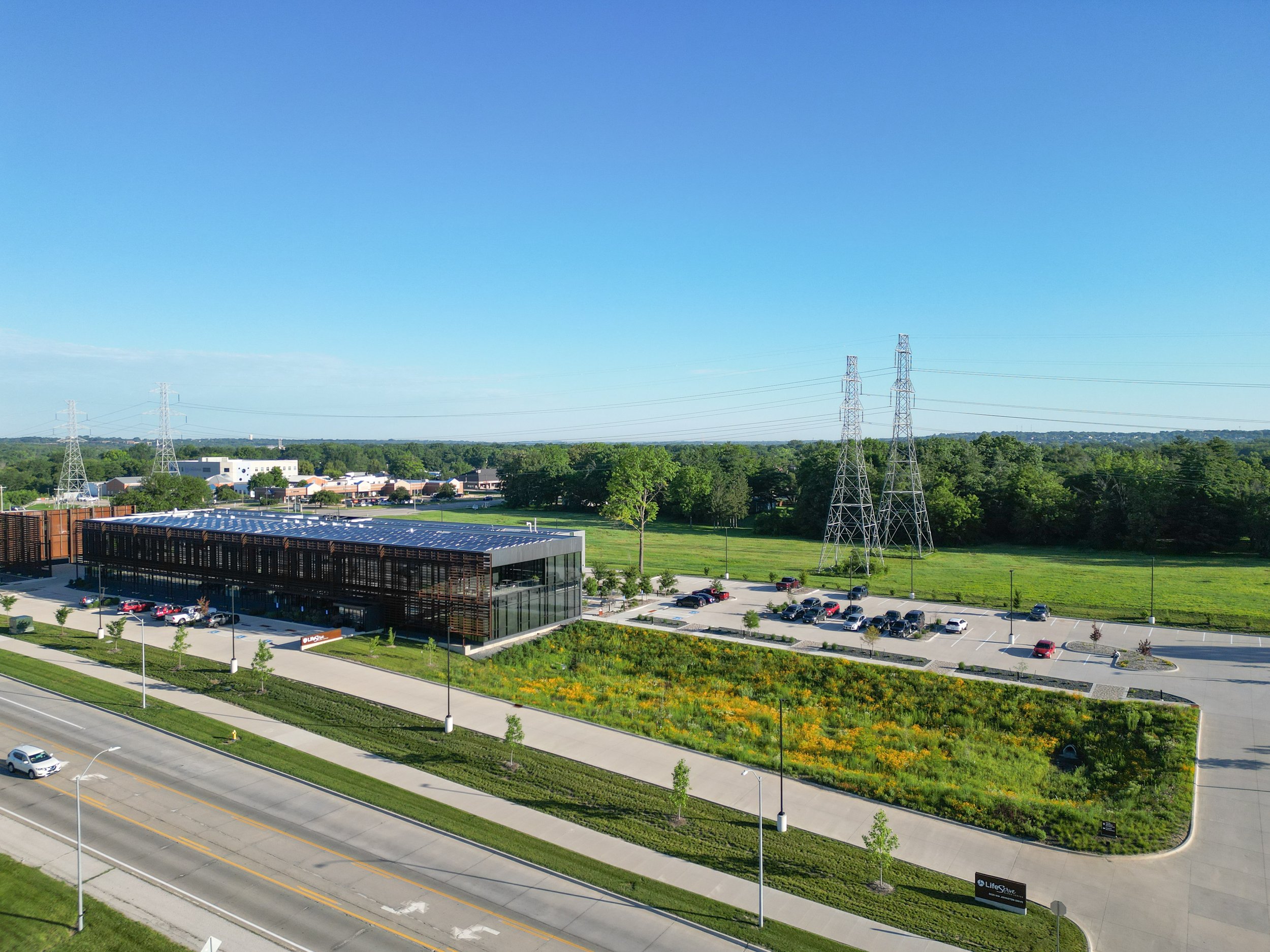
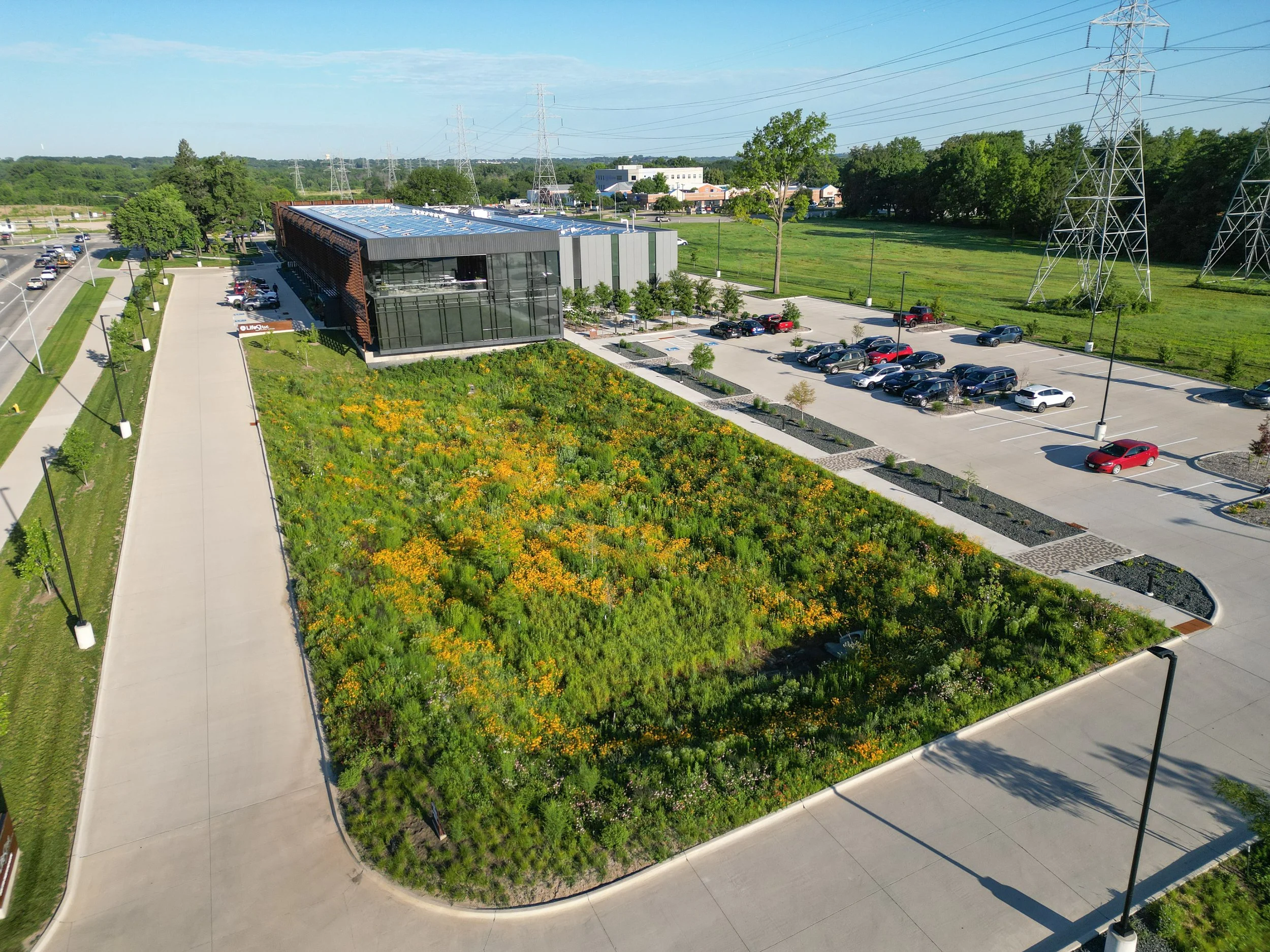
43,000 square feet of stormwater basins transformed through native seeding and planting
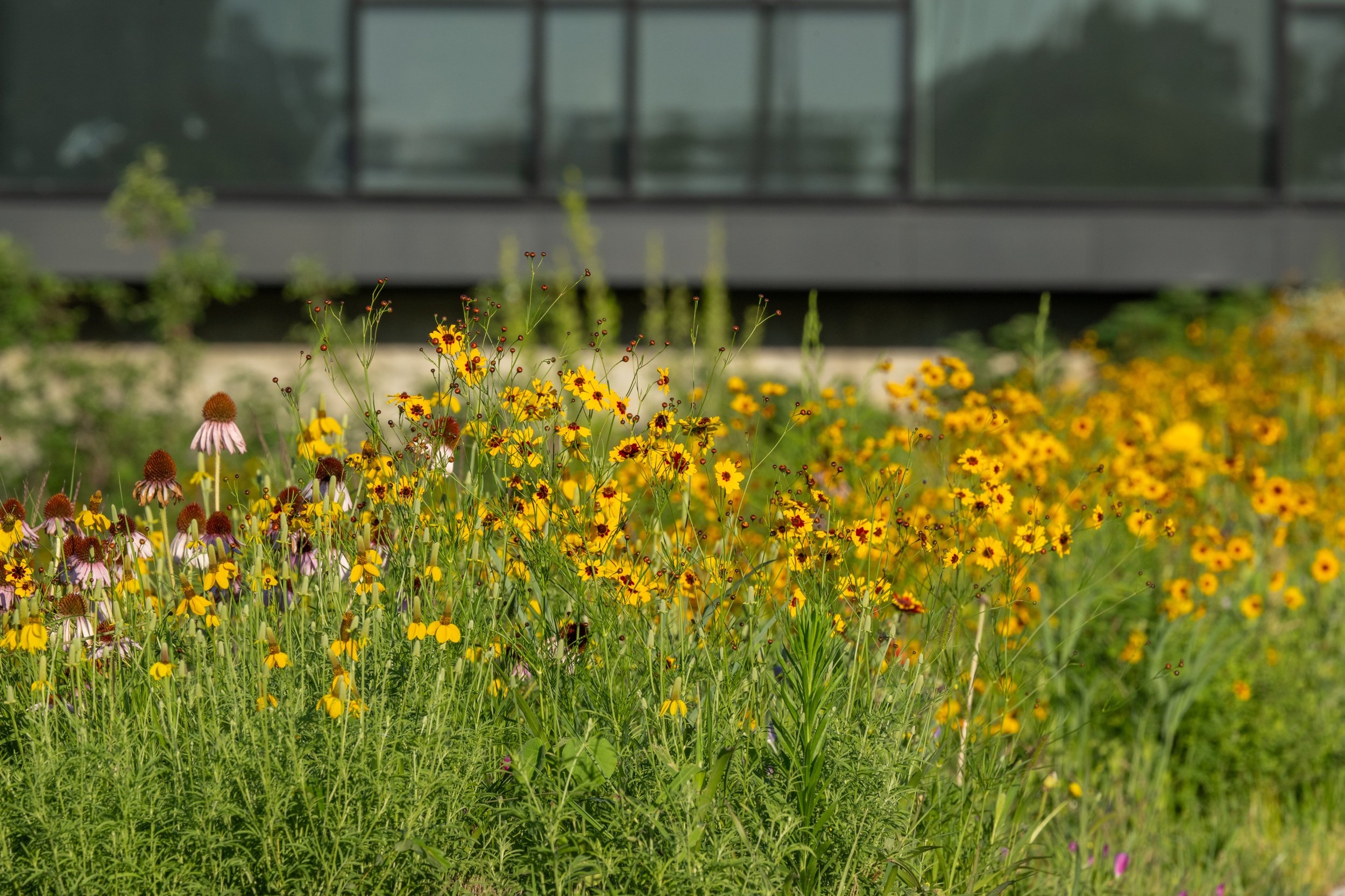
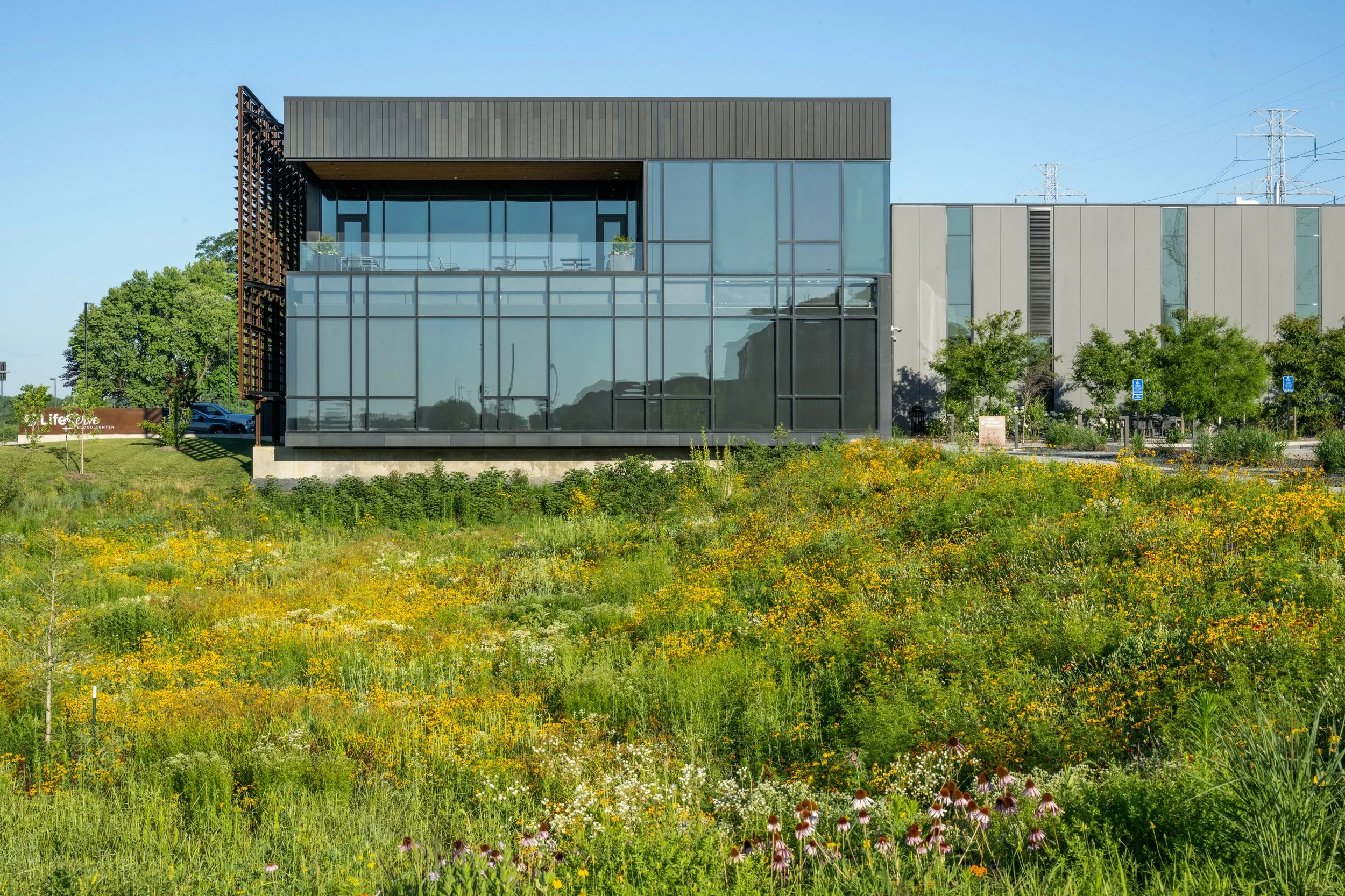
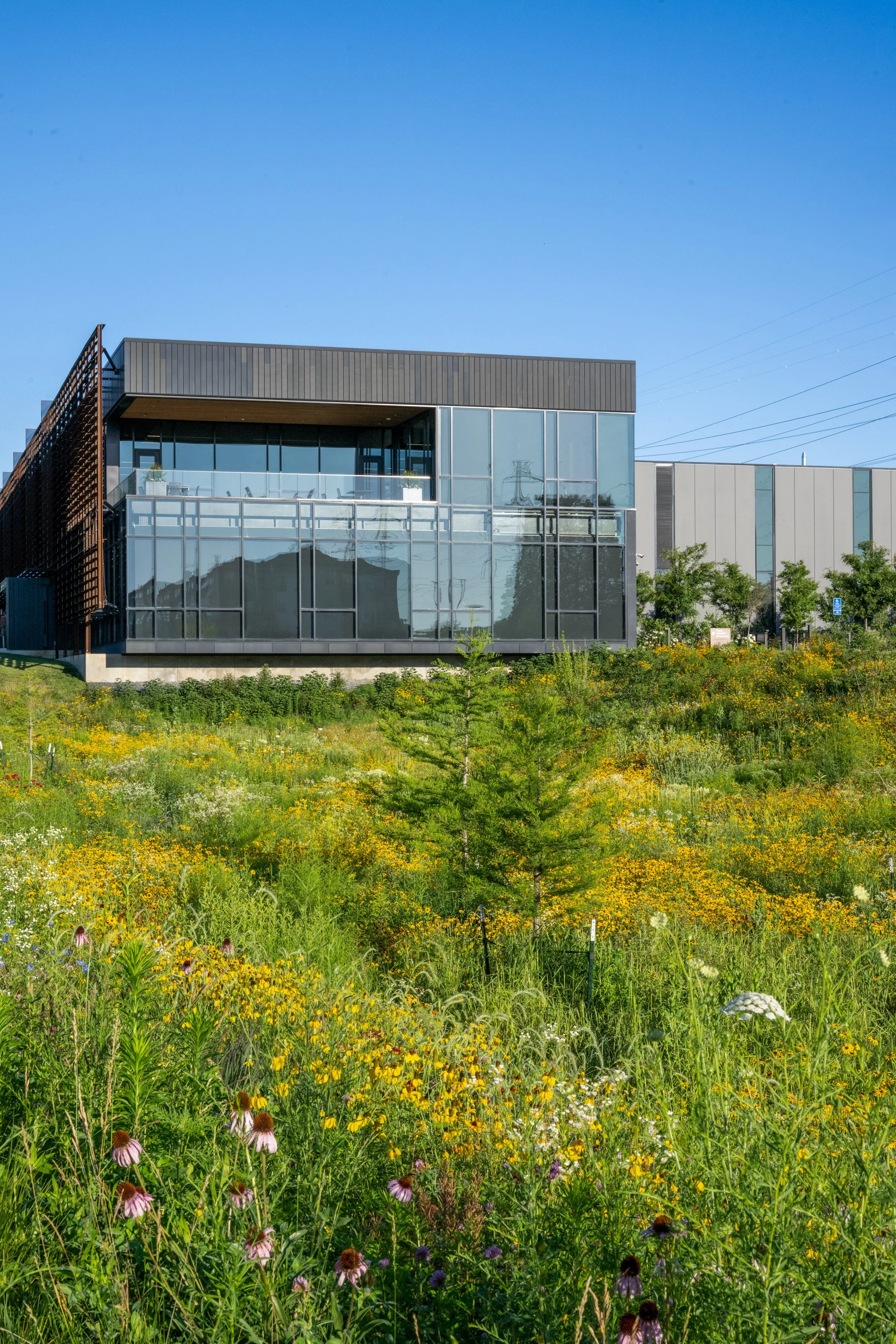
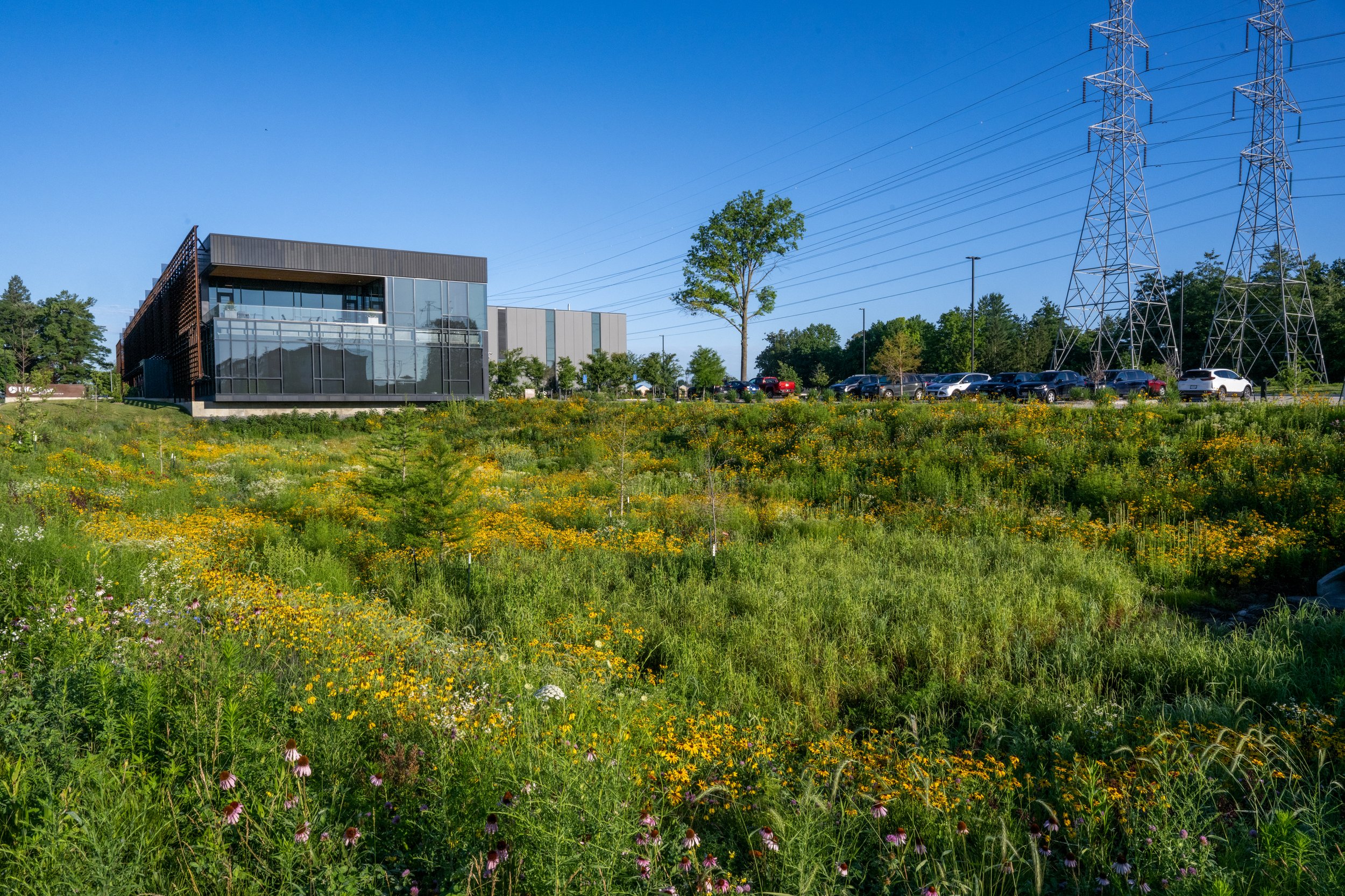
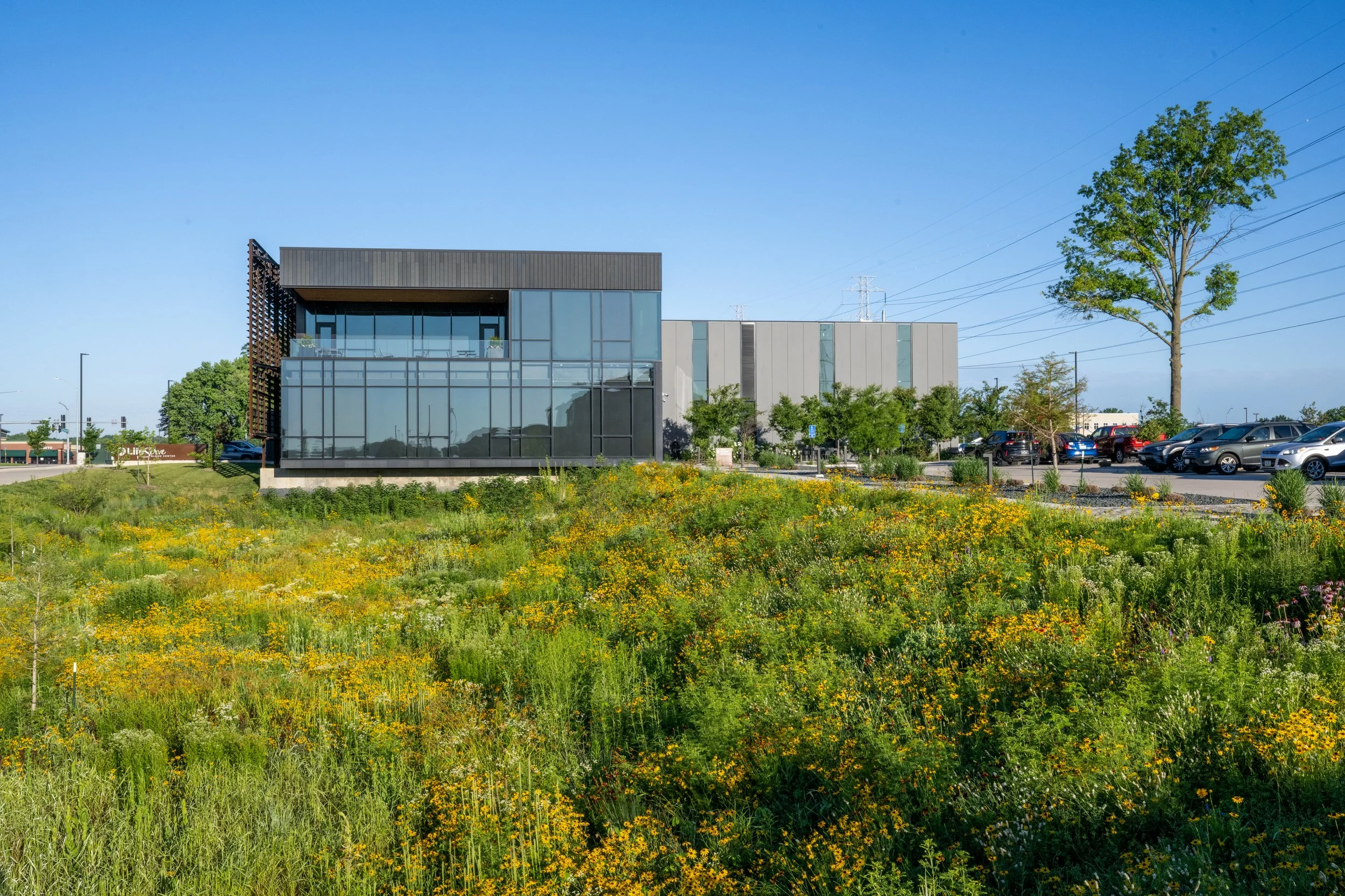
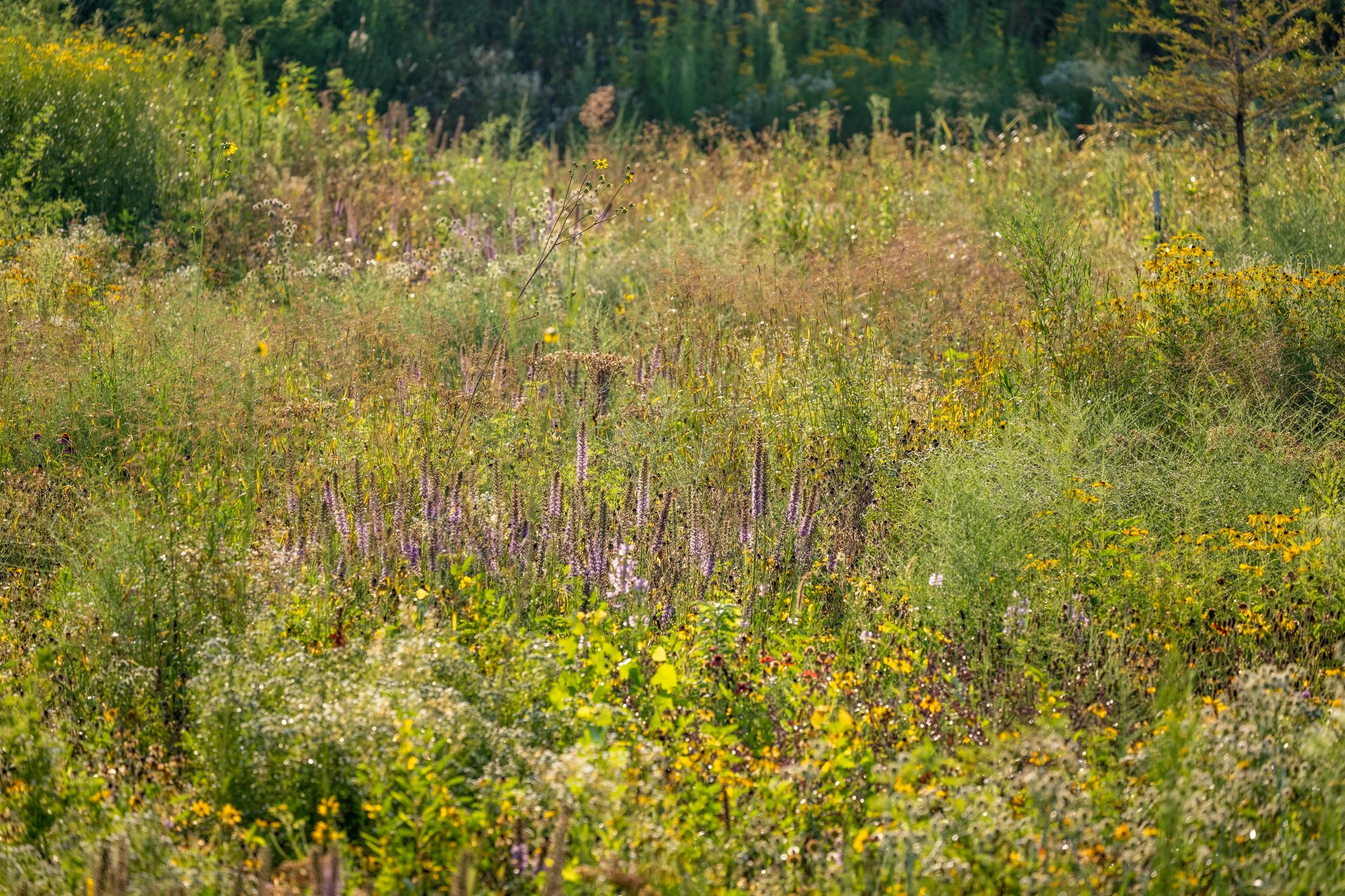
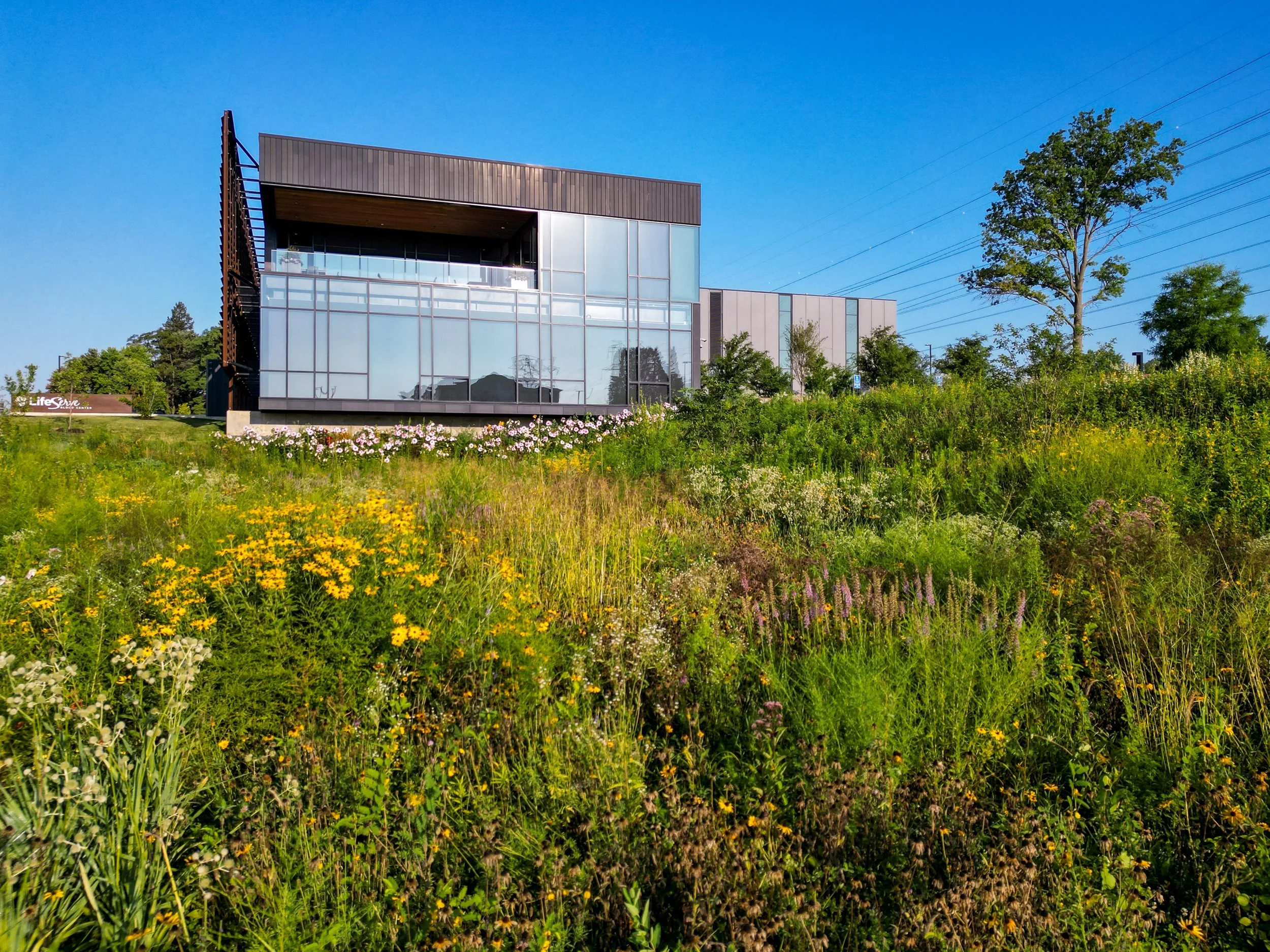
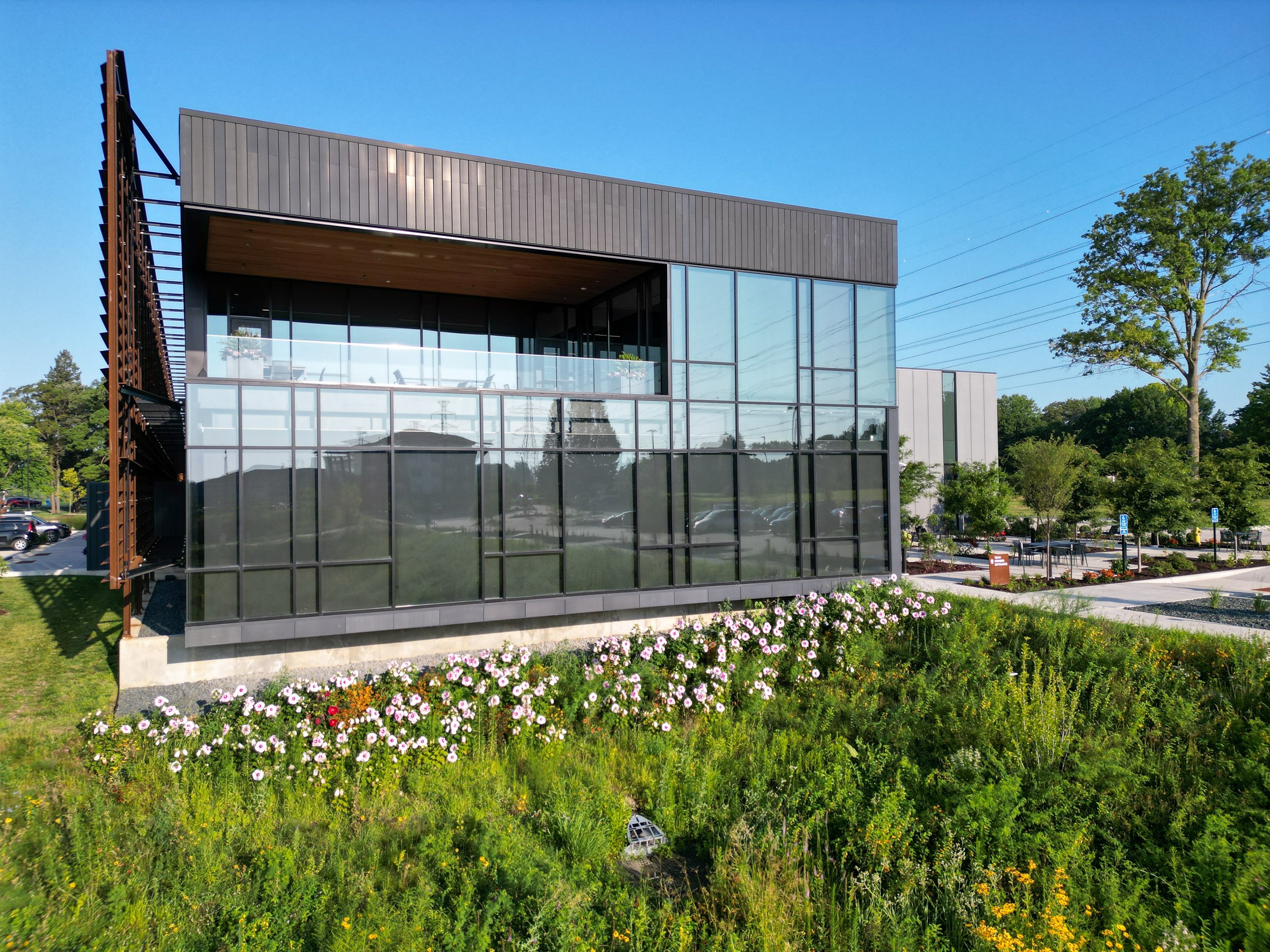
The LifeServe Blood Center campus in Johnston, Iowa includes two large stormwater basins designed to slow and collect runoff from the surrounding building, parking lot, and sidewalks. Stormwater basins pose a unique design challenge: balancing engineered ecological functions with aesthetic and experiential value. Too often, these spaces become utilitarian voids instead of dynamic landscapes that manage stormwater and enhance their surroundings. As constructed, these basins were functional but unresolved: broad engineered depressions with sandy, disturbed soils, inadequate seeding specifications, and (too many) newly planted trees not yet connected to a larger landscape idea. Could these basins do more than convey water and do so beautifully?
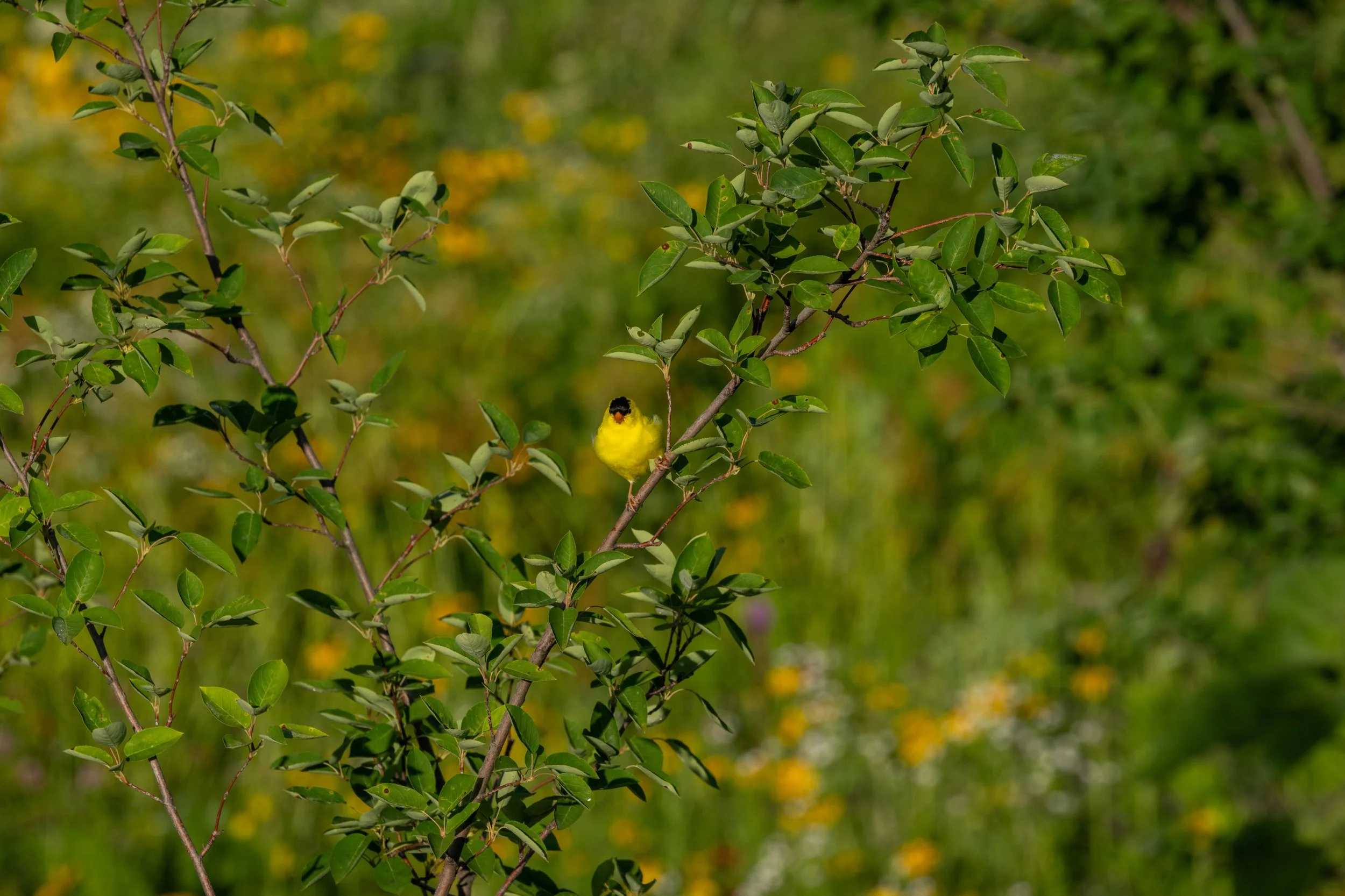
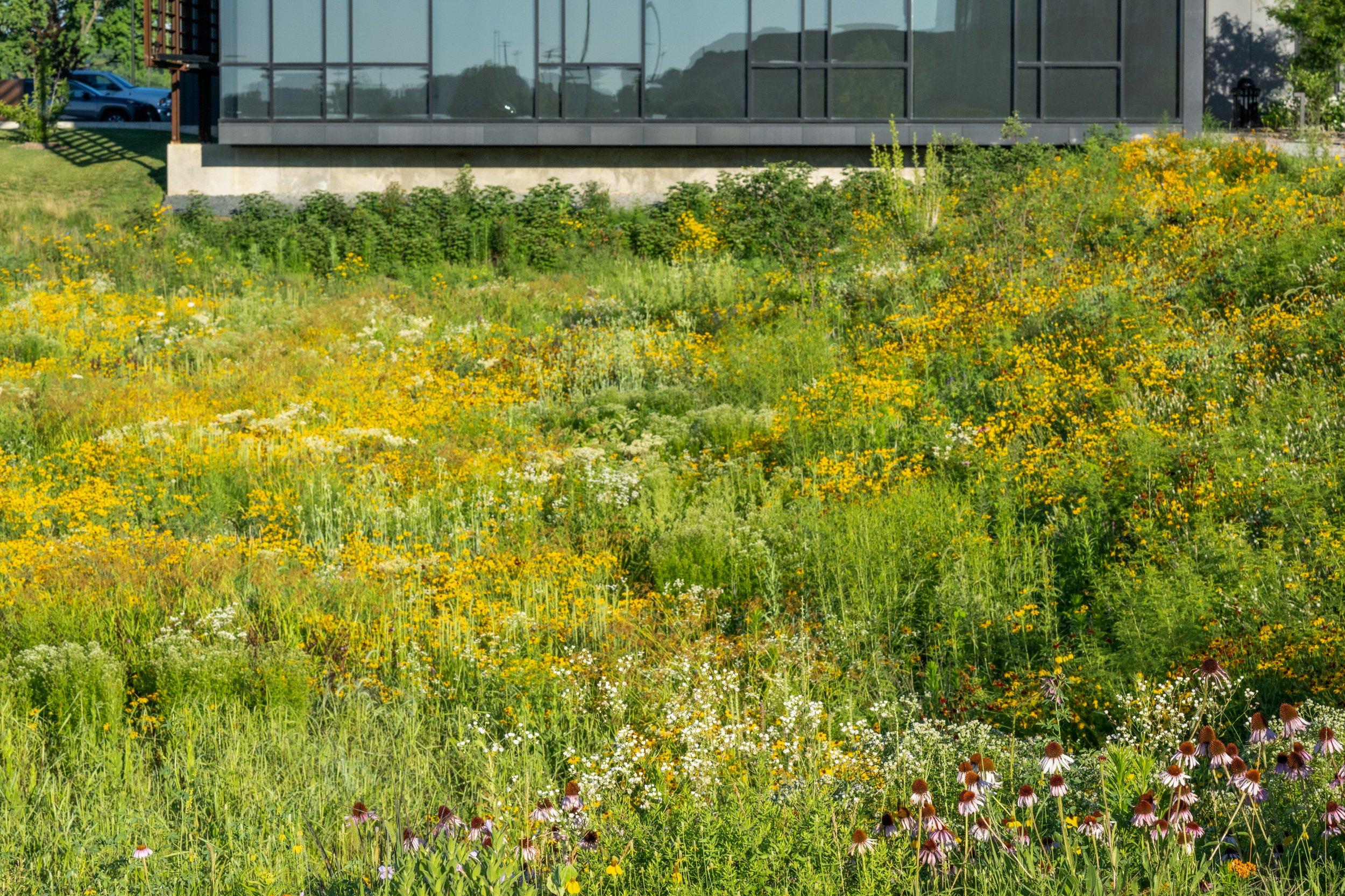
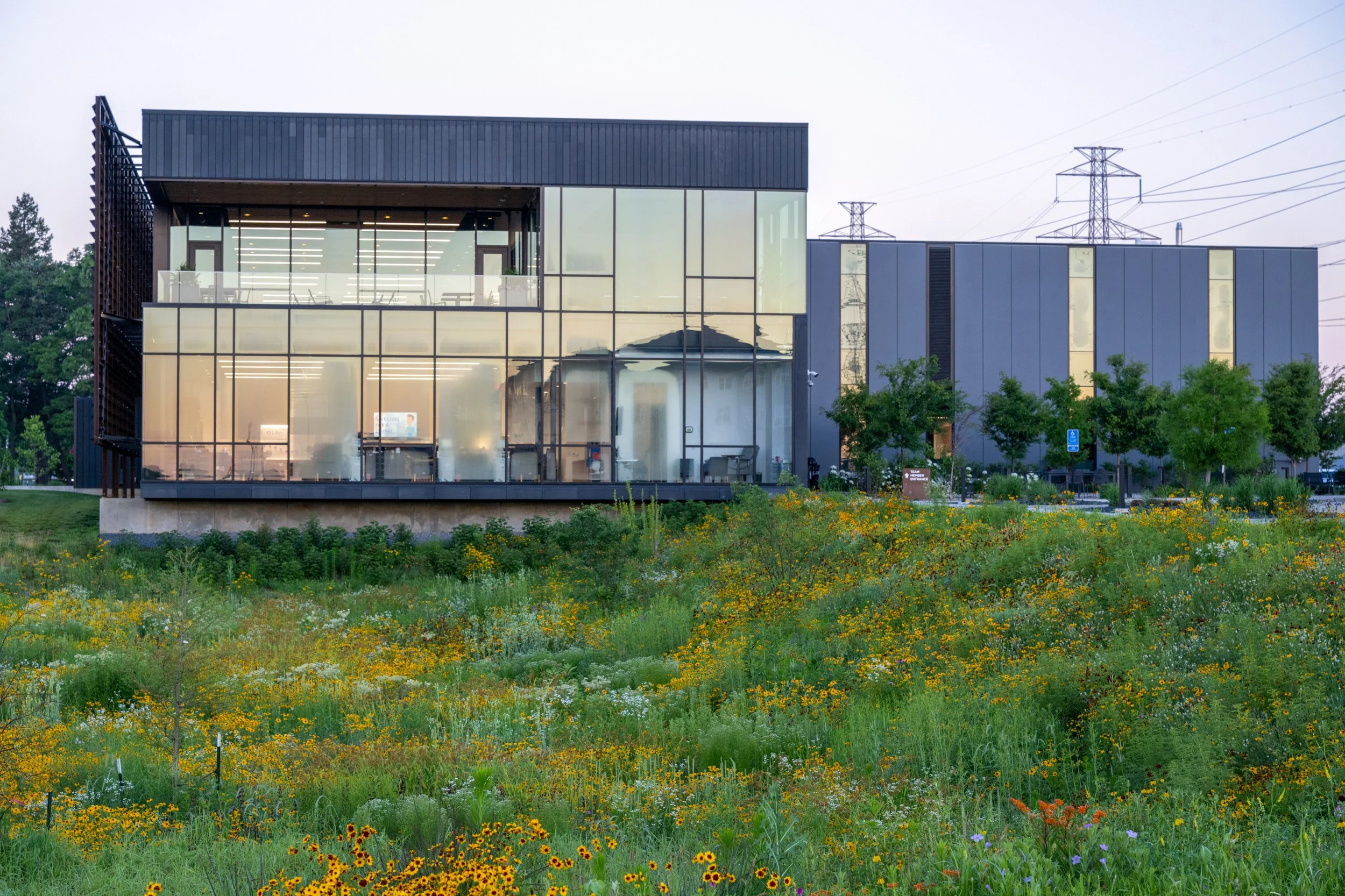
The site holds rich landscape memories. In recent decades, it was a thriving nursery operation, with many of the existing specimen trees dating to that era. Prior to modern times, the soil maps indicate this landscape was a sandy upland prairie rolling towards the Beaver Creek and Des Moines River floodplains. After contemporary construction, grading, and compaction, it had become something more hybrid: part detention basin, part swale, part remnant memory. The design reimagines the basins as an abundant, plant-driven “green sponge,” using dense, diverse vegetation to enhance the site’s hydrologic performance while creating a vivid seasonal experience for staff and visitors, and habitat for invertebrates and birds. Water now gathers and moves through the site in ways that mimic depressions within otherwise upland prairie systems.
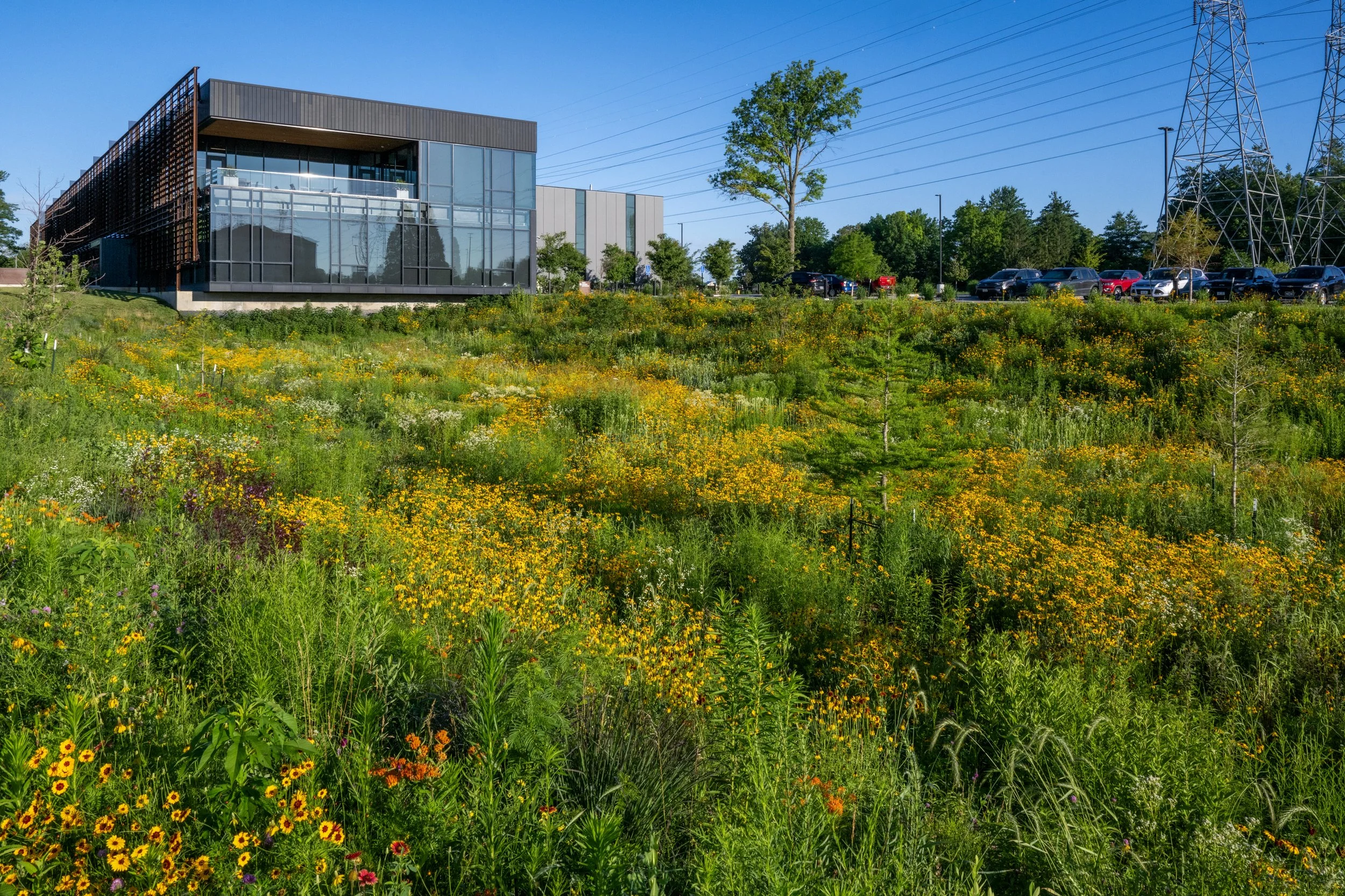
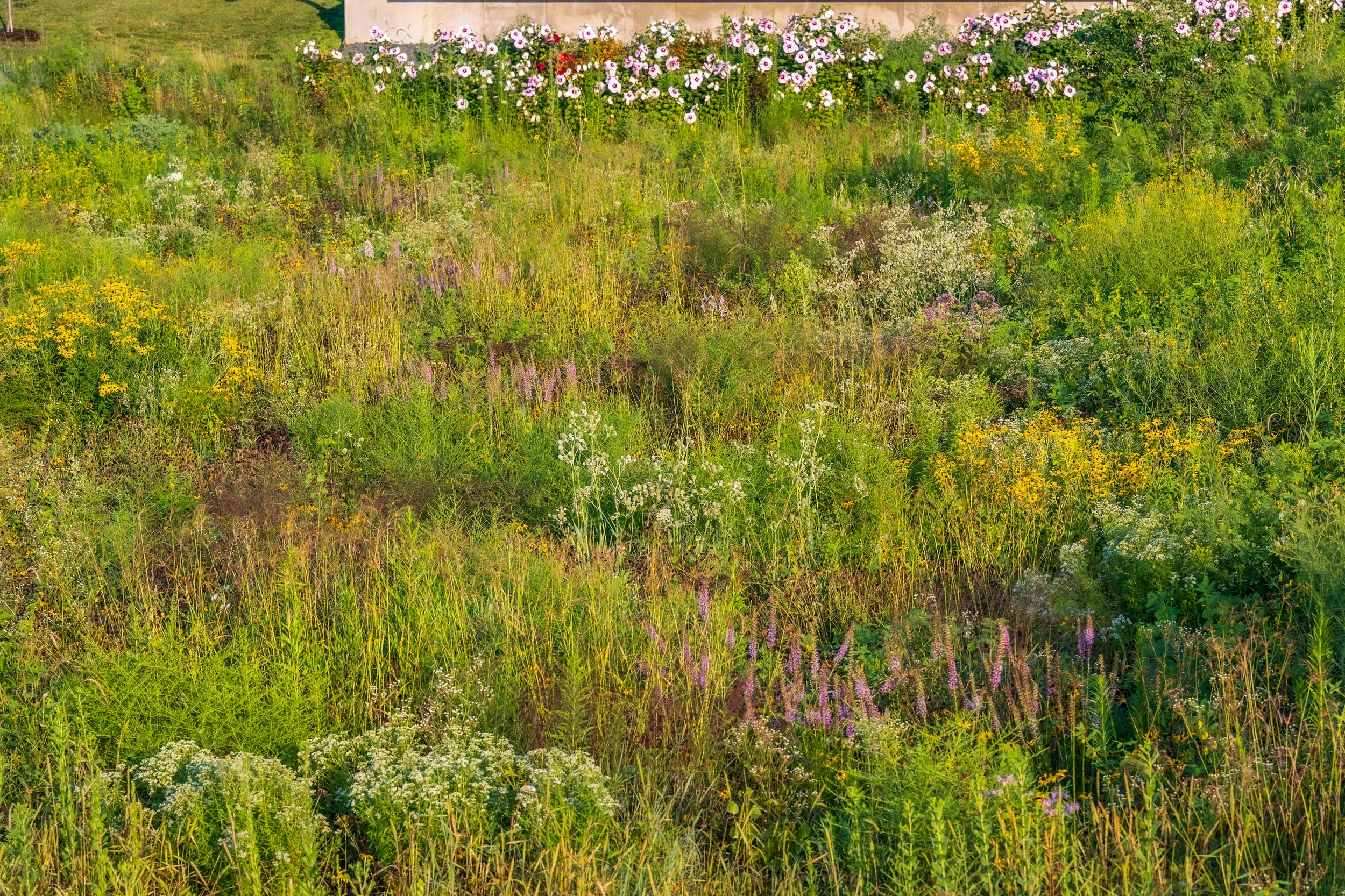
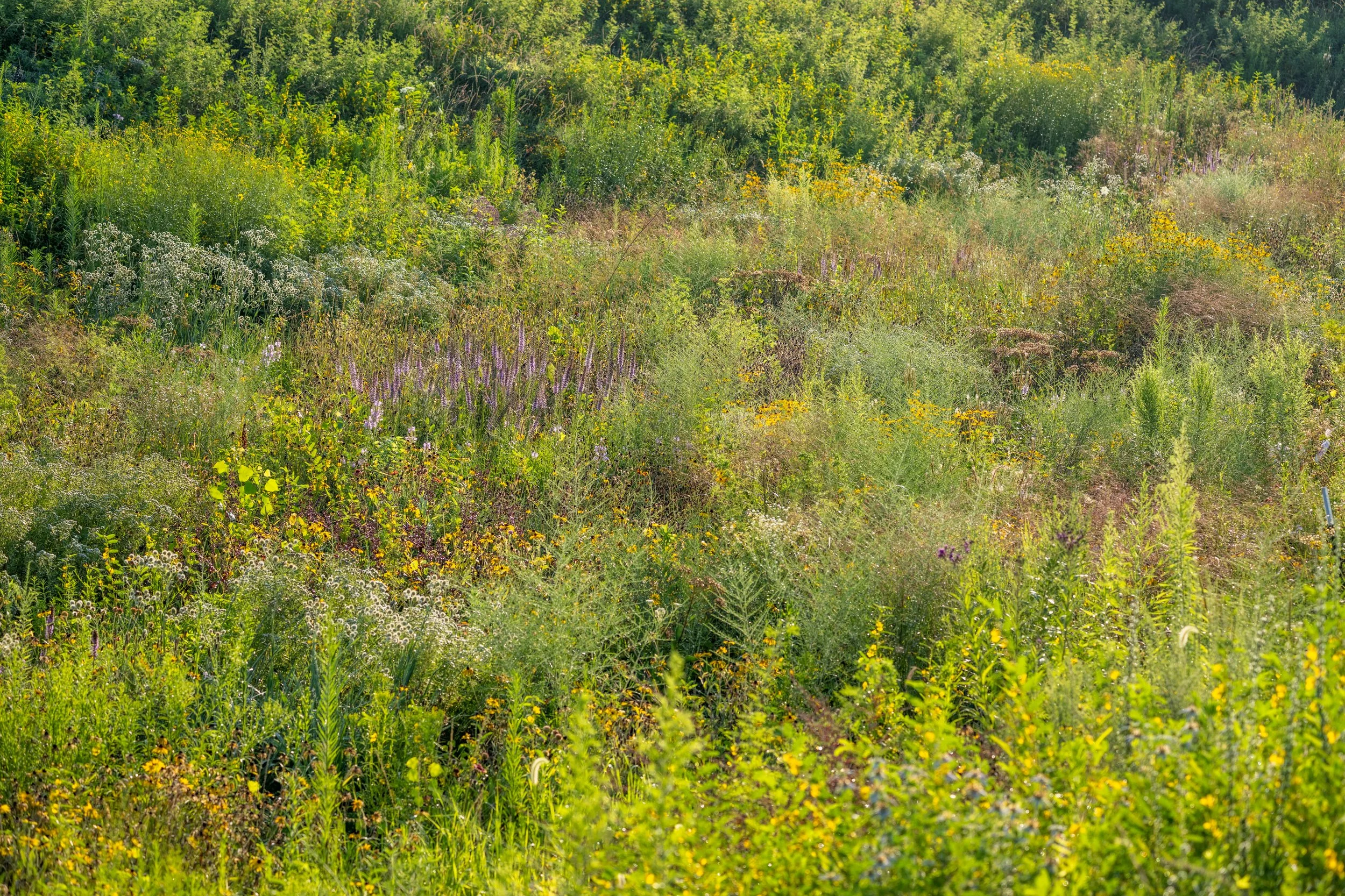
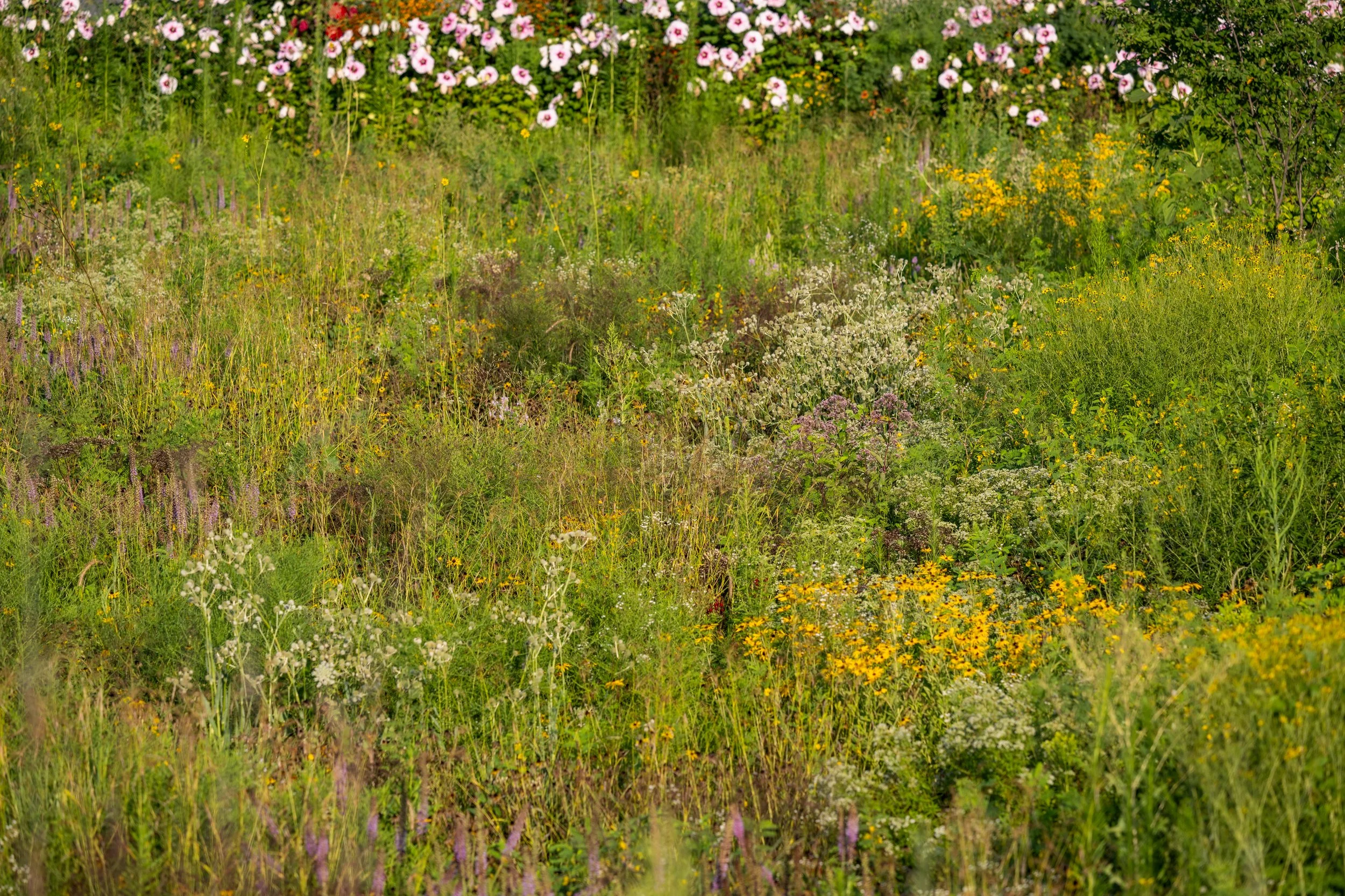
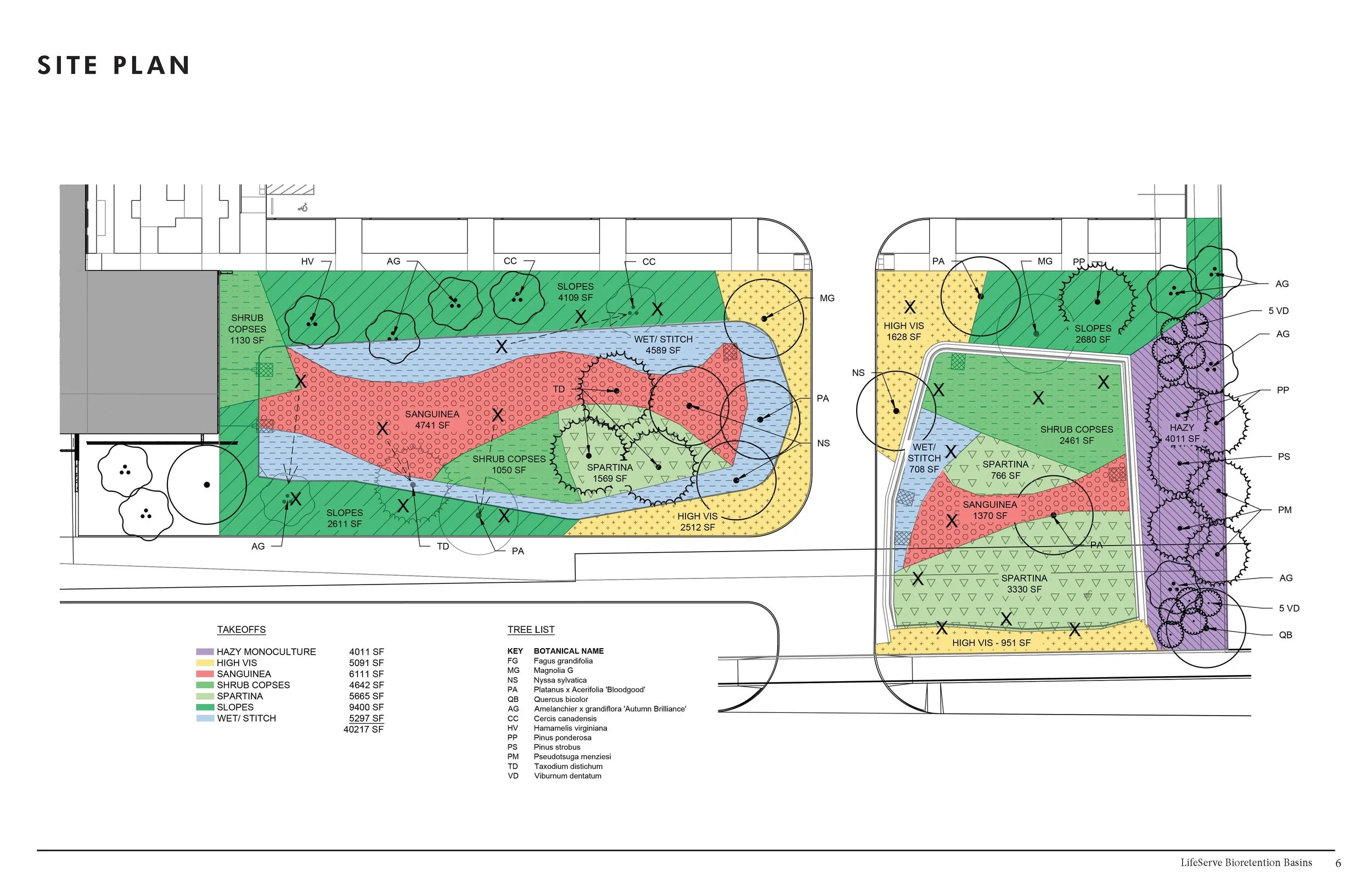
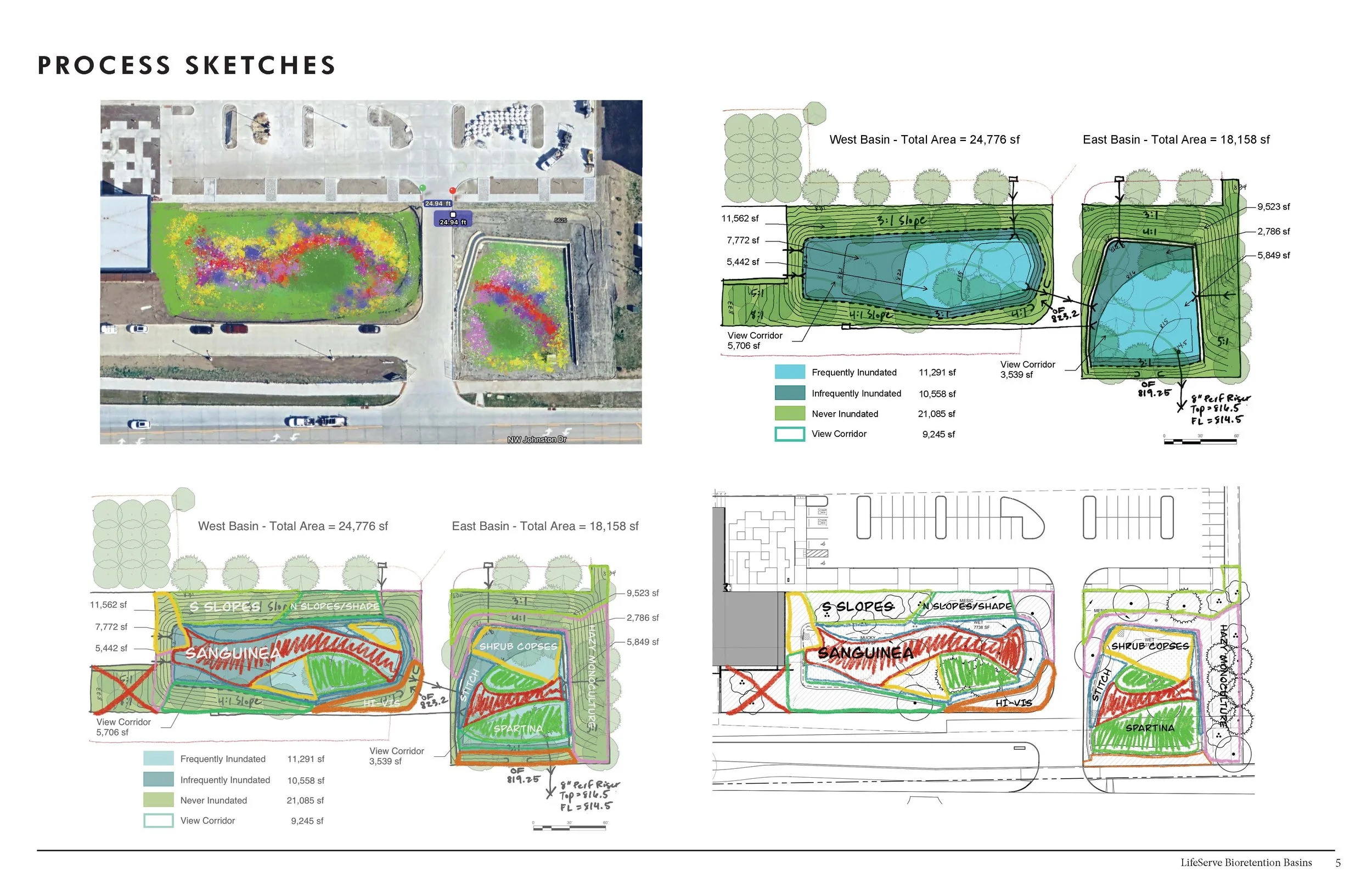
Our site plan recorded the basin’s microtopography as zones for different kinds of vegetation. The lowest areas receive species adapted to frequent inundation, while slopes shift toward plants capable of handling mesic to dry conditions. Across the two basins, seven planting zones structure this gradient, moving from wet basin floors to mesic edges, dry slopes, shrub copses, preserved view corridors, and high-visibility apertures. The design introduces approximately eighty-four species through a combination of seeding, plugs, and containerized shrubs.
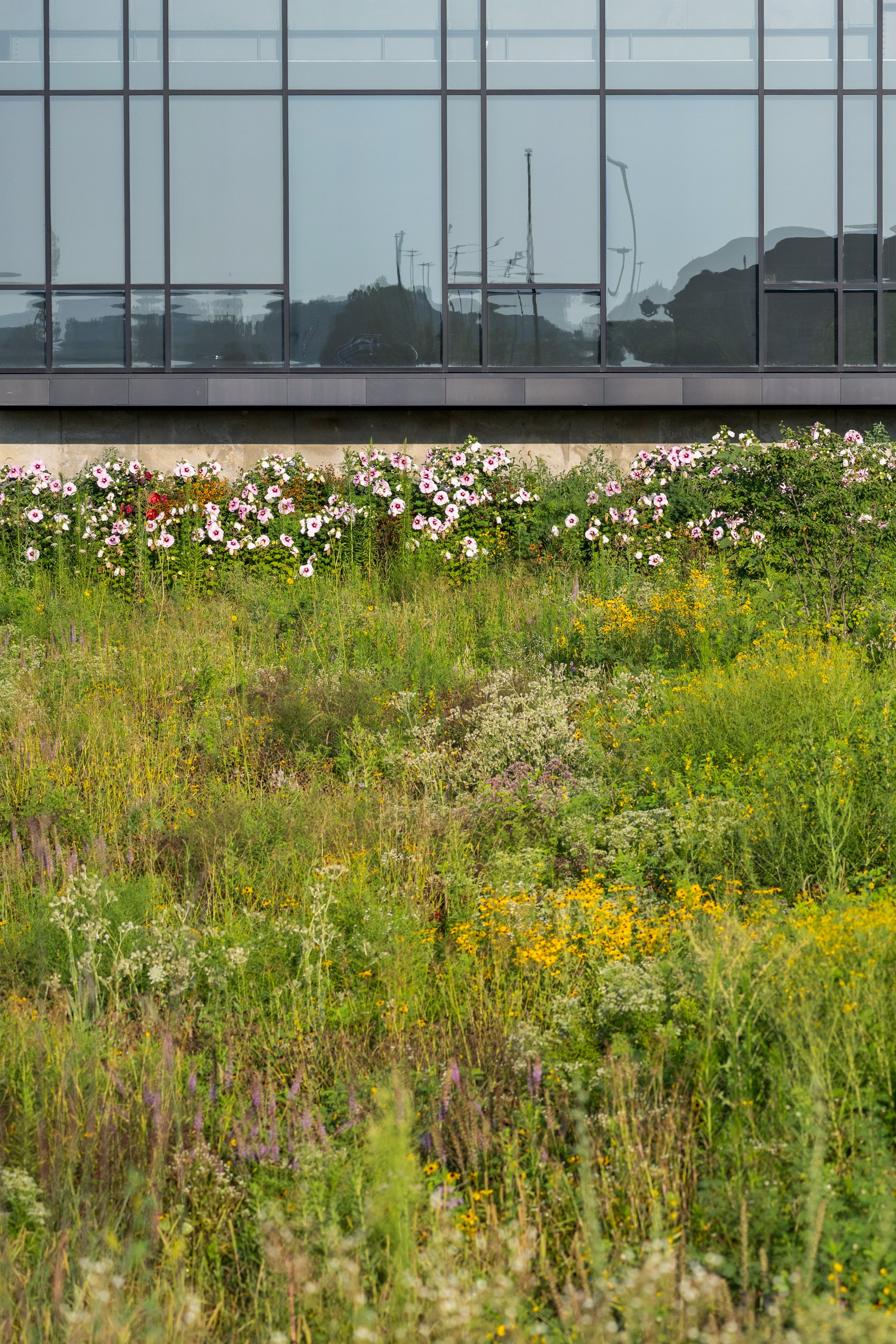
A central gesture organizes the planting’s composition in each basin. From the building’s eastward axial view, the wettest line of the basin becomes a sinuous band of saturated color and growth. We called this line sanguinea, Latin for blood, which seemed apt for a blood bank. Lobelia cardinalis (cardinal flower), Hibiscus spp. and cultivars (rose mallow), sedges, grasses, and other moisture-loving plants intensify this zone, making the path of water legible from inside the building and across the site. The planting follows a cohesive, site-specific logic, enabling ecological complexity through pattern language.
Around this line, the planting opens into broader community patterns. Matrix grasses and sedges build density. Flood-tolerant shrubs and young trees, fewer than in the original condition, frame the herbaceous layers. Seasonal vignettes create distinct moments of spring brightness, summer saturation, and autumn texture. The goal is not a static picture but a resilient, cinematic landscape that stabilizes slopes, absorbs runoff, suppresses weeds, supports biodiversity, and offers LifeServe a campus landscape with civic presence.
Landscape architecture and planting design: Kelly D. Norris, LLC
Landscape Contractor: Country Landscapes, LLC
Stewardship: The Public Horticulture Co., LLC
Photos by Grant Webster Photography.