

Welcome to the New Naturalism Academy
Fall 2025 Cohort!
Welcome Video
Watch this short orientation video to get started!
Lets’s kickoff this six-week exploration of ecologically informed planting design.
This landing page contains helpful information for navigating the course experience.
The live broadcast via Zoom Webinar occurs every Wednesday evening October 8 through November 12 from 5:30-7:30 p.m. Central Daylight Time (UTC-5). The link for the Zoom webinar will be sent out weekly in advance of each live session. You can also watch the recordings on your own schedule.
Reminder: please save your login email and password that you used to create your Member Account! Due to security features of the site that are designed to protect your data, we are unable to change your password for you. If you have lost your password, you can navigate to the home page, click Login and then Forgot password? to send yourself a password reset email. This link expires after 24 hours.
The course launches October 8, 2025 at 5:30 p.m. CDT (UTC-5).
Both of Kelly’s books are great resources for your learning experience.
Click Add to Cart and then scroll up to the upper right corner of the navigation menu to check out via the shopping cart icon.
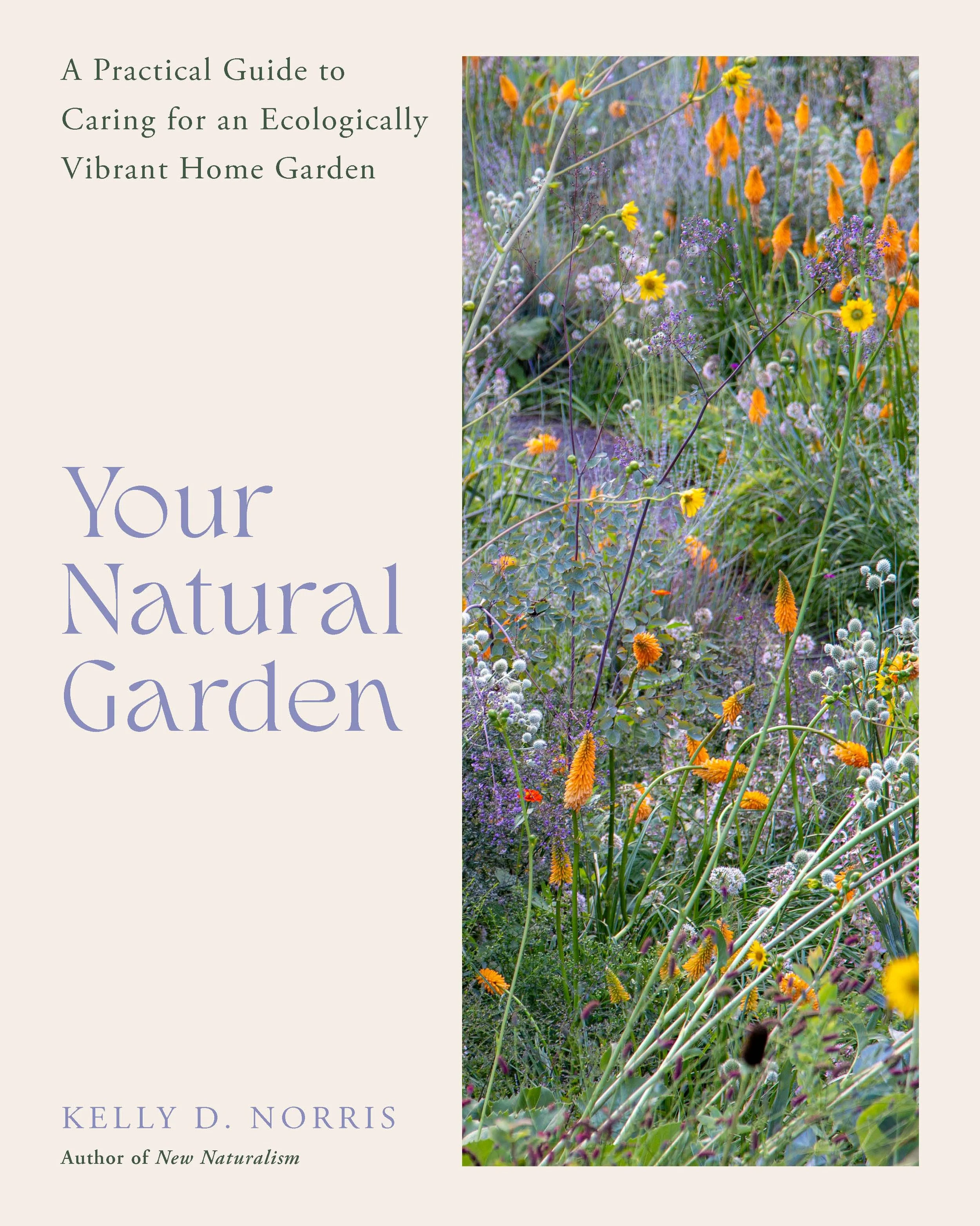
Your Natural Garden (2025)
Your Natural Garden is the follow-up to New Naturalism (2021), focusing primarily on the stewardship of naturally inspired, designed gardens.
Click Add to Cart and then scroll up to the upper right corner of the navigation menu to check out via the shopping cart icon.

Each copy arrives signed.
A valuable and artfully crafted guide to tending a naturalistic garden.
From plantsman Kelly Norris, author of New Naturalism, comes a much-needed handbook to maintaining today’s natural gardens. Naturalistic plantings, overflowing with biodiverse communities of plants, are filling front and backyards around the globe with colorful blooms, easy-care plants, and wildlife habitat. But caring for a naturalistic garden is vastly different than caring for a traditional home landscape of carefully manicured plants separated by mulch and regularly primped and pruned. In Your Natural Garden, tending your garden properly means understanding its connection to the greater natural world and using garden care methods that mimic nature instead of controlling it.
Page by page, you’re guided through all the seasons of a naturalistic garden’s life and the tasks and to-dos that come with each of them. Including how to:
Encourage and establish complexity in a new garden
Promote growth and variation by letting your plants self propagate
Determine when and what to edit, and when it’s best to let chaos rein
Decide if and when weeding is necessary
Foster the insects and other animals that rely on your plants
Understand succession in the naturalistic garden and why it’s important
Know when it’s time to cut back your garden and how to do it right
Verdant photographs accompany the text throughout, offering examples of well-tended naturalistic plantings and the tasks that are needed to properly care for them.

New Naturalism (2021)
Kelly’s book New Naturalism: Designing and Planting a Resilient, Ecologically Vibrant Home Garden is a great companion reference for the course.
Click Add to Cart and then scroll up to the upper right corner of the navigation menu to check out via the shopping cart icon.
Each copy arrives signed.
In New Naturalism, horticulturist and modern plantsman Kelly D. Norris shares his inspiring, ecologically sound vision for home gardens created with stylish yet naturalistic plantings that mimic the wild spaces we covet, such as meadows, prairies, woodlands, and streamsides—far from the contrived, formal, high-maintenance plantings of the past.
Through a basic introduction to plant biology and ecology, you’ll learn how to design and grow a lush, thriving home garden by harnessing the power of plant layers and palettes defined by nature, not humans.
The next generation of home landscapes don’t consist of plants in a row, pruned to perfection and reliant on pesticides, fertilizers, and herbicides to survive. Instead, today’s stunning landscapes convey nature's inherent beauty. These gardens are imbued with romance and emotion, yet they have so much more to offer than their gorgeous aesthetics. Naturalistic garden designs, such as those featured in this groundbreaking new book, contribute to positive environmental change by increasing biodiversity, providing a refuge for wildlife, and reconnecting humans to nature.
In the pages of New Naturalism you’ll find:
Planting recipes for building meadows, prairies, and other grassland-inspired open plantings even in compact, urban settings
Nature-inspired ways to upgrade existing foundation plantings, shrub beds, and flower borders to a wilder aesthetic while still managing the space
Inspiration for taking sidewalk and driveway plantings and turning them into visually soft, welcoming spaces for humans and wildlife alike
Ideas for turning shady landscapes into canopied retreats that celebrate nature
Creative ways to make an ecologically vibrant garden in even the smallest of spaces
New Naturalism approaches the planting beds around our homes as ecological systems. If properly designed and planted, these areas can support positive environmental change, increase plant and animal diversity, and create a more resilient space that's less reliant on artificial inputs. And they do it all while looking beautiful and improving property values.
Course Structure
Class 1 Creative Tools and Prompts for Ecological Landscape Practices
The course begins with a wide-ranging review of landscapes, including those from art and literature, that can prompt and inform creative plantings. The session aims to inspire participants to think beyond dogmatic frameworks and dig deeper into the unconventional places we are often called to work. How can we partner with plants while supporting ecosystem services on contemporary, near-term timescales? Further, how do we communicate the value of this work to clients and stakeholders while still accomplishing project objectives?
Class 2 Making Models that Work
In-depth plant knowledge supports the development and implementation of successful planting designs. While creative prompts and inspirations can spur out-of-the-box thinking, delivering on that promise requires increasingly intimate views of plant life. This class explores a quantitative method for planting design that relies heavily on metrics of plant behavior, performance, and ecological value to create model plant communities. This session aims to connect design thinking to the ecological realities of plants living in horticultural landscapes.
Class 3 Midterm Discussion
The midterm discussion is a two-hour session dedicated to participant questions and dialogue. It kicks off with a review of homework assignments but remains largely unstructured to promote more authentic conversation. Previous participants have rated this experience highly in their final course evaluation. Participants can submit questions in advance through the course portal or participate live.
Class 4 The Art of Abundance
Promoting and fostering plant species abundance is central to ecological practice. Abundance is the mothering force of ecology, yet it poses various challenges in horticultural environments, ranging from aesthetics to long-term performance. Many practitioners ask how to balance legibility and coherence with a meaningful contribution to local ecosystem services. This class explores those issues by contrasting wild precedent examples with the challenges they produce inside the relatively disturbed parameters of horticultural landscapes. Participants will come away with tools for approaching the design and establishment of complex plant communities relative to site-specific goals.
Class 5 Field Notes: Implementation and Layout Strategies
This class focuses on bridging the quantitative design process with fieldwork. The session is animated by the central question of how to efficiently and precisely bring ecological planting designs to life while also considering the influence of stewardship on the design’s evolution. The session focuses heavily on Kelly’s practice experience through several case studies of residential and commercial projects.
Class 6 Design Showcase
The final class session features participants' work, preselected by the course instructors for critique by a panel of ecological design professionals. The presentations will reflect course principles and offer real-world insights into various design practices and professional experiences.

Meet the Course Team!
Kelly Norris, instructor and course creator
is one of the leading planting designers of his generation and the creator of the New Naturalism Academy. In his practice, he explores the intersections of people, plants and place through ecological, site-specific design and art. You can read more of his bio here.
Kimberly James, moderator and customer support
is an accomplished horticulturist and educator with over 30 years of experience in public and commercial horticulture. She has worked at Longwood Gardens, South Dakota State University and Greater Des Moines Botanical Garden, among other notable institutions. She is currently the horticulture manager for Kelly D. Norris, LLC.